Posted On:
30 OCT 2026 7:04PM by PIB Ahmedabad
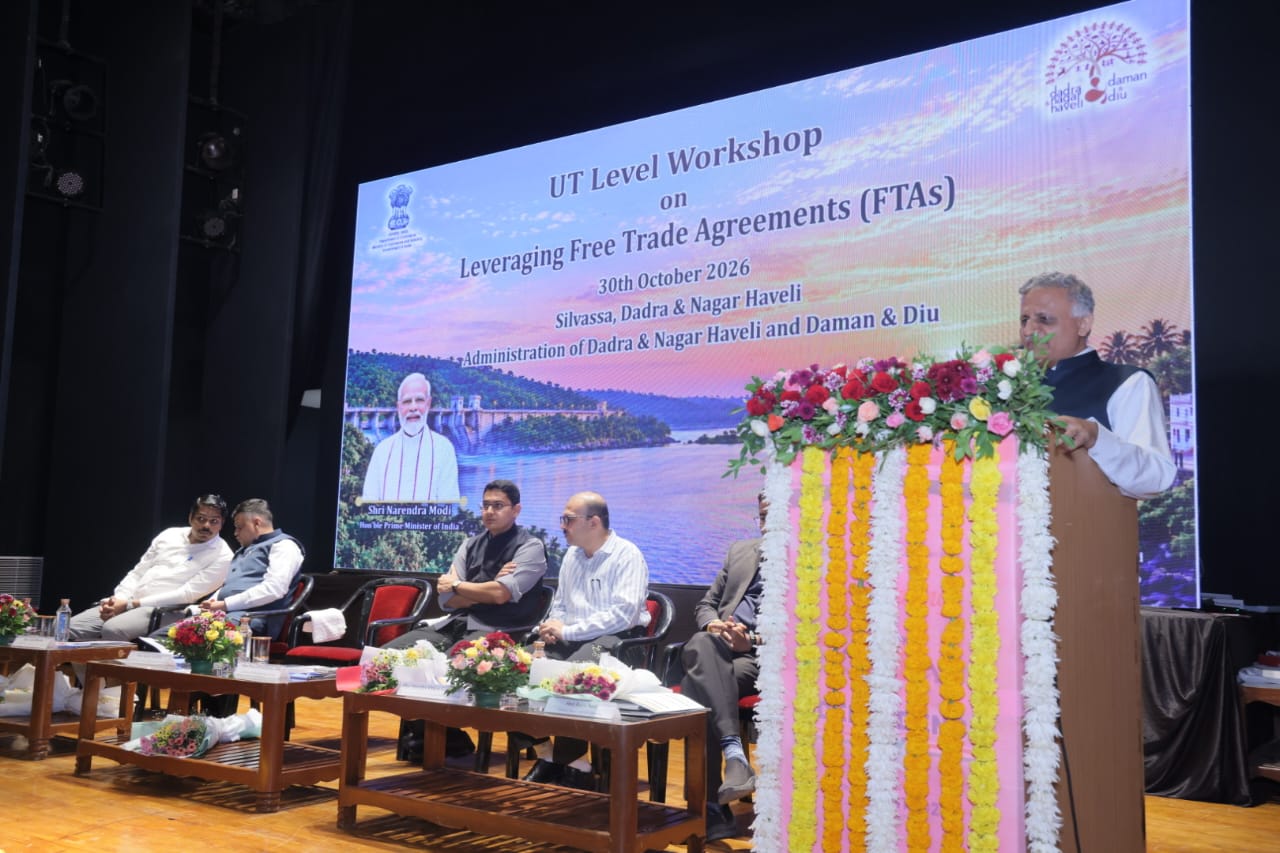
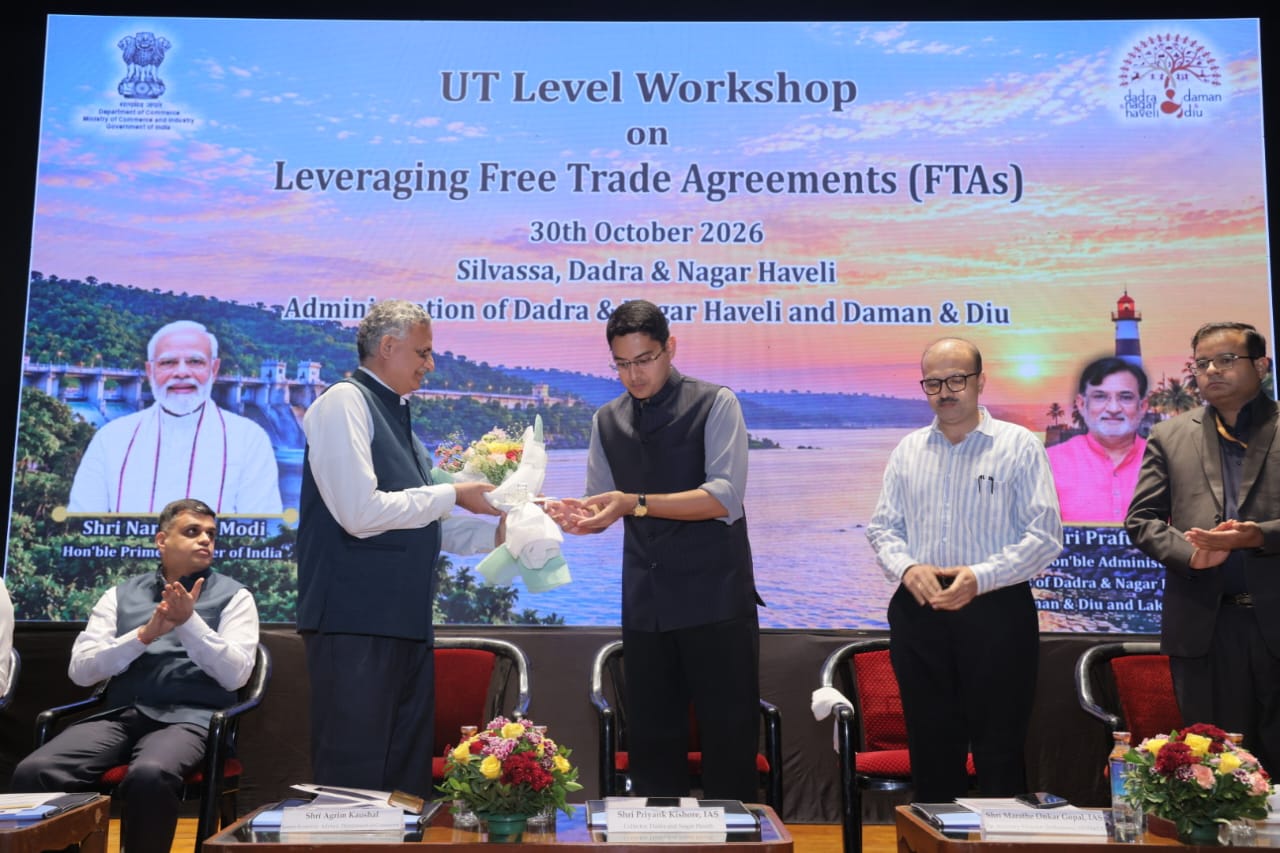
Union Territory level workshop under the "Leveraging FTAs – Outreach Programme" was held at Kala Kendra, Silvassa, UT of Dadra & Nagar Haveli and Daman & Diu today to help exporters, manufacturers and MSMEs of Dadra & Nagar Haveli and Daman & Diu turn the preferential market access available under India's Free Trade Agreements (FTAs) into real export orders. The programme was organised by Department of Industries, UT Administration of DNH&DD in coordination with the Department of Commerce and the Directorate General of Foreign Trade (DGFT), with the support of the Silvassa Industries & Manufacturers Association (SIMA) and other local industry bodies. It drew around 80 participants from industry, export promotion councils, banks and government departments.
The Silvassa programme is part of the nationwide FTA outreach drive launched after Union Minister of Commerce & Industry Shri Piyush Goyal, at the National Workshop on "Leveraging FTAs: An Outreach Programme" in New Delhi on 3 September 2026, called for FTA awareness to reach all 780 districts of the country, including small businesses, traders, start-ups and women entrepreneurs.
The workshop was inaugurated by Shri Priyank Kishore, IAS, Collector, Dadra and Nagar Haveli, in the presence of Shri Agrim Kaushal, IES, Senior Economic Advisor, Dept. of Commerce. Addressing the gathering, Shri Priyank Kishore IAS, Collector, Dadra and Nagar Haveli, said that India's growing network of trade agreements gives the industrial belt of Silvassa, Dadra and Daman a strong opportunity to scale up exports, and urged units - especially MSMEs - to make full use of reduced and zero-duty access in partner markets.
Shri Agrim Kaushal, IES, Senior Economic Advisor, Dept. of Commerce, said that the endeavour is to promote the effective and optimal utilisation of Free Trade Agreements (FTAs) to enhance India's export competitiveness, diversify export markets, and facilitate greater market access for Indian exporters, with a view to contributing towards the achievement of India's overall export target of USD 2 trillion by 2030–31, comprising USD 1 trillion in merchandise exports and USD 1 trillion in services exports.
Participants were briefed on India's recent agreements, including the India–UK Comprehensive Economic and Trade Agreement, in force since 15 July 2026; the India–Oman Comprehensive Economic Partnership Agreement, in effect since 1 June 2026; and the India–New Zealand Free Trade Agreement, which came into force on 20 October 2026, alongside earlier agreements such as the India–UAE CEPA, India–Australia ECTA and India–EFTA TEPA.
Officers from Office of the Additional DGFT, Mumbai DGFT and Department of Commerce took participants through:
●identifying tariff concessions for their products using HS codes and partner-country tariff schedules;
●rules of origin and how to obtain preferential Certificates of Origin online through the DGFT Common Digital Platform;
●documentation, record-keeping and verification requirements when claiming FTA benefits;
●quality standards, technical regulations and non-tariff measures in partner markets;
●sector-specific opportunities for the U.T.'s key industries, including textiles and yarn, plastics and polymers, chemicals, engineering goods.
An interactive session followed, in which exporters raised practical issues such rising freight costs, logistic challenges, connectivity to the African market. Some exporters expressed satisfaction with the online processes of DGFT. Officials assured that the feedback would be conveyed to the Department of Commerce to improve FTA utilisation and to inform future trade negotiations.
The programme supports the Government's goal of reaching USD 2 trillion in exports by 2030. India's merchandise and services exports for April–September 2026-27 are estimated at USD 476.20 billion, 13.84% higher than in the same period last year. The programme concluded with a vote of thanks by Dept. of Industries, UT Administration of DNH&DD.
An initiative of the Department of Commerce, Ministry of Commerce & Industry, Government of India, in partnership with State and U.T. Governments, DGFT, export promotion councils and industry bodies, to help enterprises - particularly MSMEs, farmers, artisans, women entrepreneurs and start-ups — understand and use the preferential market access available under India's trade agreements.