Ministry of Science & Technology
BRIC-ILS Bhubaneswar scientists feature in the world’s Top 2% list for the year 2026
Posted On:
10 OCT 2026 7:12PM by PIB Bhubaneswar
Two scientists from the BRIC-Institute of Life Sciences (BRIC-ILS), Bhubaneswar, Dr. Sanjeeb Kumar Sahoo and Dr. Amaresh Chandra Panda, have again been named among the world’s Top 2% scientists. The list is compiled by Stanford University and published by Elsevier.
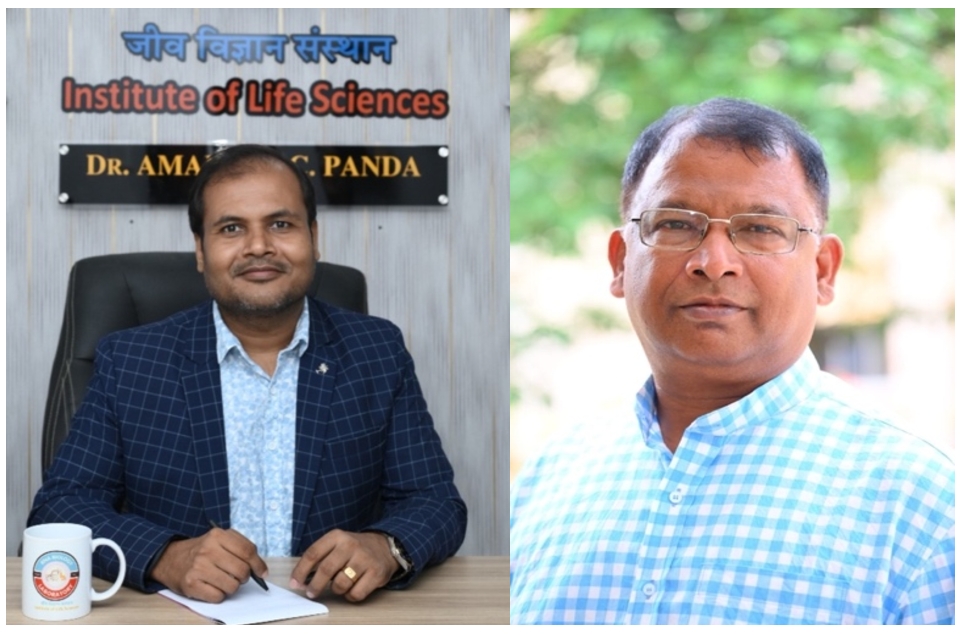
Both researchers have appeared on the list every year from 2019 to 2026, for a total of eight consecutive years of recognition. This year’s edition includes 6,954 Indian researchers.
Rankings and profiles
Dr. Sahoo works in Clinical Medicine, with a sub-field of Pharmacology & Pharmacy. He ranks 51,868 globally. In his sub-field, he ranks 302 out of 166,116 authors. His h-index is 17, and his hm-index is 10.09 as of the 2025 year-end. He also appears in the career-long dataset, with a global rank of 70,468.
Dr. Panda works in Biomedical Research, with a sub-field of Developmental Biology. He ranks 41,810 globally. In his sub-field he ranks 908 out of 167,121 authors. His h-index is 11 and his hm-index is 5.84 as of the 2025 year-end.
Background Content
What is a citation, and why does it matter?
When scientists publish a discovery, it appears in a research paper. Any scientist who later uses that finding, whether to test a new idea, design an experiment or develop a treatment, mentions the original paper in their own work. That mention is a citation.
Think of it as a vote of trust. A citation means other experts read the work, found it reliable and thought it worth building on. A paper that is cited again and again has usually shaped what other scientists do next.
Citations matter beyond the lab. Medical research often starts with basic questions about how cells and diseases work. Each paper that builds on an earlier one brings a better test, a more targeted drug or a clearer understanding of a disease a little closer to patients. Citations let us trace that chain from a laboratory finding to its eventual benefit to society. For this reason, many consider citations among the most meaningful indicators of the value and reach of research.
The rankings use a composite score built from standardized citation indicators. These include the total citations, the h-index and the hm-index. The figures reported here exclude self-citations, meaning scientists citing their own earlier work. Only recognition from the wider research community counts. The database is described in “August 2026 data-update for ‘Updated science-wide author databases of standardized citation indicators’” by John P.A. Ioannidis, published in the Elsevier Data Repository.
Science advances fastest when research arrives at the right moment. Work that addresses an urgent question, such as an emerging disease, a gap in treatment or a new technique other labs need, is picked up quickly. Other researchers can then test it, improve it and apply it, rather than starting from scratch. Timely and relevant studies save effort, avoid duplication and speed up the path from discovery to use.
The sustained citations that Dr. Sahoo and Dr. Panda have earned over eight consecutive years indicate that their work has stayed relevant, useful, and trusted. They show that the community keeps returning to it.
The recognition reflects years of rigorous research and the collaborative effort of the whole BRIC-ILS community. The institute congratulated both scientists and said it looks forward to further milestones.
Reference: Ioannidis, John P.A. (2026), “August 2026 data-update for ‘Updated science-wide author databases of standardized citation indicators’”, Elsevier Data Repository, V9, doi: 10.17632/btchxktzyw.9
*******
Swadhin Shakti Prasad/Manoj Kumar Jali
(Release ID: 2321787)
Visitor Counter : 68
Read this release in:
Odia