Ministry of Health and Family Welfare
AIIMS Raipur Holds National CME on FISH to Strengthen Advanced Genomic Diagnostics
Experts discuss applications of Fluorescent In Situ Hybridization in detecting complex chromosomal abnormalities
National workshop focuses on practical training, targeted diagnosis and skill development in molecular cytogenetics
Posted On:
05 OCT 2026 5:42PM by PIB Raipur
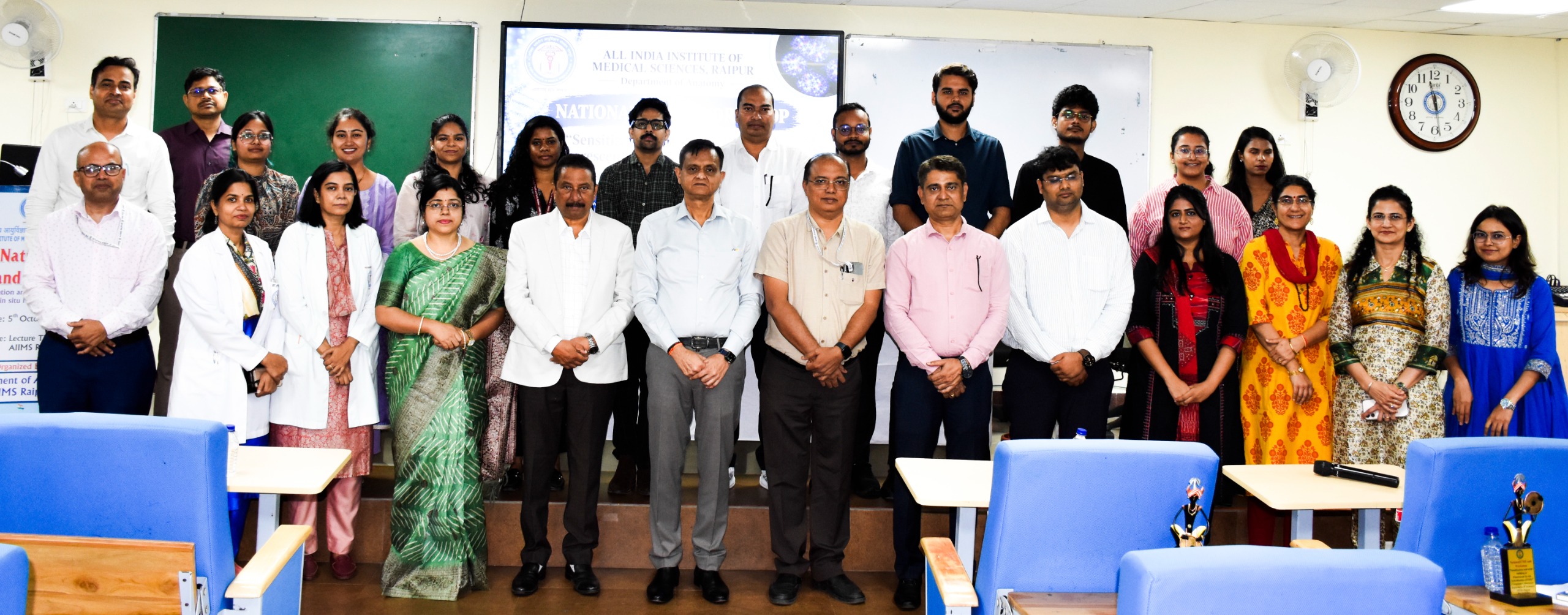
All India Institute of Medical Sciences (AIIMS), Raipur, organised a Continuing Medical Education (CME) programme and national-level workshop on “Sensitization and Skill Building in Fluorescent In Situ Hybridization (FISH)” to strengthen awareness, practical application and diagnostic skills in advanced molecular cytogenetic techniques. The programme was organised by the Department of Cytogenetics in collaboration with the Department of Anatomy, AIIMS Raipur.
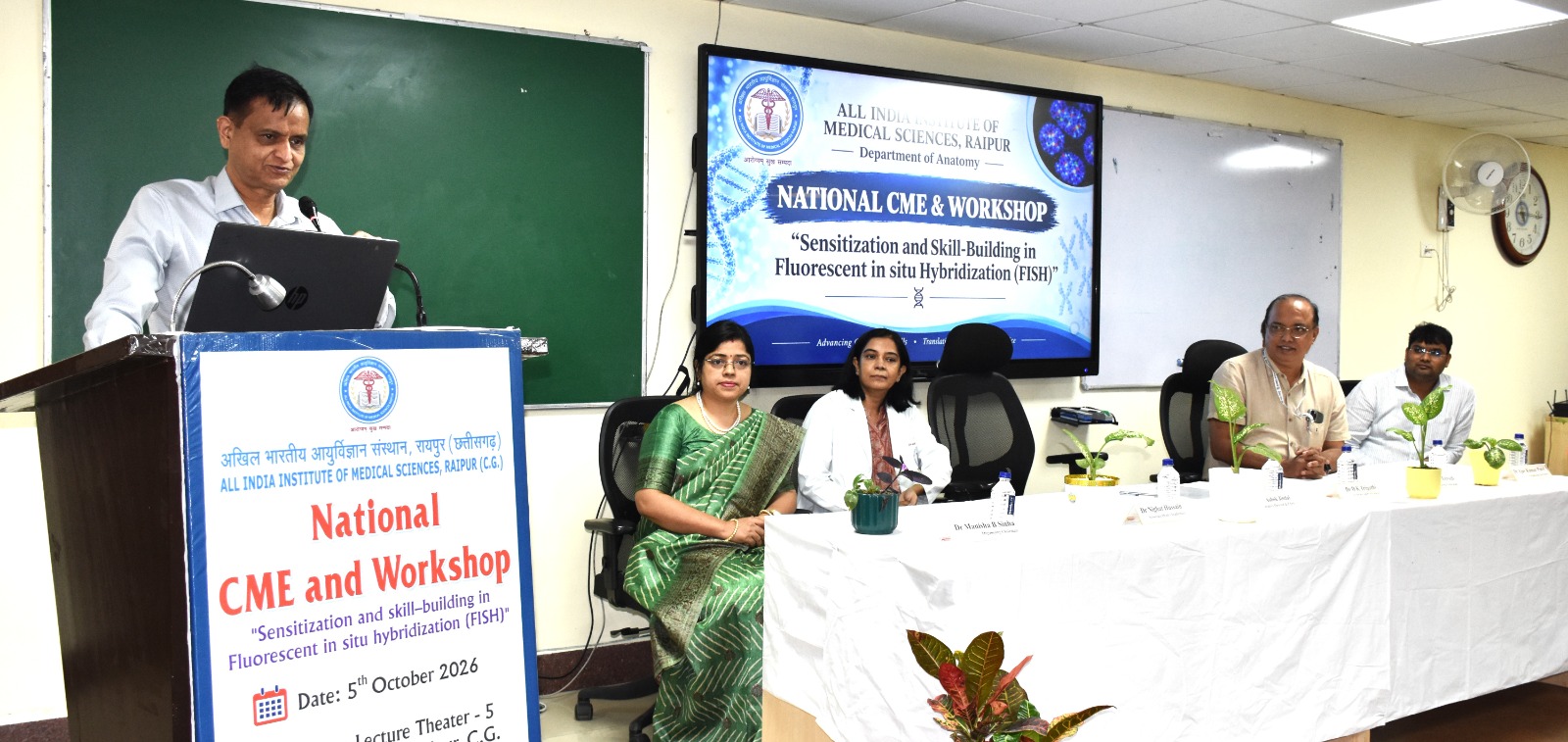
The programme was inaugurated by Lt Gen Ashok Jindal (Retd), Executive Director, AIIMS Raipur. Addressing the gathering, Lt Gen Jindal described the initiative as “one of the biggest milestones of the institute” and underlined the importance of establishing and strengthening advanced genomic diagnostic facilities and developing specialised skills at the institutional level.
The scientific sessions featured an expert lecture by Dr Jairam, an invited expert from the Centre of Human Genetics, Bengaluru, who discussed the principles, methodology and clinical applications of Fluorescent In Situ Hybridization. He highlighted the role of FISH in identifying specific chromosomal and genetic abnormalities and its usefulness in diagnostically challenging cases where conventional investigations may not provide sufficient or definitive information.
Dr Manisha B. Sinha, Professor, AIIMS Raipur, delivered a lecture on “Why and Where FISH is Needed After Karyotyping”. She explained that while conventional karyotyping remains an important investigation for detecting numerical and large structural chromosomal abnormalities, Fluorescent In Situ Hybridization provides targeted and specific information about particular chromosomes or chromosomal regions that may not be adequately characterised through routine karyotyping.
Dr Sinha also presented and discussed clinically relevant cases to demonstrate the importance of selecting appropriate FISH probes after karyotyping. The case-based discussions highlighted how combining conventional cytogenetics with molecular cytogenetic techniques can improve diagnostic accuracy and facilitate the evaluation of complex chromosomal abnormalities.
The CME programme covered various clinical applications of Fluorescent In Situ Hybridization, including the diagnosis of aneuploidies, microdeletions, duplications, marker chromosomes and other chromosomal abnormalities. Experts emphasised that FISH has emerged as an important component of modern genomic diagnostics, particularly where targeted investigation is required.
The national-level workshop brought together clinicians, students, laboratory professionals and experts from different parts of the country. The programme provided a platform for academic exchange, practical learning and skill development in FISH technology, with particular emphasis on its application in clinical diagnosis.
The initiative marks an important step towards strengthening genomic and molecular cytogenetic diagnostic capabilities at AIIMS Raipur and advancing specialised diagnostic services in the field of medical genetics.
***
RDJ/BKT
(Release ID: 2319280)
Visitor Counter : 13