Ministry of Chemicals and Fertilizers :
Department of Fertilizers
Dr. Abhilaksh Likhi, Union Secretary, Department of Fisheries, Ministry of Fisheries, Animal Husbandry and Dairying (MoFAH&D), Chaired Review meeting on National Surveillance Programme for Aquatic Animal Diseases (NSPAAD)
Focus on strengthening aquatic animal health, disease surveillance and biosecurity for sustainable aquaculture growth and export-led development of the fisheries sector.
Posted On:
01 OCT 2026 6:42PM by PIB Delhi
Dr. Abhilaksh Likhi, Union Secretary, Department of Fisheries, MoFAH&D, GoI chaired review meeting on National Surveillance Programme for Aquatic Animal Diseases (NSPAAD) on 1st October 2026 in New Delhi. The meeting focused on strengthening aquatic animal health surveillance through a review of NSPAAD Phase-I and Phase-II, assessment of the Disease Report App, and discussions on the way forward.
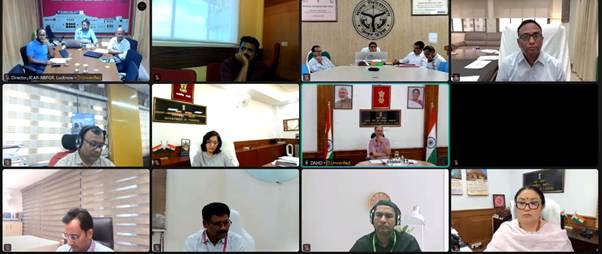
The Review meeting was held through video conference and witnessed participation from State fisheries department, fisheries ICAR institutions including ICAR- National Bureau of Fish Genetic Resources (NBFGR), Marine Products Export Development Authority (MPEDA), Export Inspection Council (EIC), Coastal Aquaculture Authority (CAA), National Fisheries Development Board (NFDB) and other relevant fisheries stakeholders.
During the review meeting, Dr Abhilaksh Likhi, Secretary (Fisheries), Department of Fisheries, MoFAH&D highlighted the role of NSPAAD program in strengthening disease diagnostics, surveillance networks and laboratory infrastructure to achieve export targets. The Secretary stressed the need for stronger engagement of State Governments, improved convergence among stakeholders and wider adoption of disease reporting mechanisms to enhance disease preparedness and safeguard export competitiveness. He noted that, implemented under PMMSY, the National Surveillance Programme for Aquatic Animal Diseases (NSPAAD) is being executed in two phases to establish a robust aquatic animal disease surveillance and reporting framework in the country. He further suggested examining the transition of NSPAAD from a project-based intervention to a long-term programme under PMMSY to ensure continuity, institutionalization and sustained support for aquatic animal health management in the country. The secretary also sought suggestions from ICAR scientists, state officials to further improve the program outreach.
The stakeholders highlighted the critical role of aquatic animal disease surveillance in sustaining aquaculture growth and supporting India’s expanding seafood exports. Representatives from MPEDA and EIC emphasized the need for closer convergence with NSPAAD to strengthen disease monitoring, ensure compliance with international sanitary requirements and facilitate access to emerging export markets. EIC informed that regular disease reporting and coordinated engagement among regulatory agencies have contributed to easing export certification requirements in key markets such as the Republic of Korea.
ICAR, NFDB, CAA and participating States underscored the need to institutionalize NSPAAD as a long-term programme, strengthen State-level disease surveillance systems and expand farmer participation through the ReportFishDisease mobile application. States shared progress in laboratory strengthening, disease diagnostics, awareness generation and farmer outreach, while also highlighting the need for greater adoption of disease reporting tools and enhanced capacity building at the grassroots level. Stakeholders further recommended leveraging Matsya Seva Kendras, Sagar Mitras and fisheries extension networks to improve disease reporting, early warning and rapid response mechanisms across the country.
India’s seafood exports have more than doubled over the past decade, increasing from ₹30,213 crore in FY 2013-14 to ₹73,890.46 crore in FY 2025-26, reinforcing the country’s position as one of the world’s leading seafood exporters. Recognizing that aquatic animal health is integral to export competitiveness, the Department is simultaneously strengthening disease surveillance, biosecurity and compliance systems to ensure sustainable growth, improved market access and greater acceptance of Indian seafood products in global markets.
The Department is implementing the National Surveillance Programme for Aquatic Animal Diseases (NSPAAD) as the country’s flagship aquatic animal disease surveillance initiative. Operational since 2013 and expanded to pan-India coverage under PMMSY since 2022, the programme has established a national network of aquatic animal health laboratories, strengthened diagnostic capacity for WOAH-listed and emerging pathogens, and institutionalised a transparent disease reporting framework aligned with international standards. NSPAAD has conducted over 1,100 awareness programmes covering nearly 48,000 fish farmers and 177 training programmes for stakeholders, while the multilingual ReportFishDisease mobile application has enabled timely reporting of disease incidences and rapid scientific response. The programme has facilitated the first-time detection and confirmation of 15 emerging and exotic aquatic animal diseases in the country, strengthened early warning and response mechanisms, and significantly enhanced India’s credibility in international aquatic animal health reporting, thereby supporting the sustainability, resilience and export readiness of the fisheries sector.
*********
JP
(Release ID: 2317857)
Visitor Counter : 298