Ministry of Science & Technology
Third National Space Day Celebrated in Ahmedabad: India Advances Towards Global Leadership in the Space Sector
India Advances Towards Global Leadership in Space Technology Through Vision, Innovation and Determination: Union Minister Shri Gajendra Singh Shekhawat
Gujarat Poised to Emerge as a Growth Engine for the Nation in Science, Technology and the Space Sector: Cabinet Minister Shri Arjun Modhwadia
With Determination and Sustained Efforts, India’s Space Journey Has Reached Global Leadership: ISRO Chairman Dr. V. Narayanan
प्रविष्टि तिथि:
23 AUG 2026 2:45PM by PIB Ahmedabad
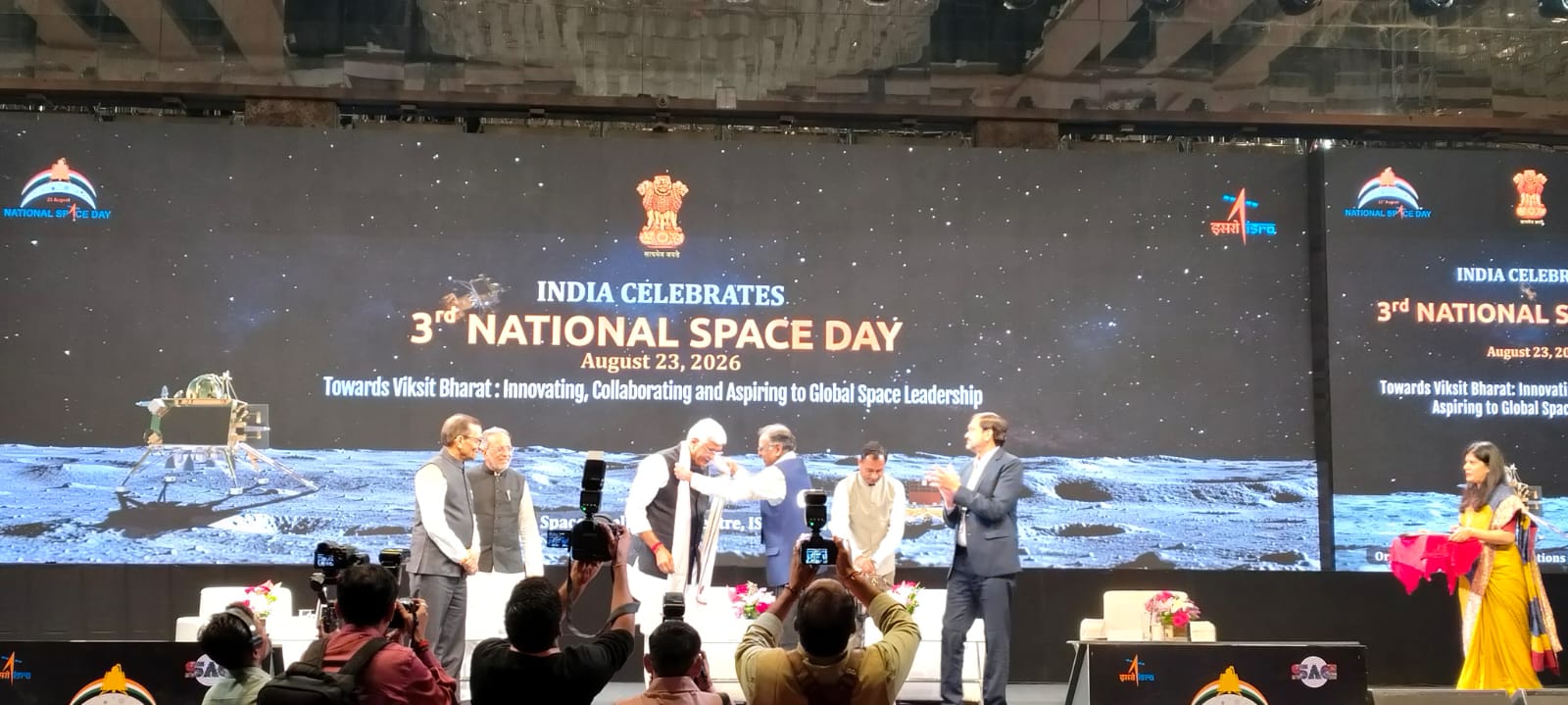
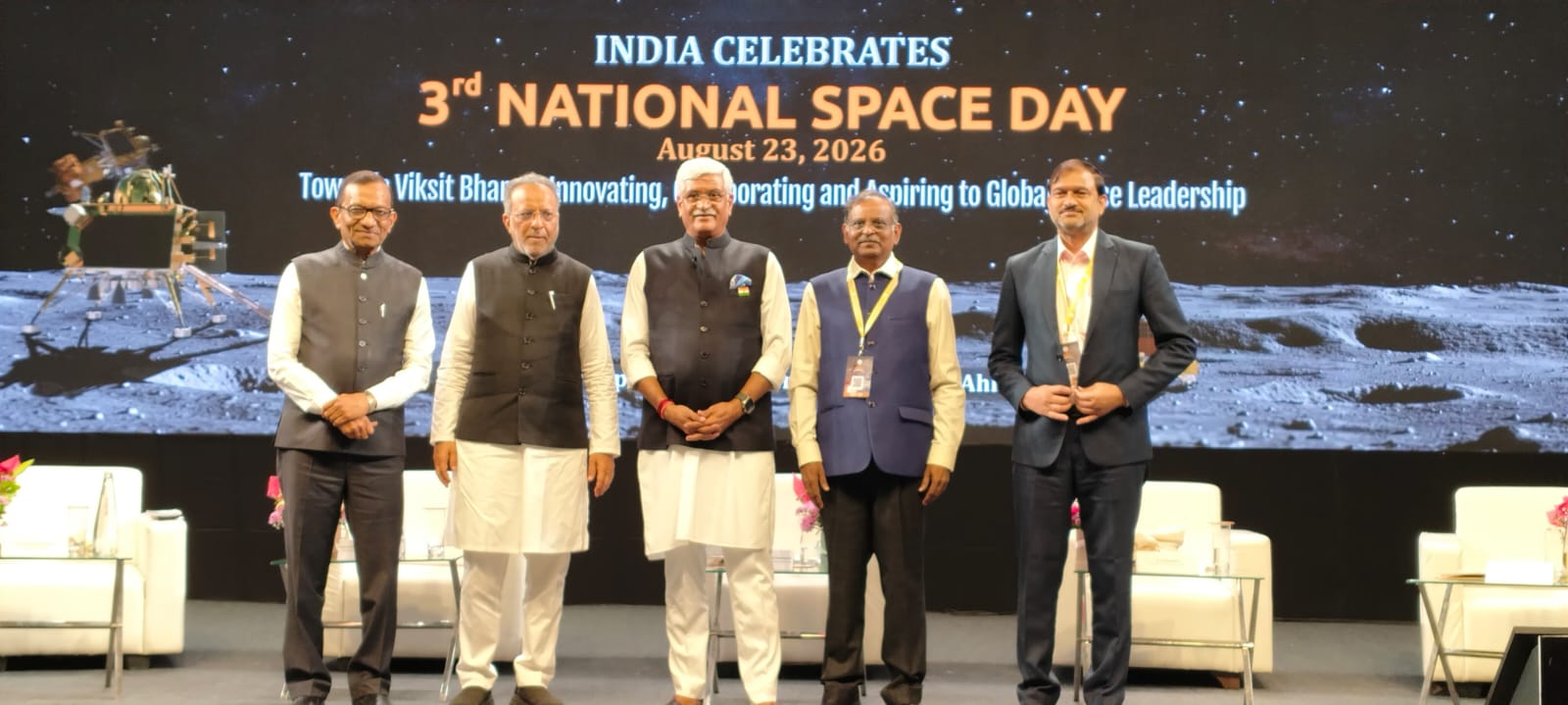
The Third National Space Day was enthusiastically celebrated at the Space Applications Centre (SAC), Ahmedabad, functioning under the Indian Space Research Organisation (ISRO), Department of Space, Government of India. Based on the theme “Towards Viksit Bharat: Innovating, Collaborating and Aspiring to Global Space Leadership,” the programme was attended by Union Minister for Culture and Tourism Shri Gajendra Singh Shekhawat, Cabinet Minister of the Government of Gujarat Shri Arjun Modhwadia, and Secretary, Department of Space and Chairman, ISRO, Dr. V. Narayanan.
Union Minister for Culture and Tourism Shri Gajendra Singh Shekhawat said that India’s space journey began amid limited resources and constraints, but the determination of Indian scientists and the late Dr. Vikram Sarabhai remained unwavering. Dr. Sarabhai’s vision was not merely to achieve accomplishments in space, but to use space technology to bring positive transformation to the lives of ordinary citizens.
He said that today satellite technology is playing an important role in agriculture, weather forecasting, disaster management, providing potential fishing zone information to fishermen, connectivity, education and healthcare. Space technology is no longer limited to research but has emerged as an important tool for people-centric governance and development.
Referring to India’s ancient scientific tradition, Shri Shekhawat said that great Indian scientists such as Aryabhata, Varahamihira and Bhaskaracharya made significant contributions to astronomy and mathematics, enriching the global knowledge tradition. He said that curiosity is the beginning of knowledge, research and innovation.
He further stated that today, with the use of modern technologies such as Artificial Intelligence and Optical Character Recognition (OCR), efforts are being undertaken to digitise India’s ancient manuscripts and make them available in various languages. Through these efforts, India’s rich knowledge tradition is being taken to the global community.
Speaking about the future of technology, he said that the convergence of technologies such as space technology, Artificial Intelligence, quantum computing, robotics, humanoids and semiconductors will shape the direction of the global economy, human life and geopolitics in the coming years. He emphasised that innovation, collaboration and global leadership are three important aspirations for India, with the country’s youth power at the heart of all three.
Addressing the gathering on the occasion of the National Space Day celebration, Cabinet Minister Shri Arjun Modhwadia said that Ahmedabad, Gujarat and the Indian space programme share a historic and deep-rooted relationship. Inspired by the vision of the late Dr. Vikram Sarabhai, Ahmedabad has evolved into an important centre of India’s space programme. He said that under the visionary leadership of Prime Minister Shri Narendra Modi, the establishment of the headquarters of IN-SPACe in Ahmedabad has given fresh momentum and opened new opportunities for Gujarat’s space ecosystem.
He said that reforms undertaken in the space sector have created new opportunities for the private sector, academic institutions, researchers and young start-ups. Several space start-ups in Gujarat are developing innovative technologies and solutions. Various facilities, including small satellite manufacturing, are being developed at the Gujarat Space Park, and he invited domestic and international space industries to invest in Gujarat and establish their manufacturing facilities.
Shri Modhwadia further said that Gujarat is also rapidly advancing in emerging fields such as semiconductors, Artificial Intelligence, quantum technology, biotechnology and supercomputing. A significant share of the semiconductor projects approved in the country is coming to Gujarat. He said that Gujarat is poised to lead the country in the semiconductor sector in the coming years.
On science popularisation, he said that through Ahmedabad’s Science City and various regional and district science centres across the state, efforts are being made to promote scientific temper among students and the general public. He said that Gujarat’s objective is not merely to adopt technology but to become a centre for the development of new technologies and innovation.
Emphasising the significance of Ahmedabad being specially chosen to host the National Space Day celebration, Secretary, Department of Space and Chairman, ISRO, Dr. V. Narayanan said that the late Dr. Vikram Sarabhai laid the foundation for the development of the Physical Research Laboratory (PRL) and the Space Applications Centre (SAC) in Ahmedabad. He said that Ahmedabad has made significant contributions to payload development, which is essential for satellites and launch vehicles.
Recalling the early days of India’s space journey, he said that the country’s space programme began with limited resources but has today established itself among the world’s leading space programmes. India has made remarkable progress across various domains of science, satellite technology and launch vehicle technology, and today several countries and companies across the world place their trust in India’s launch capabilities and technological expertise.
Dr. Narayanan referred to important missions such as Chandrayaan-3, Chandrayaan-1 and Aditya-L1, and said that the successful soft landing of Chandrayaan-3 gave India’s scientific capabilities a new global identity. The discovery of water molecules on the Moon by Chandrayaan-1 and the scientific data being obtained through Aditya-L1 for the study of the Sun demonstrate the high level of India’s space research capabilities.
Speaking about the goal of Viksit Bharat 2047, he said that India will require a large number of satellites in the coming years. The space sector reforms undertaken since 2020 have created new opportunities for private industries, academic institutions, researchers and start-ups in the space sector. He stated that India’s space community is fully committed to making India a global space leader through new technologies, innovation and international collaboration.
On the occasion, IN-SPACe Chairman Dr. Pawan Kumar Goenka provided insights into the progress of the Indian space programme, India’s growing role at the global level and the opportunities that lie ahead. Awards were presented to the winning teams of the ISRO Robotics Challenge, Indian Space Hackathon and Dr. Vikram Sarabhai Space Quiz.
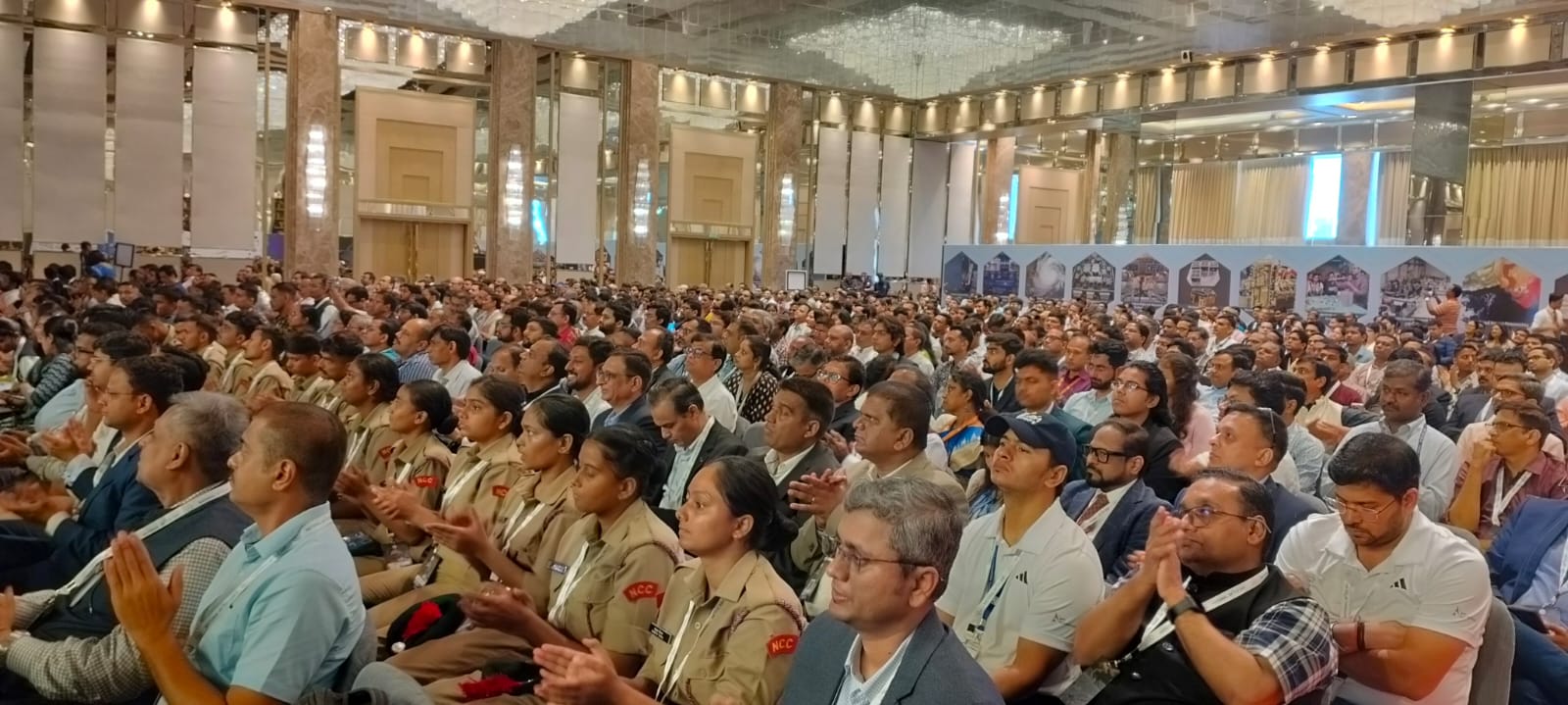
Expert discussions were organised on important themes including preparing the next generation for careers in space science and technology, expanding India’s emerging space ecosystem and exploring new avenues for global collaboration in the space sector. Representatives from academic and research institutions, private space companies, start-ups and experts from various fields participated in the discussions.
Throughout the programme, India’s achievements in the space sector, innovation, research, participation of the private sector and new opportunities for global collaboration were highlighted. The programme served as an important platform for strengthening India’s resolve to advance towards global leadership in the space sector.
The programme was attended by SAC Director Dr. V. N. Rao, Dr. Kartikeya Sarabhai, senior space scientists, technical experts, representatives of the space industry and space start-ups, and a large number of young students.
સોશિયલ મીડિયા પર અમને ફોલો કરો :  @PIBAhmedabad
  /pibahmedabad1964
  /pibahmedabad