Ministry of Fisheries, Animal Husbandry & Dairying
Efforts on Restoration of Indigenous Fish Diversity and Sustainable Wetland Fisheries through Pen Culture in North 24 Parganas
प्रविष्टि तिथि:
21 MAY 2026 1:55PM by PIB Kolkata
Kolkata, May 21, 2026
Wetlands, though most productive in fish diversity, are gradually turning vulnerable and hence seek immediate attention for supporting fisheries, biodiversity conservation, nutrient cycling, climate resilience and livelihoods of millions of rural households. Indigenous fish diversity in wetlands has declined considerably due to habitat degradation, indiscriminate fishing, pollution, nutrient loading from agriculture, hydrological alterations, and climate-induced ecological stress. The depletion of native fish populations poses serious concerns for biodiversity conservation, food and nutritional security and sustainable inland fisheries governance.
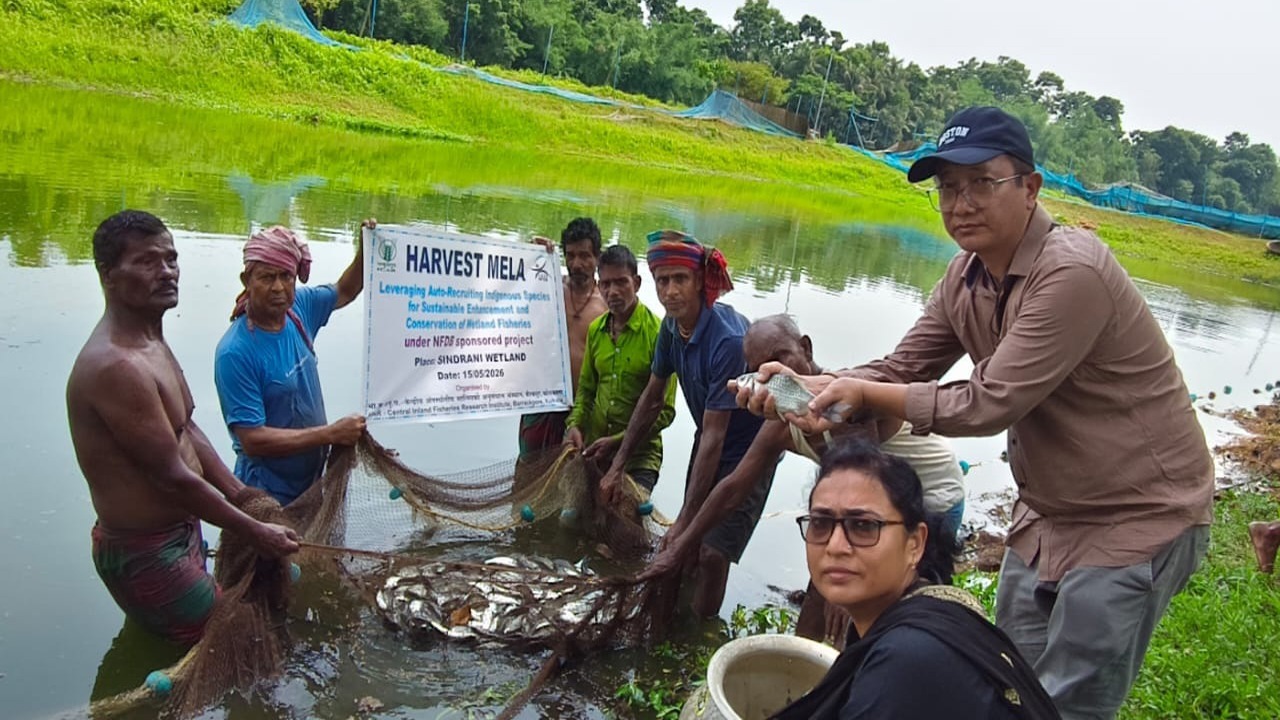
To address such challenges, ICAR-Central Inland Fisheries Research Institute (ICAR-CIFRI), with financial support from the National Fisheries Development Board (NFDB), implemented a demonstration programme on pen-based seed rearing of the small indigenous fish species Systomus sarana in the Chamaradaha and Sindrani wetlands of North 24 Parganas, West Bengal recently. The initiative aimed to restore the indigenous fish abundance, strengthen sustainable culture-based fisheries and promote community participation in wetland resource management.
The intervention demonstrated the effectiveness of pen culture technology for wetland-based seed production and biodiversity restoration. Fish were reared from fry to advanced fingerling and grow-out stages within scientifically designed pens, producing quality stocking material for wetland enhancement. The programme highlighted pen culture as a scalable and community-friendly approach for restoring depleted native fish populations while supporting sustainable fisheries development.
Field day and harvest mela were organised during the programme, wherein harvested fish were released into the open wetlands to facilitate stock enhancement, culture-based fisheries, and natural auto-recruitment of indigenous fish species. Simultaneously, part of the stock was retained within the pens to assess the feasibility of in situ recruitment under the pen culture system, generating useful insights for future wetland fisheries management models.
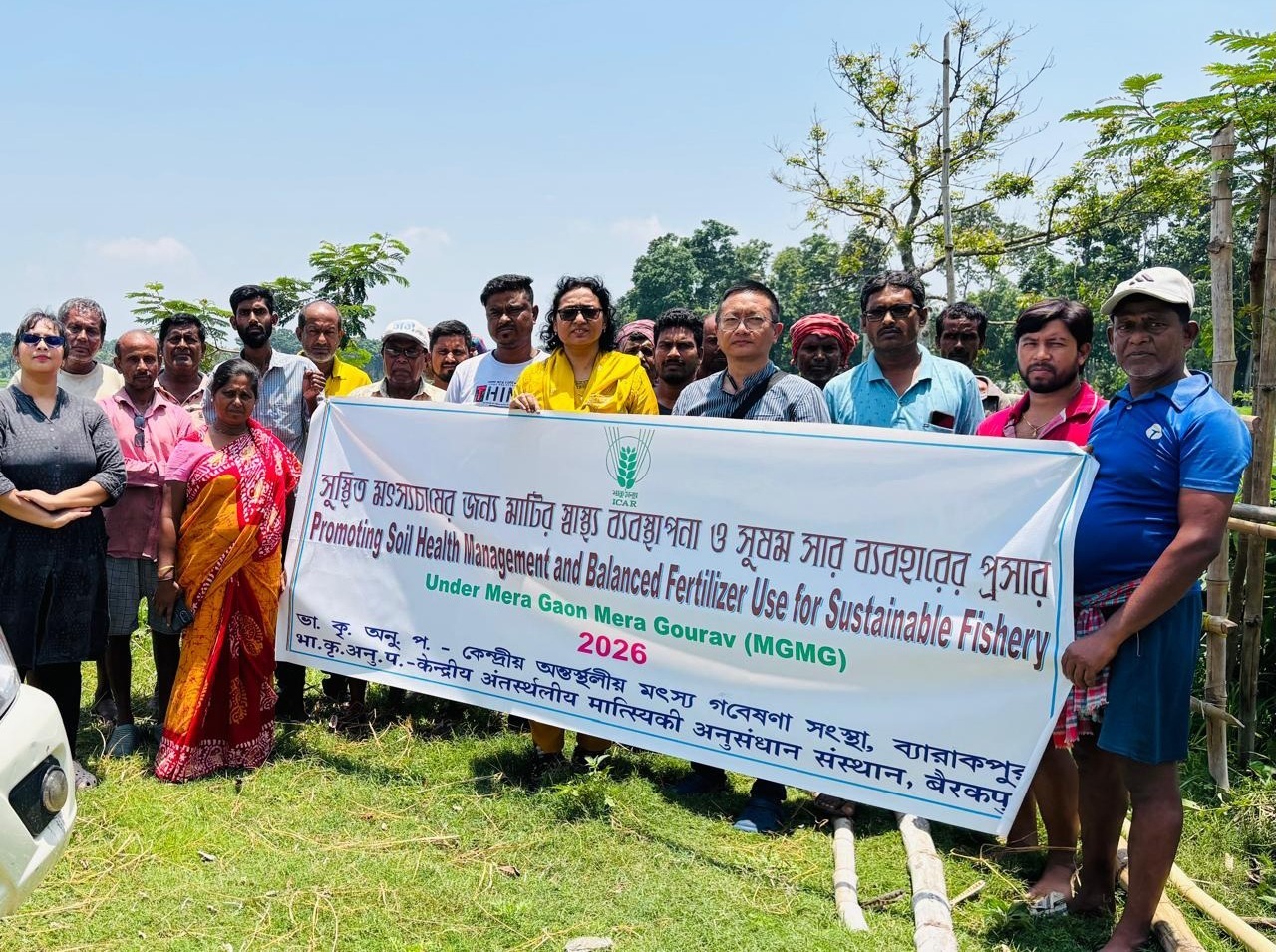
Recognising the ecological linkage between agriculture and wetland health, the programme also included awareness campaigns on balanced fertilizer use. Farmers and stakeholders were sensitized on the scientific and judicious application of fertilizers to minimise nutrient runoff, reduce eutrophication risks, and prevent deterioration of wetland water quality. The week-long awareness programmes witnessed active participation of local fishers, farmers, and community stakeholders, reflecting growing awareness and collective ownership toward sustainable wetland stewardship.
The activities were conducted by Dr. Lianthuamluaia and Dr. Suman Kumari under the guidance of Dr. Pradip Dey, Director, ICAR-CIFRI. Dr. Dey emphasised that restoration of indigenous fish diversity in wetlands is essential for ecological sustainability, nutritional security, and livelihood resilience of wetland-dependent communities, while also contributing to the broader goals of the Blue Economy. He pointed out that community-led interventions such as pen culture may effectively enhance sustainable fisheries production alongside conservation of native aquatic biodiversity.
The programme successfully demonstrated how scientific fisheries interventions, combined with community participation and ecological awareness, can contribute to restoration of indigenous fish diversity and sustainable wetland management and align with the national priorities on sustainable inland fisheries, biodiversity conservation, climate resilience and integrated wetland management.
*************
SSS....
(रिलीज़ आईडी: 2263671)
आगंतुक पटल : 49
इस विज्ञप्ति को इन भाषाओं में पढ़ें:
Bengali