Ministry of Labour & Employment
India’s civilisational openness key to future leadership: William Dalrymple at EPFO’s RGDE Season 2 on Civil Services Day
Posted On:
21 APR 2026 7:53PM by PIB Delhi
Marking Civil Services Day, the Employees’ Provident Fund Organisation (EPFO) inaugurated Season 2 of Reimagining Governance Discourse for Excellence (RGDE) lead by PDUNASS with a keynote by historian and author William Dalrymple, reflecting on India’s long arc as a civilisational connector of ideas, trade and culture.
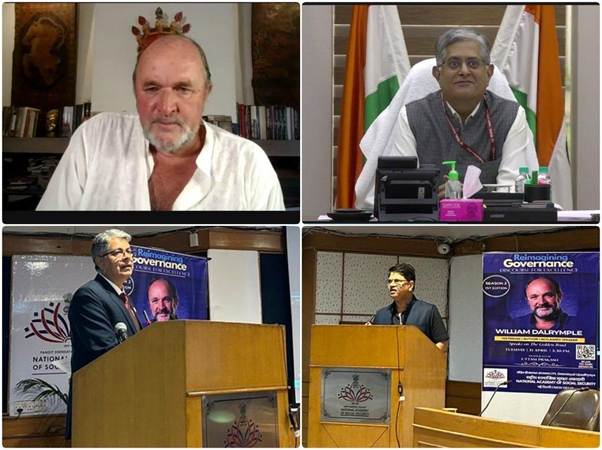
India’s historic strength, Dalrymple argued, lay not in conquest but in the movement of ideas, an openness that allowed it to shape civilizations across continents. Reclaiming that spirit, he suggested, may be central to India’s future global role.
Challenging conventional narratives of the “Silk Road,” he pointed to evidence that places India at the heart of ancient global exchange. Trade patterns, including the concentration of Roman wealth along India’s coasts and its absence further east, indicate that India functioned as a key intermediary linking the Mediterranean world with Asia .
But trade, he noted, was only one layer of a deeper story.
India’s influence travelled through ideas, through monks, scholars and traders, shaping cultures from Central Asia to Southeast Asia. The spread of Buddhism across Asia, the evolution of Indian thought within other traditions, and the transmission of mathematics, including the concept of zero, reflect a civilisational reach that was intellectual as much as economic.
What made this possible was not power in the conventional sense, but a distinctive capacity to absorb, adapt and reinterpret. Indian ideas did not remain fixed; they evolved as they moved, taking root in new contexts while retaining their philosophical depth.
At a time when global systems are once again in flux, Dalrymple suggested that this openness offers a relevant template. Nations that influence the world are not only those that project strength, but those that generate ideas and allow them to travel.
The session saw active participation from officers across more than 150 field offices and various constituents of the Ministry of Labour and Employment, with questions that connected history to contemporary governance.
Participants raised questions on whether civilisational influence can emerge through culture and knowledge alone, or requires hard power, and how India’s historical openness might inform its present geopolitical positioning.
There was also interest in how historical patterns continue to shape modern governance, and whether administrators can draw on these continuities to design more context-sensitive policies and whether artificial intelligence could make history more objectivity removing visible forms of bias.
These exchanges reflected a broader attempt to engage with history not merely as narrative, but as a resource for thinking about institutions, policy, and the future.
In his opening remarks, Director, PDUNASS, Shri Kumar Rohit described governance itself as a “golden road” , a continuous process of balancing institutional memory with the need for adaptation, particularly relevant on Civil Services Day.
The Central Provident Fund Commissioner, Shri Ramesh Krishnamurthi, emphasised the importance of continuous learning in public institutions, noting that such platforms expand administrative thinking beyond immediate operational concerns.
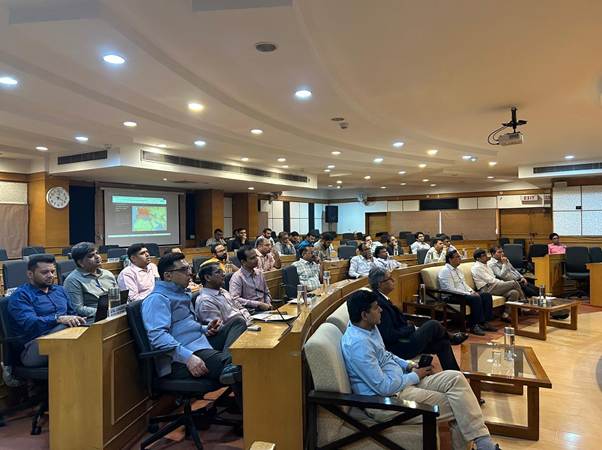
The session was moderated by Shri Uttam Prakash, RPFC-I, and underscored the value of bringing historical perspective into contemporary governance discourse.
As RGDE enters its second season, it continues to position itself as a unique platform for engaging with diverse intellectual perspectives, encouraging institutions not just to function, but to think.
*****
Rini Choudhury/Anjelina Alexander
(Release ID: 2254275)
Visitor Counter : 1104