Ministry of Home Affairs
National Conference on Use of AI in Criminal Justice System Held in Bhopal
प्रविष्टि तिथि:
21 APR 2026 6:02PM by PIB Bhopal
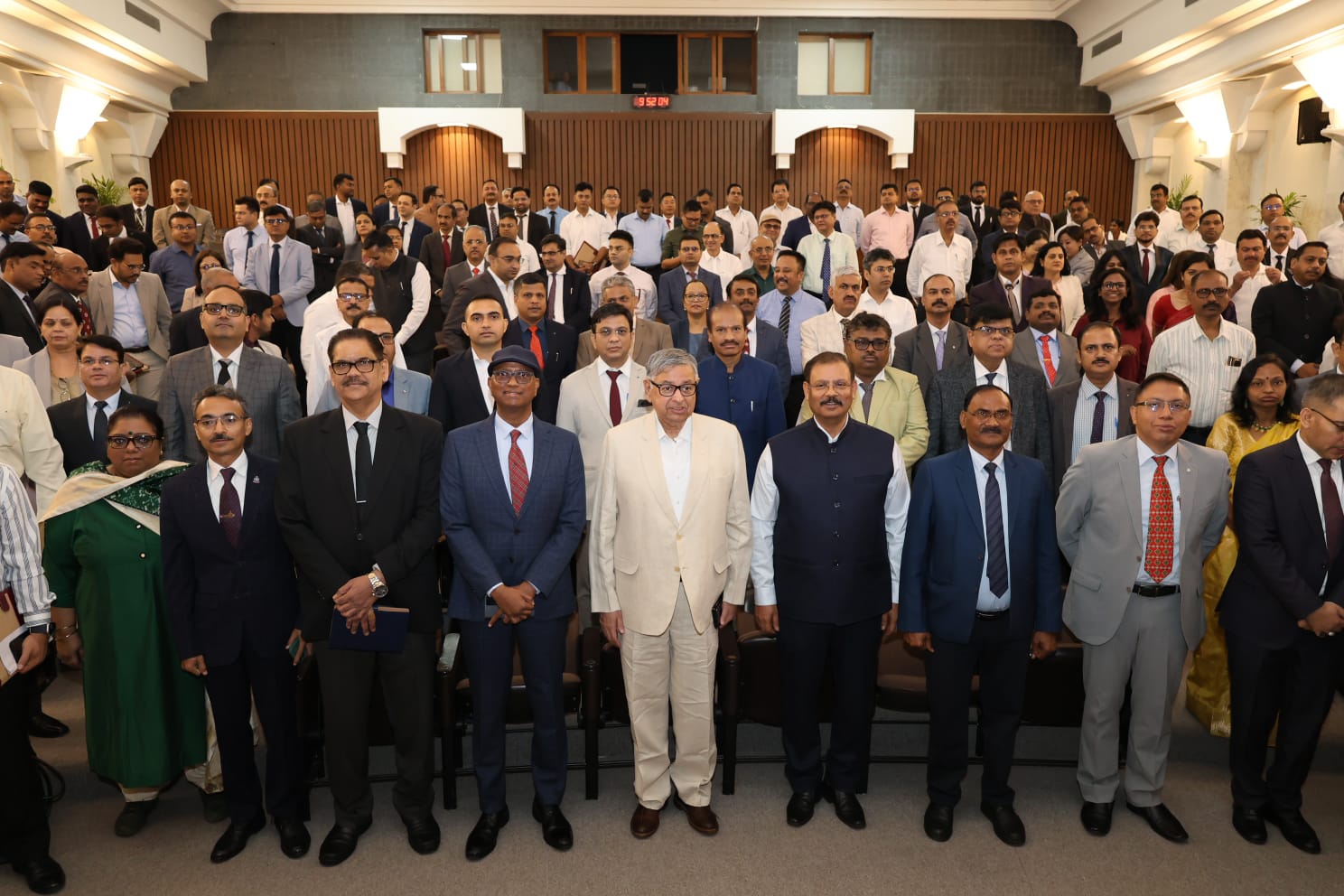
A special one-day conference was organized by the Bureau of Police Research and Development (BPR&D) in Bhopal today. Held at the Central Academy for Police Training (CAPT) in collaboration with the National Judicial Academy, the event focused on the theme "Use of Artificial Intelligence (AI) in the Criminal Justice System."
The conference was conducted under the leadership of Shri Alok Ranjan, IPS, Director General NCRB & BPR&D, and brought together more than 170 participants, including experts from the judiciary, police, prosecution, forensic science, and correctional services.
CR4I.jpeg)
The conference commenced with the opening address by Hon’ble Justice Aniruddha Bose, Director, National Judicial Academy India, Bhopal along with special address by Shri Alok Ranjan, IPS, Director General, NCRB and Director General, BPR&D New Delhi, Ministry of Home Affairs (MHA).
The conference highlighted the growing role of AI across the five pillars of the criminal justice system viz. judiciary, police, prosecution, forensics, and correctional administration, while emphasizing the need for balanced and responsible use. Discussions focused on applications such as e-governance, improvement of citizen-centric services, standardization of administrative processes, along with predictive policing, facial recognition systems, cyber-forensics, and AI-assisted evidence analysis, which enhance efficiency, accuracy, and decision-making.
L7TR.jpeg)
Participants also deliberated on key challenges, including algorithmic bias, false positives, and the risks of over-reliance on automated systems. The evolving legal and institutional responses in India were examined, including AI initiatives by the Supreme Court and recent guidelines issued by various High Courts to regulate the use of generative AI.
Each session was followed by interactive discussions, question-and-answer sessions, and sharing of best practices and case studies. The conference further addressed concerns relating to the admissibility of AI-generated evidence, deepfakes, and the need to maintain the integrity of electronic evidence in accordance with established legal standards. Ethical considerations, particularly privacy, surveillance, and human rights, were also emphasized.
The conference concluded that while AI is a force multiplier in the criminal justice system, its effective adoption requires capacity building, clear standard operating procedures, and human oversight to ensure transparency, accountability, and legal defensibility. One of the major outcomes is identification of areas of use of AI in each pillar of criminal justice systems so that a road map may be drawn for its quick implementation.
***
(रिलीज़ आईडी: 2254208)
आगंतुक पटल : 158
इस विज्ञप्ति को इन भाषाओं में पढ़ें:
Hindi_MP