Ministry of Education
IIT Jodhpur Develops Next-Generation Bio-Bricks and Agro-Plastic Blocks
Patented innovation led by Dr. Priyabrata Rautray enables carbon-negative construction and circular use of agro and plastic waste to tackle pollution and resource scarcity
Posted On:
01 APR 2026 4:29PM by PIB Jaipur
In a landmark development in sustainable materials research, the Indian Institute of Technology Jodhpur has advanced a patented technology that converts agricultural residue and plastic waste into high-performance construction materials, marking a significant step toward circular and climate-resilient infrastructure.
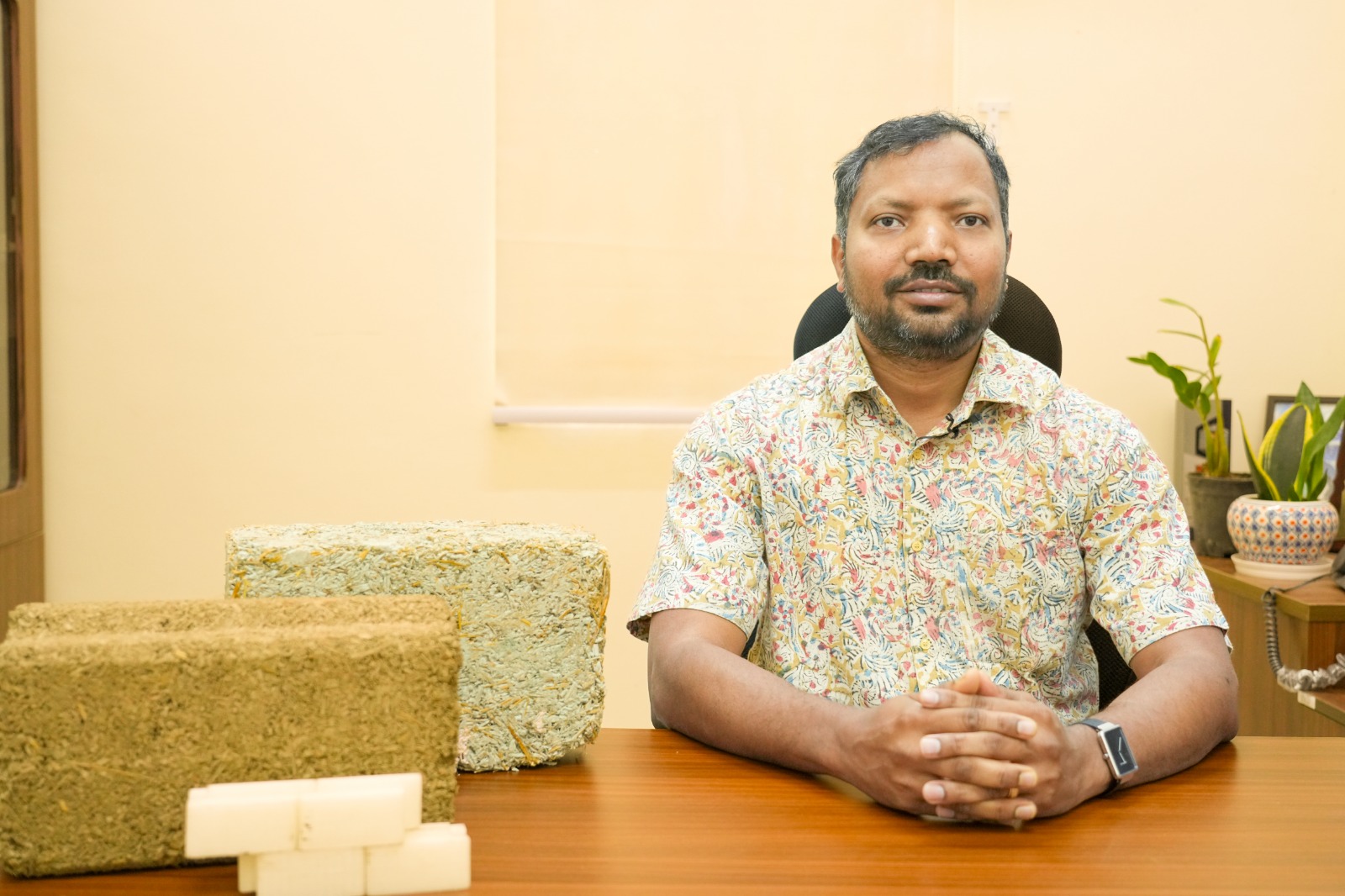
The research, led by Dr. Priyabrata Rautray, Assistant Professor at the School of Design, introduces two breakthrough materials—Bio-Bricks and Agro-Plastic Blocks (APBs)—that combine scientific innovation, material engineering, and sustainable design principles.
Patented Bio-Bricks: Converting Agricultural Residue into Carbon-Negative Materials
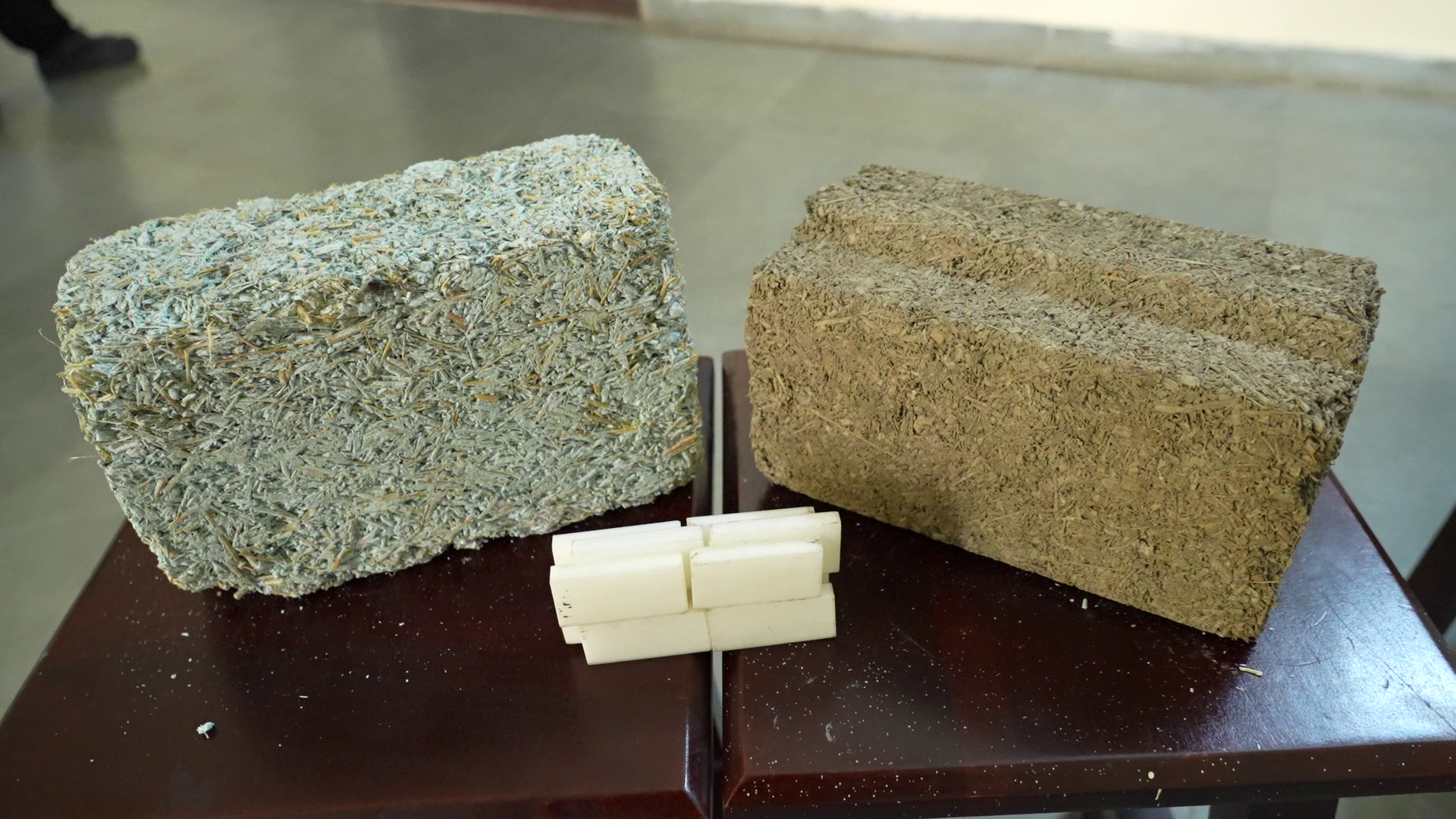
At the core of this innovation lies a patented process that transforms crop residues such as paddy straw, wheat straw, and sugarcane bagasse into durable building blocks through a low-energy, lime-based formulation.
Unlike traditional fired bricks, Bio-Bricks represent a significant departure from energy-intensive construction practices. Developed through a low-energy, lime-based process, these bricks eliminate the need for kiln firing, thereby substantially reducing greenhouse gas emissions. More importantly, Bio-Bricks function as carbon-negative materials, storing more carbon dioxide (CO₂) over their lifecycle than is emitted during production. Their recyclability further strengthens their sustainability profile, enabling end-of-life reuse and supporting circular material flows. Additionally, by reducing dependence on fertile topsoil and other energy-intensive raw materials, Bio-Bricks emerge as a scientifically robust and environmentally responsible alternative to conventional masonry products, particularly in the context of a rapidly expanding construction sector.
Extending this innovation, the Agro-Plastic Block (APB) technology introduces a patented, circular solution that integrates mixed plastic waste with agricultural residue. This approach offers a novel and scalable pathway for comprehensive waste utilisation, particularly addressing the challenge of non-recyclable and heterogeneous plastic streams. Through a low-energy thermal fusion and compression process, APBs convert diverse plastic waste into durable construction materials without the need for complex, multi-stage recycling systems. In addition to simplifying waste processing, these blocks provide enhanced thermal and acoustic insulation, contributing to improved building performance. Their production model is inherently decentralised and economically viable, making it adaptable across geographies, especially in regions with limited recycling infrastructure. Together, Bio-Bricks and APBs establish a closed-loop construction ecosystem, embedding waste directly into the built environment and redefining waste as a valuable resource.
The transition of these innovations from research to real-world application underscores their scientific validity and scalability. The patented technologies have been supported by rigorous academic research, including international peer-reviewed publications and global dissemination. Their practical feasibility has been demonstrated through full-scale built prototypes, including India’s first Bio-Brick structure, as well as the ongoing development of a Bio-Brick-based housing unit at IIT Jodhpur. The work has received recognition through prestigious national innovation grants and awards, further affirming its impact and potential. In addition, active collaborations with institutions and local bodies are enabling deployment in affordable housing and rural development contexts, marking a critical step toward large-scale adoption and societal transformation.
“This patented technology demonstrates that agricultural residue and plastic waste can be reimagined as valuable construction resources. Our goal is to move beyond waste management toward material innovation—creating carbon-negative, circular systems that can transform how we build and live.”
— Dr. Priyabrata Rautray
Addressing a National and Global Imperative
India faces a dual environmental challenge—air pollution from stubble burning and rising plastic waste accumulation—alongside increasing demand for infrastructure. This innovation offers a convergent solution, aligning with national priorities on:
- Sustainable construction and green infrastructure
- Waste-to-wealth and circular economy frameworks
- Affordable and climate-responsive housing
As the world confronts the intertwined challenges of climate change, resource depletion, and waste management, innovations such as these patented materials signal a transformative shift in how infrastructure can be conceived and built. By converting agricultural residue and plastic waste into high-value, sustainable construction inputs, the work led by Dr. Priyabrata Rautray at Indian Institute of Technology Jodhpur not only addresses critical environmental concerns but also lays the foundation for a circular, low-carbon construction ecosystem. With continued research, industry partnerships, and policy support, such innovations hold the potential to redefine the future of housing and infrastructure—making it more resilient, inclusive, and environmentally responsible.
(Release ID: 2248032)
Visitor Counter : 7