Ministry of Home Affairs
2nd International Olympic Research Conference Concludes at Rashtriya Raksha University with Global Expertise Converging on India's Olympic Aspirations
Posted On:
31 JAN 2026 5:30PM by PIB Ahmedabad
Rashtriya Raksha University (RRU), an institution of national importance under the Ministry of Home Affairs, Government of India, successfully concluded the 2nd International Olympic Research Conference (IORC 2026) on January 30, 2026. The four-day conference, organized by the Bharat Centre of Olympic Research and Education (BCORE), brought together leading Olympic scholars, sports governance experts, anti-doping specialists, and high-performance consultants from across the globe, positioning India as a significant contributor to global Olympic knowledge and research.
The conference, held from January 27-30, 2026, featured over 40 expert sessions under four strategic themes: Education, Governance and Anti-Doping, Research and Practice, and Mega-Event Organizing Strategies. With participants from Greece, Poland, Germany, Brazil, Hong Kong, Australia, and WADA headquarters in Montreal, alongside Indian experts and researchers, IORC 2026 represented a landmark moment in India's journey toward becoming a global hub for Olympic studies.
Since its establishment in June 2024, BCORE has been undertaking systematic research to identify the determinants of successful Olympic movements globally and assess India's preparedness across critical dimensions. This foundational research has consistently highlighted Olympic education as a cornerstone area requiring immediate attention particularly the need for India to establish formal connections with the International Olympic Academy to access global best practices and bring structured Olympic education programmes to the country by establishing a dedicated National Olympic Academy in the country.
The research findings naturally shaped the architecture of IORC 2026. Day 1's strategic focus on Olympic education reflected these insights, with Professor Makis Asimakopoulos, Director of the International Olympic Academy, Greece, serving as Chief Guest a collaboration that represents the kind of international partnership BCORE's research recommends for strengthening India's Olympic ecosystem. The conference themes spanning education, anti-doping, governance, and mega-event management directly emerged from BCORE's ongoing gap analysis, bringing international expertise to address the specific capacity-building areas India needs to strengthen for its Olympic aspirations.
FOUR DAYS OF OLYMPIC EXCELLENCE: BUILDING INDIA'S KNOWLEDGE ECOSYSTEM
The conference ignited with an opening ceremony that brought together Olympic legacy and Indian vision. Professor Makis Asimakopoulos, Director of the International Olympic Academy, Greece, as Chief Guest, alongside Professor Bimal N. Patel, Vice-Chancellor of RRU, and distinguished supporters Shri Ajay Patel ji, Senior vice president, Indian Olympic Association and Shri Jayesh Modi ji, Honorary Secretary of Karnavati Club. Professor Asimakopoulos's keynote address emphasized that Olympic education transcends athletic achievement to build character and sustainable sporting cultures setting the tone for four days of rigorous academic discourse.
The conference unfolded across four strategic themes, each addressing critical capacity areas for India's Olympic journey:
Education and Athlete Development: International experts including Ms. Alexandra Karaiskou (IOA President's Office), Professor Dr. Ravi Prakash Ranjan (Africa Business School, UM6P), and a distinguished panel featuring Mr. Rushdee Warley, Mr. Pradyut Voleti, Mr. Nilesh Kulkarni, Dr. Usha Nair, and Mr. Cedric Vanden (Executive Director, AISTS) explored sustainable athlete development ecosystems integrating schools, universities, and high-performance academies.
Sessions with Dr. Grzegorz Botwina (Director, Polish Olympic Studies and Research Centre) joining virtually, Professor Wolfgang Maennig (Chair of Economic Policy, University of Hamburg and 1988 Seoul Olympic Gold Medalist), and Mr. Anders Pettersson (Board Member, Brazilian Olympic Committee) provided frameworks for modern Olympic governance, transparency mechanisms, and accountability particularly relevant given India's newly enacted Sports Governance Act 2025 and the nation's 2036 Olympic aspirations.
A comprehensive two-day anti-doping focus featured world-leading experts including Professor Yannis Pitsiladis (Hong Kong Baptist University), who introduced the "3Ps" framework for holistic anti-doping; Dr. Ankush Gupta (NADA) on India-centric anti-doping strategies; Mr. Tony Cunningham (WADA Education Manager) joining virtually from Montreal on evidence-based education; Dr. Mayumi Yamamoto (Director, WADA Asia/Oceania) on regional strategies; and Professor Alka Beotra (former Scientific Director, National Dope Testing Laboratory) on laboratory science and detection methodologies. This intensive focus directly supports RRU's development of a WADA-accredited Anti-Doping Laboratory.
Dr. Rohit K. Thapa (Symbiosis School of Sports Sciences) addressed bridging the research-coach divide. The session on Indigenous & Affordable Technologies featuring Hyperlabs demonstrated how Indian innovation can democratize evidence-based coaching beyond elite programs.
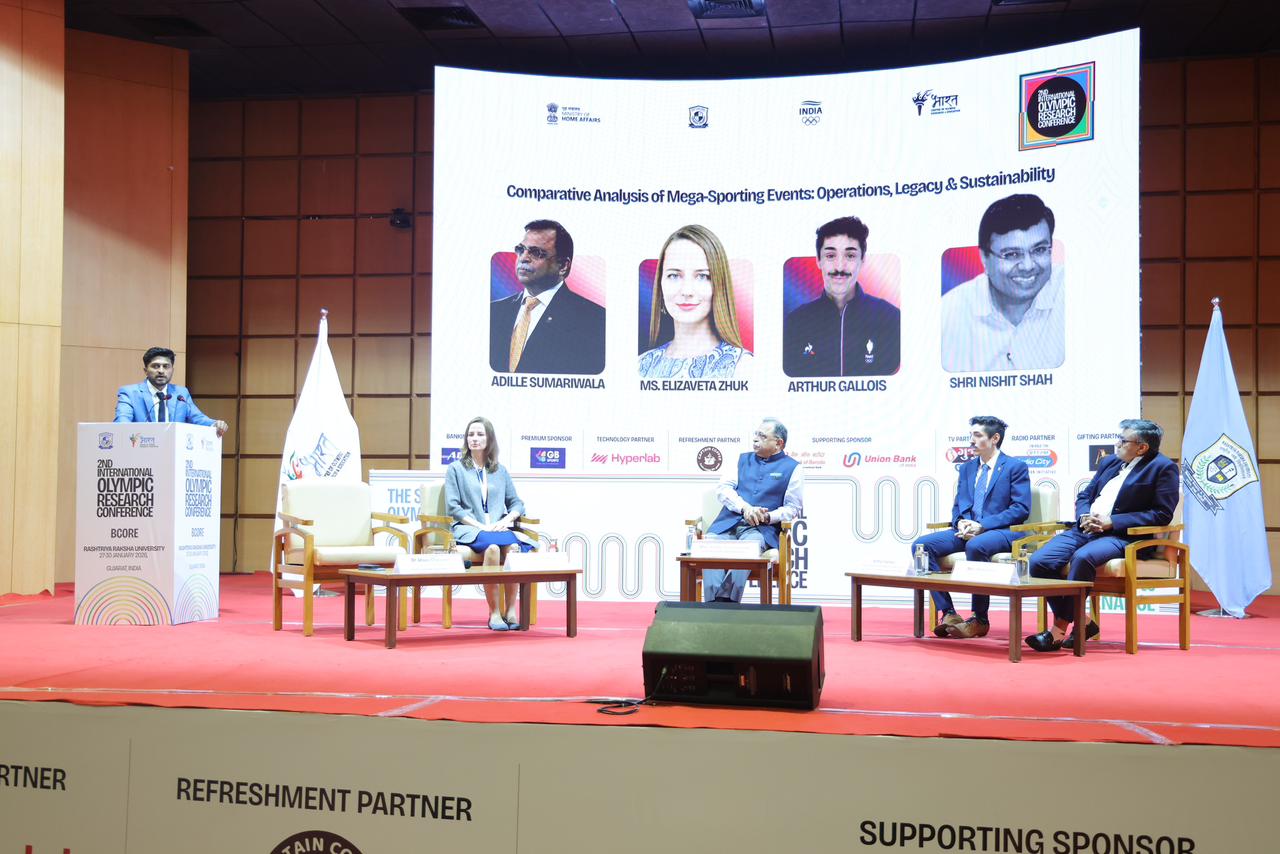
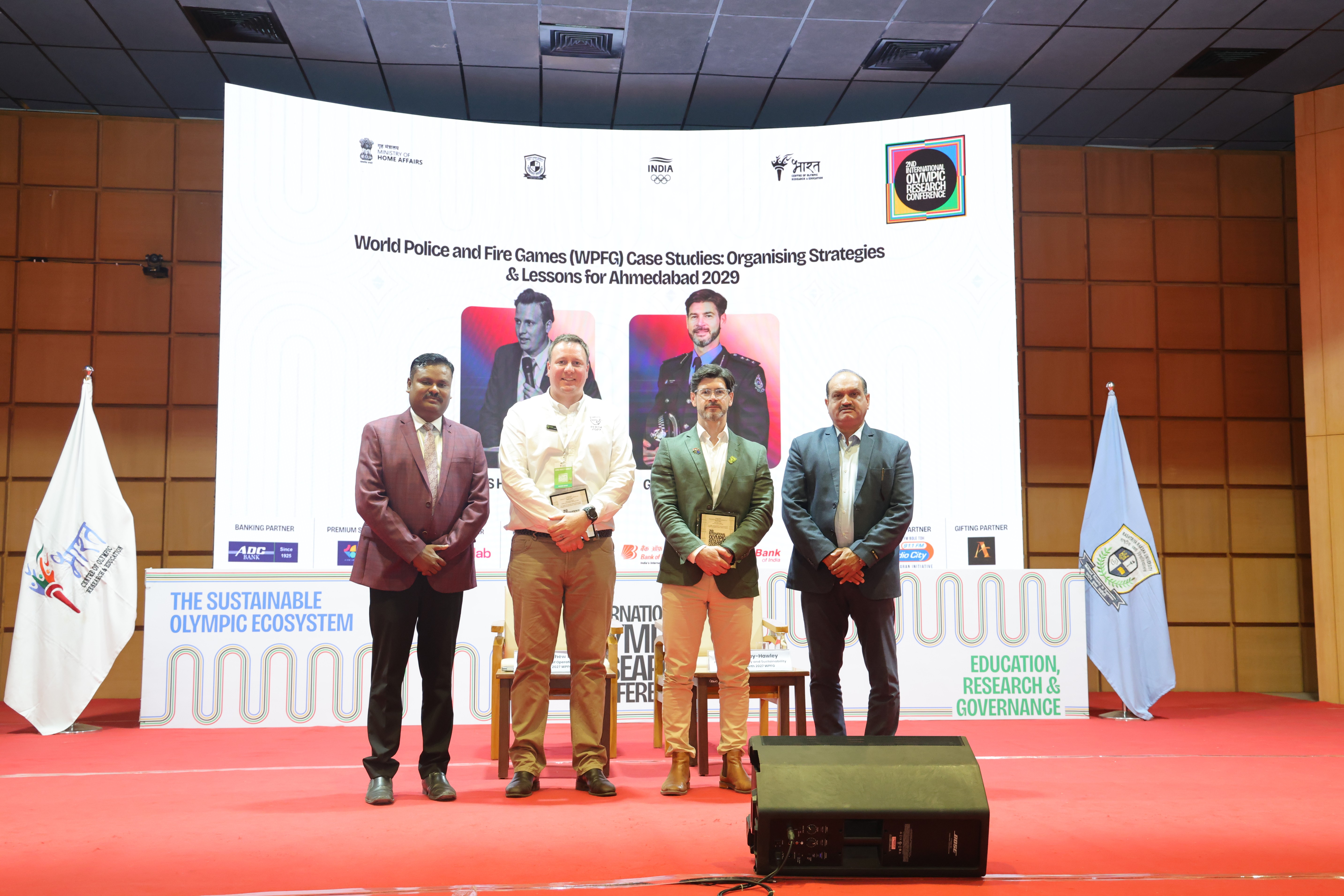
The final day featured OSRC presentations, lessons from Perth 2027 World Police and Fire Games representatives Glen Mathew Beros and Chris Hadley-Hawley for Ahmedabad's 2029 hosting, followed by a strategic panel discussion on comparative mega-event analysis featuring Adille Sumariwalla (Vice President, World Athletics), Elizaveta Zhuk (Visiting Professor, Sport Management & Marketing), Nishit Shah (Director, Gobananas), and Arthur Gallois (Researcher, University of Lausanne & French Olympic Committee). The panel emphasized that mega-events must be evaluated not only by scale, but by governance quality, sustainability, community impact, and long-term legacy.
And academically with the final keynote by Professor Wolfgang Maennig (Professor of Economic Policy, University of Hamburg and Olympic Gold Medallist, Seoul 1988), who shared global learnings and strategic insights on India's 2036 Olympic bid drawn from international case studies.
CLOSING CEREMONY: CELEBRATING ACHIEVEMENT AND COMMITMENT
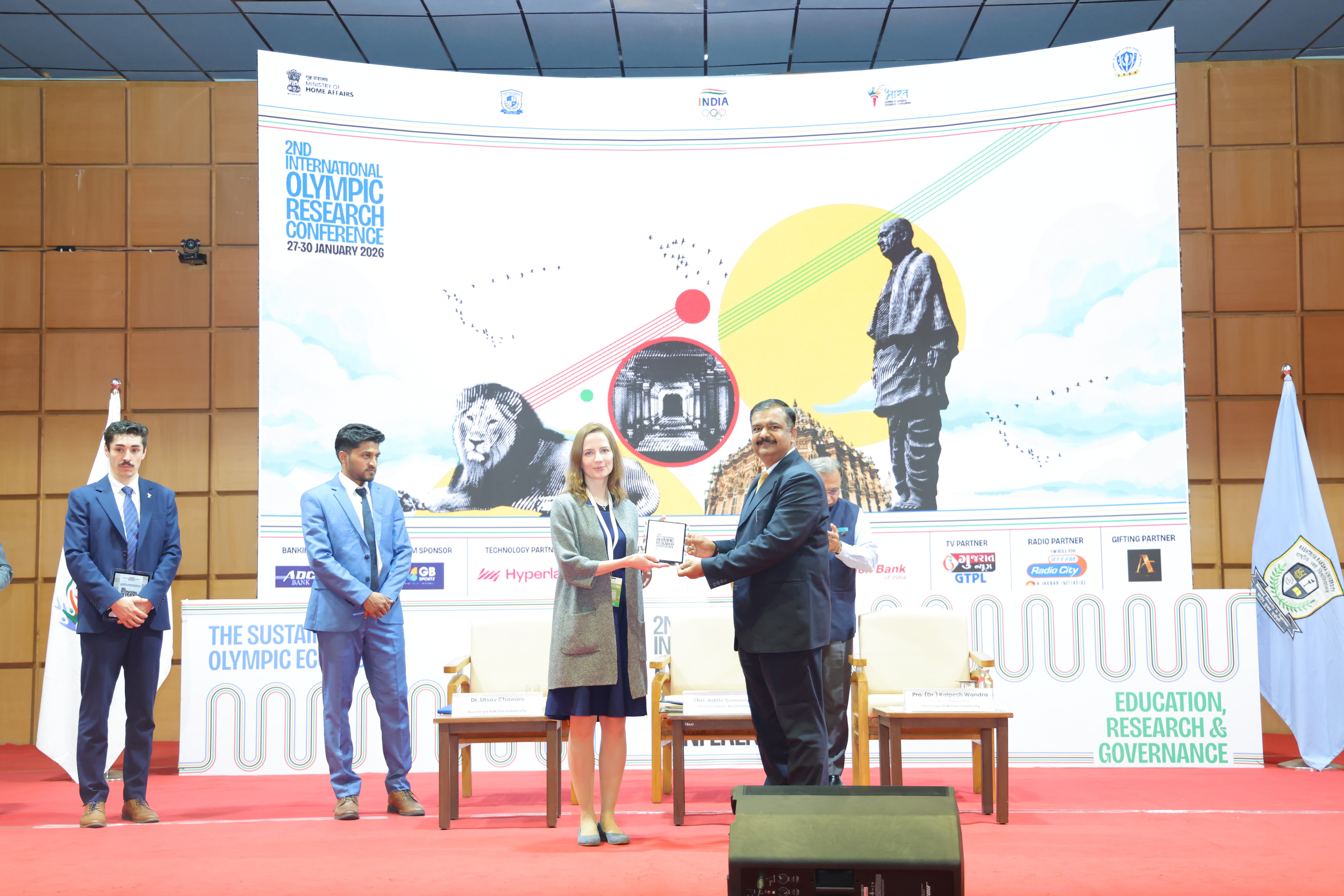
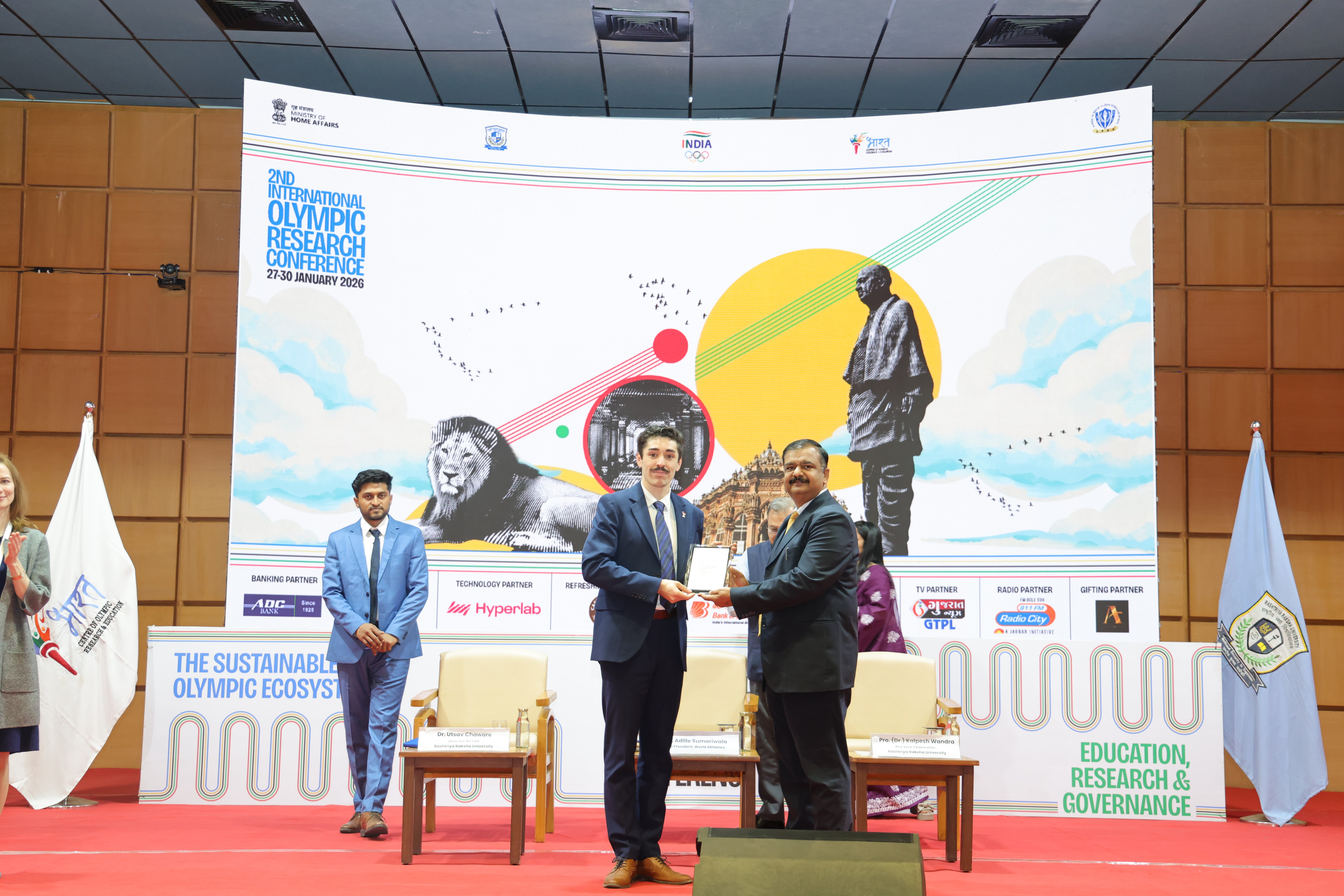
The conference concluded with a formal closing ceremony featuring certificate distribution to all participants and closing remarks by Dr. Kalpesh. H. Wandra, Pro Vice-Chancellor of RRU. In his address, he emphasized that this conference represents India's commitment to becoming not just a host of Olympic events but a hub of Olympic knowledge, research, and innovation.
SIGNIFICANCE AND STRATEGIC IMPACT
IORC 2026 validates BCORE's position as India's first and only IOC-recognized Olympic Studies Centre. Within just two years of establishment, BCORE has demonstrated the capacity to convene world-class international Olympic expertise and contribute meaningfully to global Olympic knowledge. For Rashtriya Raksha University, the conference establishes RRU as a multidisciplinary institution with leadership capabilities extending beyond traditional security studies to encompass sports research, Olympic education, and anti-doping science.
Building Capacity for India's Mega-Event Aspirations
As India prepares for the 2036 Olympic Bid, Commonwealth Games 2030, and Ahmedabad's World Police and Fire Games 2029, IORC 2026 has been strategically timed to build the intellectual infrastructure, governance frameworks, research capacity, and knowledge base required for successful hosting and lasting legacies. Every conference theme education, governance, anti-doping, research translation, mega-event management directly addresses critical capacity gaps that India must close to emerge as a credible Olympic host nation.
The discussions on India's Sports Governance Act 2025, evidence-based coaching methodologies, mega-event organizing strategies, anti-doping education frameworks, and indigenous sports technology innovations will influence policy and practice across Indian sports federations, government bodies, sports academies, and coaching programs. Conference participants including government officials, sports administrators, federation representatives, coaches, and researchers will carry these learnings back to their organizations, creating ripple effects throughout India's sporting ecosystem.
STATEMENT FROM LEADERSHIP
Speaking at the closing ceremony, Dr. Kalpesh. H. Wandra, Pro Vice-Chancellor of RRU, emphasized the transformational impact of IORC 2026:
"The 2nd International Olympic Research Conference demonstrates India's commitment to becoming not just a host of Olympic events but a hub of Olympic knowledge, research, and innovation. BCORE's recognition by the IOC is not the end of a journey but the beginning. This conference has shown that India is systematically preparing the intellectual infrastructure, governance frameworks, research capacity, and knowledge systems required for our Olympic aspirations 2036 bid, Commonwealth Games 2030, and Ahmedabad's World Police and Fire Games 2029. Through BCORE and RRU's comprehensive sports research infrastructure, we are building not just athletes but knowledge ecosystems that will define India's sporting future for decades to come."
Dr. Utsav Chaware, Director of BCORE, reflected on the conference outcomes:
"IORC 2026 has brought world-class Olympic expertise to India while showcasing Indian innovation, research, and perspectives to global audiences. The networks forged, knowledge shared, research presented, and collaborations initiated will influence India's sporting landscape for years to come. From anti-doping capacity building to governance reforms to indigenous technology development to mega-event preparation every aspect of this conference contributes to BCORE's mission of Learning, Education, Aspiration, and Dissemination. We are not merely studying Olympism; we are actively contributing to shaping its future in the Asian and Indian contexts."
(Release ID: 2221256)
Visitor Counter : 367