PIB Backgrounder
From Fields to Futures
How Good Governance Is Rewriting India’s Agricultural Story
प्रविष्टि तिथि:
23 DEC 2025 5:06PM by PIB Delhi
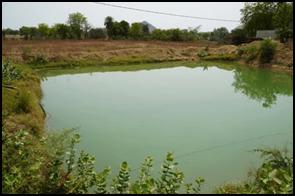
In Dabhadi village of Nashik district, Maharashtra, Mrs. Bhavana Nilkanth Nikam chose agriculture as a profession despite being a graduate. Through structured capacity-building interventions provided by the Krishi Vigyan Kendra (KVK) and support under various agricultural department programmes, she established a 2,000 sq. m polyhouse, adopting modern practices such as drip irrigation, farm mechanisation, and the integration of allied activities, including fishery and poultry farming. Her farm currently produces high-value crops such as capsicum, tomatoes, beans, and grapes, supported by rainwater harvesting ponds that ensure assured irrigation during dry periods. In recognition of her innovative approach, she received several honours, including the Innovative Woman Farmer Samman Patra award by the Government of Maharashtra in 2021. The transformation of her farm into a model integrated farming system has enhanced and diversified her household income, and it has also emerged as a demonstration and learning site for farmers from neighbouring villages, many of whom have replicated similar practices after observing its outcomes.
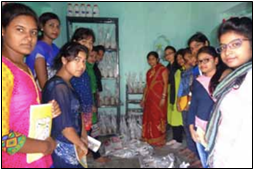
Hundreds of kilometres away in the Banka district of Bihar, Mrs. Binita Kumari transformed a modest intervention into a scalable livelihood opportunity. Belonging to a farming household, she received training in mushroom cultivation and spawn production from KVK Banka. Starting with just 25 mushroom bags, she gradually expanded her enterprise by introducing multiple mushroom varieties and adopting year-round production practices. Today, she earns Rs. 2.5-3 lakh annually from the sale of fresh mushrooms and spawn, and also supplies spawn to other farmers. She now aspires to establish a well-equipped mushroom spawn laboratory to cater to the requirements of neighbouring villages. Her initiative has enabled nearly 300 women farmers from nearby villages to adopt mushroom cultivation as a sustainable source of income, demonstrating how targeted skill training and institutional support can generate broader community-level impacts beyond individual households.
Together, these narratives reflect the broader trajectory of Indian agriculture. According to the Economic Survey 2024-25, the ‘Agriculture and Allied Activities’ sector remains the backbone of the Indian economy, contributing approximately 16 percent of the country’s GDP for FY24 (Provisional Estimates) at current prices and providing livelihoods to nearly 46.1 percent of the population. Beyond its central role in ensuring food security, the sector exerts a significant influence on allied and downstream industries, thereby supporting overall economic growth. Consequently, governance reforms have increasingly prioritized the creation of a comprehensive ecosystem encompassing income support, infrastructure development, irrigation expansion, risk mitigation mechanisms, improved market access, and sustainability-oriented interventions.
To illustrate, initiatives such as the PM-Kisan Samman Nidhi have provided direct income support to millions of farmers, enabling them to cover input costs and plan their agricultural activities more effectively. To date, Rs. 3.88 lakh crore has been released through 21 installments. Investments under the Agriculture Infrastructure Fund have strengthened post-harvest management and storage facilities, thereby reducing the need for distress sales. As of December 23, 2025, it has more than 2.87 lakh registered beneficiaries, with disbursements exceeding Rs. 57,000 crore. The Pradhan Mantri Krishi Sinchayee Yojana has expanded irrigation coverage and promoted micro-irrigation, enabling farmers to shift towards higher-value and less water-intensive crops. The government has also implemented the Rashtriya Krishi Vikas Yojana (RKVY), a centrally sponsored scheme comprising seven components, including the Per Drop More Crop (PDMC) initiative, the Sub-Mission on Agricultural Mechanization, Soil Health and Fertility, Rainfed Area Development, Crop Diversification, an Accelerated Fund for Agri Start-ups, and others. In parallel, e-NAM (e-National Agriculture Market) has improved market access and price transparency, while the Pradhan Mantri Fasal Bima Yojana has provided a safety net against crop losses. As of December 23, 2025, a total of 16.06 lakh farmers benefited by this scheme, for the Kharif and Rabi crop of 2025, receiving claims amounting to Rs. 3.60 lakh. Additionally, the Soil Health Card scheme has promoted the use of balanced fertilizers, supporting long-term soil productivity and sustainability.
The impact of these initiatives is significantly enhanced by their convergence at the farm level, supported by institutions such as NABARD and the Indian Council of Agricultural Research (ICAR). When interventions related to irrigation, income support, infrastructure development, insurance, extension services, and market access operate in an integrated manner, the agricultural system becomes more resilient and less susceptible to external shocks. The numerous success stories of individual farmers and women-led collectives engaged in value addition demonstrate that governance outcomes are most effective and visible when policy measures translate into concrete and measurable improvements in the farmers' livelihoods.
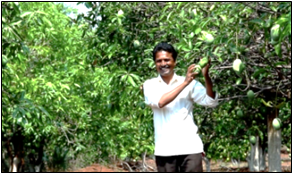
In Sangareddy district of Telangana, tribal farming households addressed chronic dependence on rainfall and persistently low incomes through the adoption of diversified horticulture under an integrated development project supported by NABARD grant assistance. The intervention promoted mango cultivation combined with intercropping of pulses and vegetables, alongside the creation of irrigation infrastructure, including ring tanks and submersible pumps, and convergence with schemes providing agricultural inputs and wage employment. As a result, over 500 acres were brought under horticulture, an additional 115 acres received assured irrigation, and beneficiary households recorded incremental annual mango incomes of Rs.50,000 - Rs.70,000 by the fourth year. Overall average household incomes increased from Rs.0.3-Rs.0.4 lakh to Rs.1.01-Rs.1.68 lakh. The initiative also contributed to a reduction in out-migration from 30% to 20% and strengthened community institutions, including self-help groups and farmers’ clubs.
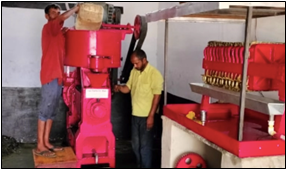
Another illustrative case emerges from the Rewari district of Haryana, where the Dharchana Farmer Producer Company Limited (FPC) transformed local oilseed cultivation into a sustainable, collective enterprise benefiting more than 500 farmers, with women constituting nearly 90% of its membership. By aggregating and procuring oilseeds through the FPO, eliminating intermediaries, and providing value-added services such as decentralized procurement and mobile collection, members realized an additional income of approximately Rs.200 per quintal by reducing mandi charges and transportation costs. Concurrently, the FPC recorded a turnover of Rs.58.8 lakh and a profit of Rs.50,000 in FY 2022–23. This experience underscores how the institutionalization of market linkages and value-chain services through producer organizations can enhance farm incomes while strengthening farmers’ participation in agribusiness activities.
As India observes Good Governance Day, these field-level experiences underscore a fundamental insight: effective governance in agriculture extends beyond achieving higher yields. It is about restoring confidence in farming as a viable and dignified livelihood, where individual effort is reinforced by supportive systems, risks are mitigated through robust institutions, and future outcomes can be planned with greater certainty. From fields to futures, India’s agricultural narrative is being reshaped by farmers whose achievements are firmly anchored in policy coherence, participatory approaches, and demonstrable outcomes.
References
Ministry of Agriculture and Farmers Welfare
Ministry of Finance
Click here to see pdf
****
PIB Research
(रिलीज़ आईडी: 2207767)
आगंतुक पटल : 2631