Ministry of Science & Technology
Celebration of Science Communication and Outreach at Vigyanika: Science Literature Festival 2025
Posted On:
10 DEC 2025 5:57PM by PIB Delhi
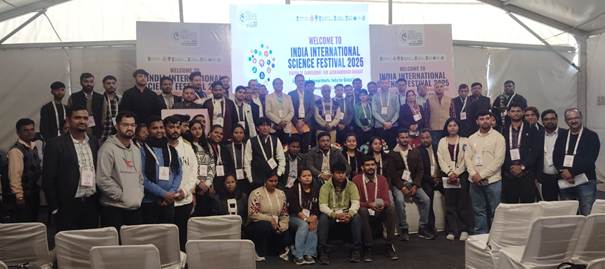
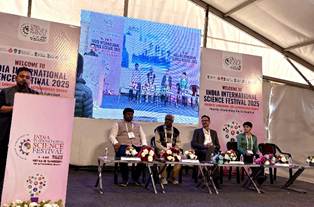
CSIR–National Institute of Science Communication and Policy Research (CSIR–NIScPR), New Delhi in association with Vijnana Bharti (VIBHA), Indian Institute of Tropical Meteorology (IITM), Pune and Panjab University, Chandigarh successfully organised Vigyanika: Science Literature Festival 2025 during 8–9 December 2025 as an integral part of the India International Science Festival (IISF), 2025. The two-day festival celebrated the convergence of science, literature, language, and creative communication, bringing together leading science communicators, scientists, editors, scholars, and science poets from across the country. The event aimed to strengthen the culture of scientific temper through multilingual and culturally rooted forms of science communication.
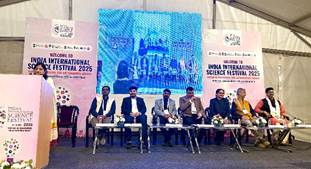
The festival opened on 8th of December with an inaugural session titled “Bhartiya Vigyan Vimarsh me Sahitya aur Sanchar Madhyamo ki Bhoomika”. The session explored the role of literature and communication platforms in shaping India’s scientific discourse. Dr. Paramananda Barman, CSIR-NIScPR offered an overview of Vigyanika. Dr. Neel Sarovar Bhavesh from VIBHA spoke about the significance of communicating science within the Indian context.
Shri Vivekananda Pai, General Secretary of VIBHA, delivered the keynote address. He discussed the importance of an Indian narrative in SciComm. He also highlighted the notable contributions of India in Science and Technology. Prof. Arun Kumar Grover, Former Vice-Chancellor of Panjab University, reflected on the history of India’s scientific institutions and science communication. Dr. Geetha Vani Rayasam, Director, CSIR–NIScPR highlighted the importance of communicating science in Indian context and mentioned about the contribution of CSIR-NIScPR in this domain. Finally, Dr. Rashmi Sharma, Head, NCSTC, DST, talked about the present day science communication approaches. Their insights underscored the continuing need for accessible and contextually grounded science communication across the country. Dr. Atul Kumar Srivastava, IITM presented the Vote of Thanks.
Later that day, the Vigyan Kavi Sammelan showcased a vibrant blend of poetry and science, highlighting how creative expression can illuminate scientific ideas. Esteemed science poets included Prof. Manoj Kumar Patairiya, former Director of CSIR–NISCAIR; Prof. Rajesh Kumar of IIT Indore; Sh. Mohan Sagoria, Associate Editor of Electroniki Aapke Liye; along with celebrated science poets Ms. Radha Gupta, Prof. Neera Raghav, Mr. Yashpal Singh ‘Yash’, TSRS Sandeep, and Dr. Anurag Gaur. Their poetries illustrated the power of poetry as a tool for public engagement with science.
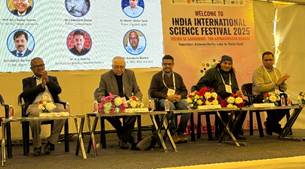
The second day of Vigyanika featured a scientific session titled Vigyan Se Samruddhi – For Atmanirbhar Bharat, which focused on traditional knowledge communication and its role in advancing national self-reliance. The session brought together key figures such as Dr. Arvind Ranade, Director, NIF who highlighted the need for protecting traditional knowledge through intellectual property (IP) frameworks, and ensuring proper recognition to knowledge holders. Dr. Viswajanani J. Sattigeri, Head, CSIR-TKDL emphasized the importance of documenting, disseminating and implementing policy for traditional knowledge. Dr. N. Srikanth, DDG, CCRAS highlighted the importance of value-addition and accurate communication of traditional knowledge and its scientific basis. Lastly, Dr. Kanupriya Vashishth, Senior Program Officer, DBT-BIRAC talked about life sciences and biotech innovations in India. The discussion emphasized India’s rich heritage of traditional knowledge, the importance of integrating it into contemporary scientific and innovation ecosystems, and effective communication.
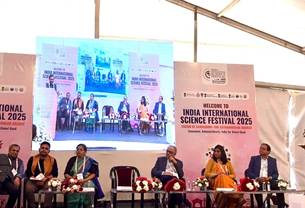
The Apni Bhasha Apna Vigyan, a panel discussion highlighted the critical role of Indian languages in science communication and outreach. Speakers included Prof. Arun Kumar Grover; Shri Debobrat Ghose, Editor, Science India; Dr. Manish Mohan Gore, Editor, Vigyan Pragati; Dr. H. S. Sudhira, Director, Research Matters, Gubbi Labs; and Dr. Nanaocha Sharma, Director, BRIC-IBSD, Manipur. The panel highlighted that science communicated in one’s own language fosters inclusivity, understanding, and deeper public engagement.
Vigyanika concluded with an interactive session titled Engaging and Creative Ways of Communicating Science showcased innovative outreach strategies from experts across diverse fields. Sh. Kollegala Sharma, former Chief Scientist at CSIR-CFTRI; Mr. G. Harikrishnan, Director, Capacity Building and Public Outreach at ISRO; Dr. Saurabh Sharma, JNU; and Ms. Pooja Rathod, Wildlife Cinematographer and Filmmaker, shared approaches that spanned storytelling, audio-visual media, field engagement, and public-facing scientific narratives. Their insights highlighted the evolving landscape of science communication in India.
As part of IISF 2025, Vigyanika reinforced its commitment to bridging the gap between science and society. Through literature, art, Indian languages, and creative media, the event demonstrated the transformative potential of culturally grounded science communication in fostering a scientifically informed and engaged society.
****
NKR/AK
(Release ID: 2201666)
Visitor Counter : 786