Ministry of Information & Broadcasting
PIB Bhubaneswar organizes Vartalap on 'Bio-E3 Policy' in collaboration with ILS
The successful implementation of ‘BioE3 policy’ will pave the path for Viksit Bharat: Dr. Debasis Dash, Director, BRIC-ILS
Media plays a vital role in the development of nation: Akhil Kumar Mishra, ADG, PIB
Posted On:
30 SEP 2024 3:54PM by PIB Bhubaneswar
Press Information Bureau (PIB) organized a media workshop- 'Vartalap' on 'Bio-E3 Policy' in collaboration with Institute of Life Sciences, Bhubaneswar today.
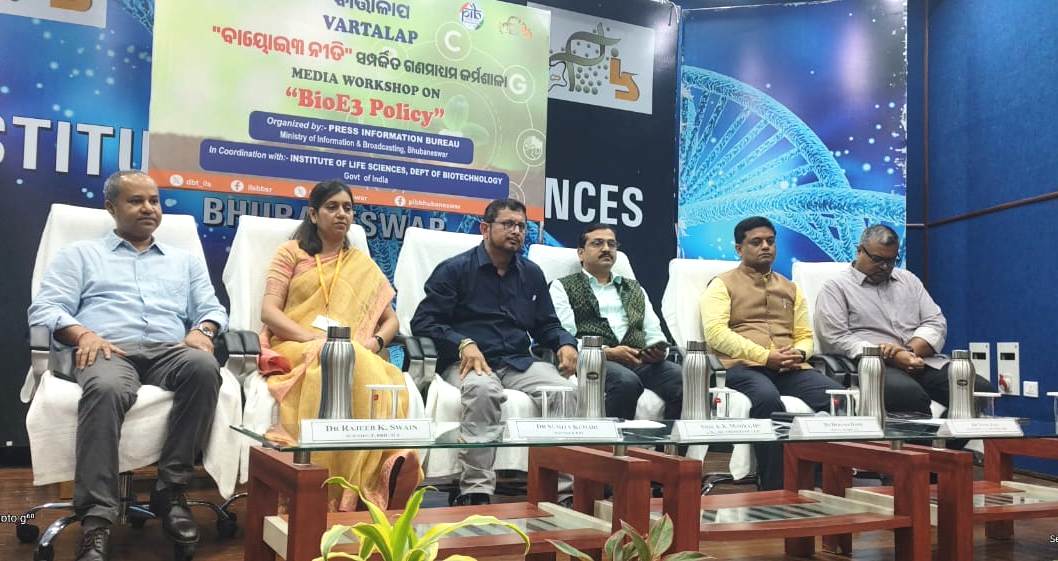
The Union Cabinet, chaired by Prime Minister Shri Narendra Modi, has approved the proposal ‘BioE3 (Biotechnology for Economy, Environment and Employment) - Policy for Fostering High-Performance Biomanufacturing’ of the Department of Biotechnology on August 24, 2024.
The salient features of BioE3 policy include innovation-driven support to R&D and entrepreneurship across thematic sectors. This will accelerate technology development and commercialization by establishing Biomanufacturing & Bio-AI hubs and Biofoundry. Along with prioritizing regenerative Bio-Economy models of green growth, this policy will facilitate expansion of India’s skilled workforce and provide a surge in job creation.
High Performance Biomanufacturing is the ability to produce products ranging from medicine to materials, address farming and food challenges, and promote manufacturing of bio-based products, through integration of advanced biotechnological processes.
To address the national priorities, the BioE3 Policy would broadly focus on the following strategic/thematic sectors: 1. high-value bio-based chemicals, biopolymers & enzymes; 2. smart proteins & functional foods; 3. precision biotherapeutics; 4. climate resilient agriculture; 5. carbon capture & its utilization; and 6. marine and space research.
The event started with a welcome address by Dr Debasis Dash, Director, ILS, who spoke on the importance of marine research and the blue economy to achieve the objective of Vikshit Bharat by 2047. BRIC-ILS has started a deep ocean mission project with generous funding support from the Ministry of Earth Sciences (MoES). He said that the successful implementation of the BioE3 policy is dependent on the collaboration of various ministries, and this is an example of how MoES and the Ministry of Science and Technology (MoST) are working together towards achieving the vision outlined in the Bio-E3 policy.
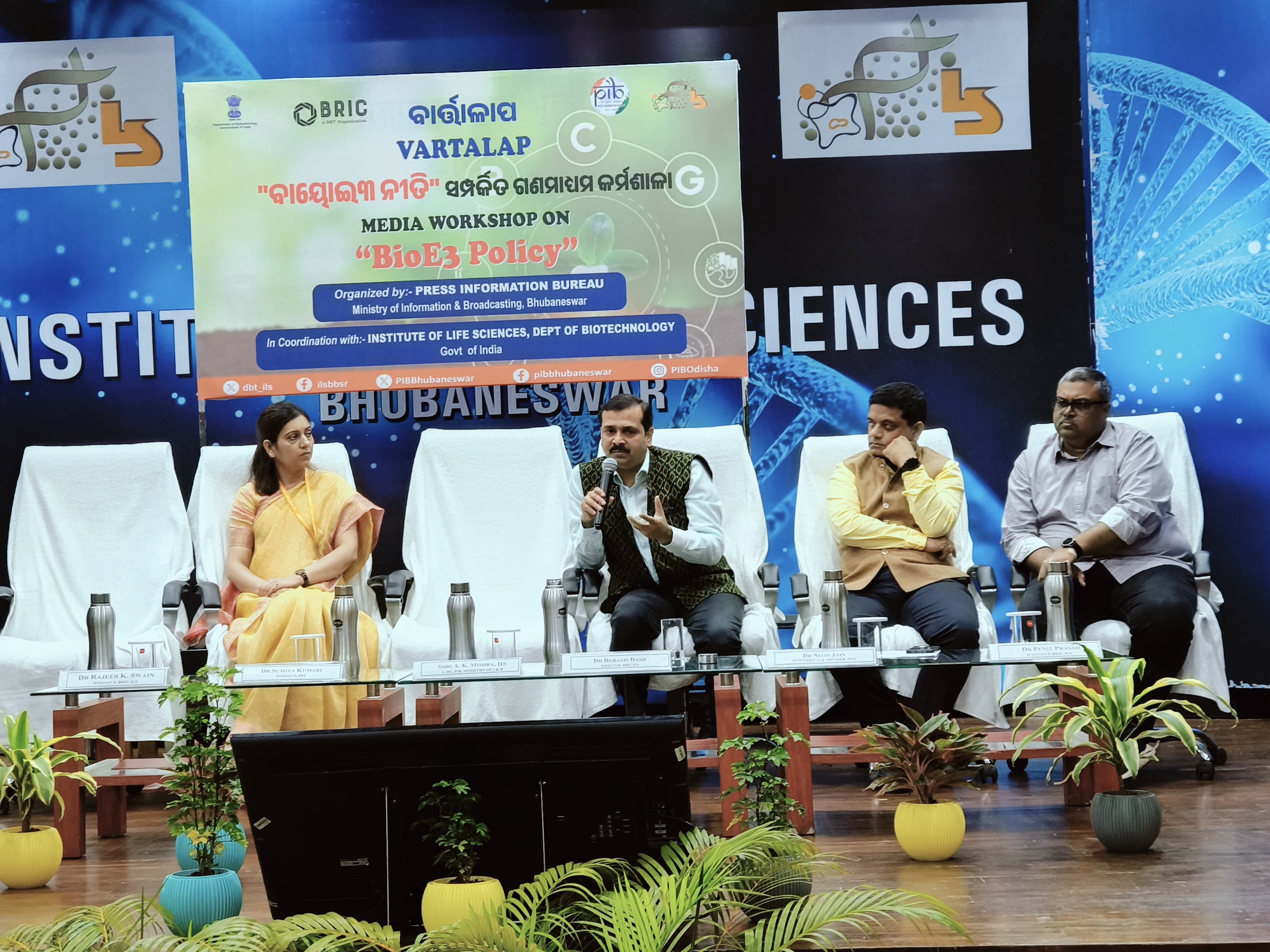
He also spoke on the proposal to establish a biomanufacturing hub in collaboration with the Department of Science and Technology, Govt. of Odisha. These new efforts and existing R&D activities of ILS in the fields of infectious and chronic diseases, regenerative medicine, crop improvement, crop protection and microbial biotechnology will contribute to making a Viksit Bharat .
Shri Akhil Kumar Mishra, ADG, PIB in his remarks, said that media plays a vital role in the development of nation and Vartalap provides an interactive platform for exchange of knowledge and insights on government plans, policies and programs.
Dr. Nitin Jain, Advisor and Scientist-G, DBT, outlined how BioE3 policy will help in making the country self-reliant in the bulk drug sector where we have import dependence for several fermentation-based Active Pharmaceutical Ingredients, Intermediates, and Key Starting Materials. API’s are generally manufactured through various processes, including chemical synthesis, fermentation process, recombinant DNA technology, isolation, and recovery from natural sources. The past few decades have evidenced the necessity to produce active pharmaceutical ingredients on a large scale. The demand for the manufacturers to make efforts to strengthen their manufacturing capacity in the developed and regulated markets by improving production yields, modifying manufacturing processes, and increasing sales in the international markets has exponentially increased. Dr. Jain mentioned that under the Bio-based Chemicals and Enzymes thematic sector of Biomanufacturing, a major component for the development of efficient API production technologies would be fostered. The research will target the development of high-yielding production platforms, process optimization, biocatalysis, etc, for generating the enhanced production of specific metabolites, which may be a KSM or API. These interventions will develop cost-effective and environmentally friendly deployable technologies for the Indian API industry.
Dr Sumita Kumari, Scientist-D, DBT, spoke on the BioE3 policy for climate-resilient agriculture. She outlined DBT programs in these areas and inter-ministerial programs that can be initiated to make an impact in the agriculture sector to mitigate the adverse effects of climate change. The pace with which the climate is changing can reduce agricultural income in the coming decade. Adopting and implementing climate-resilient agriculture rigorously has become the need of the hour. Climate-resilient agriculture is a set of agricultural practices and technologies that simultaneously boost productivity, enhance resilience and reduce Green House Gas emissions. With the upcoming BioE3 policy, there will be improved access and utilisation of technology, transparent trade regimes, and increased use of resource conservation technologies, which will increase crop and livestock adaptation to climatic stress, etc. These practices will ensure food security for future generations in the face of climate change.
Dr Punit Prasad, Scientist-F, BRIC-ILS, outlined the significance of Metagenomics in understanding complex biodiversity in a given environment to facilitate various societal needs in health care, agriculture, bio-energy, and catering sustainable ecosystems. He further discussed how metagenomic tools can facilitate Bio-Pharma, Bio-Agri, Bio-AI, etc as a key component of BioE3 policy for circular Bio-Economy.
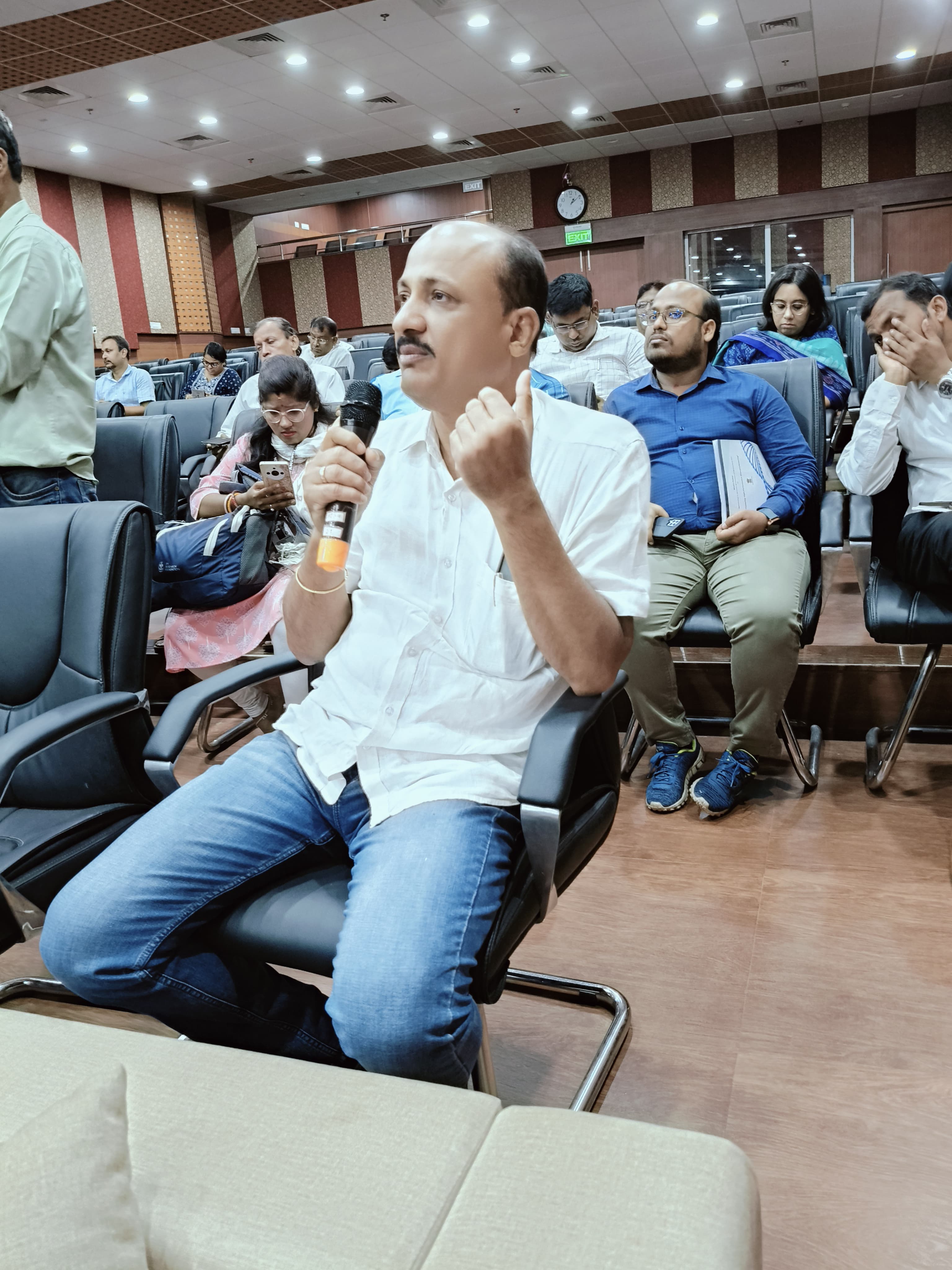
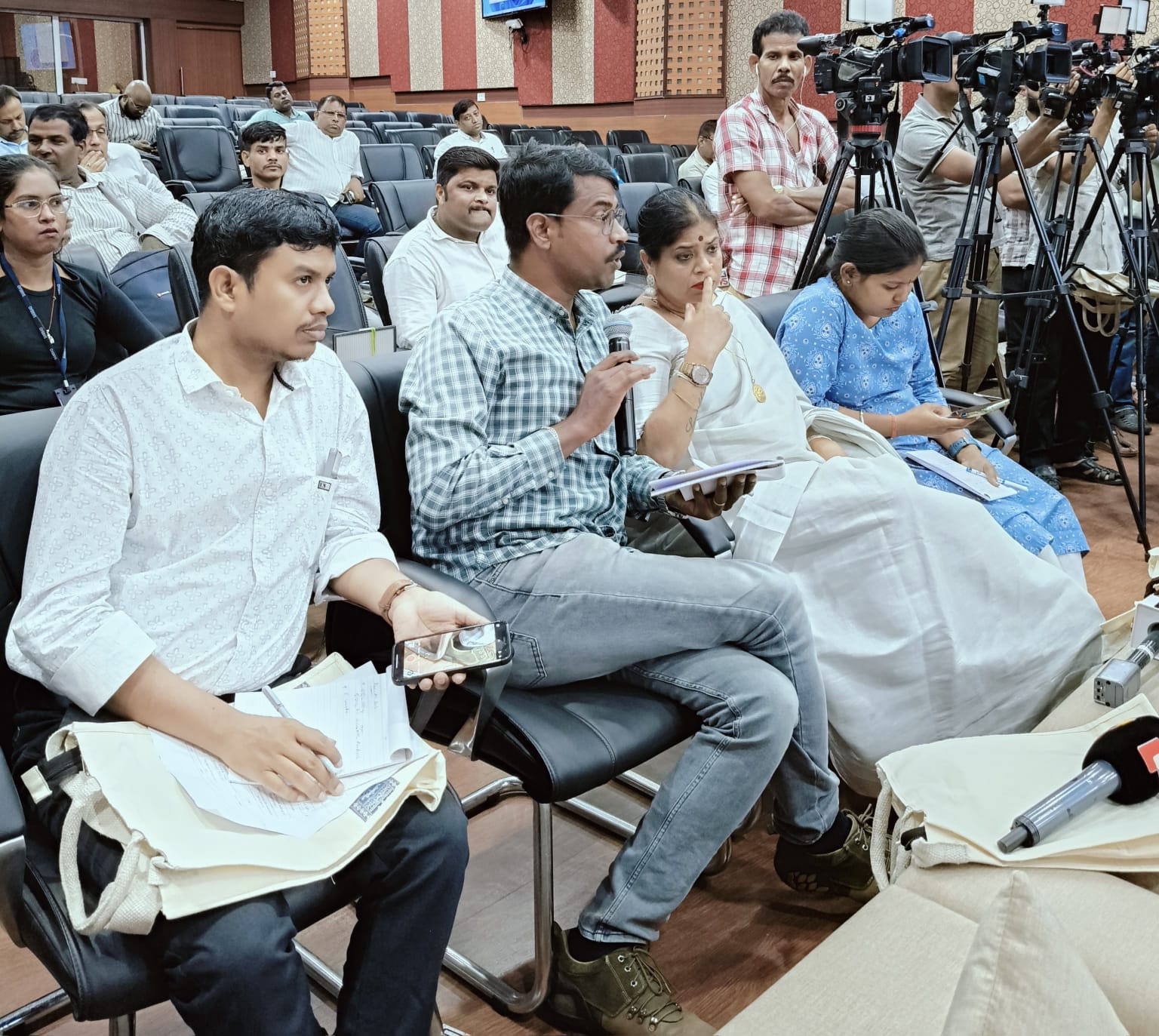
Around 40 media persons participated in the workshop and interacted with the Scientists. The workshop was moderated by Dr. Rajeeb K. Swain, Scientist- F, BRIC-ILS. Scientists, officials and Research fellows of ILS and PIB were also present on the occasion.
About BRIC-ILS:
Institute of Life Sciences, Bhubaneswar is one of the premier research institutes in the country and is engaged in fundamental and translational research in biological and interdisciplinary sciences. The major contribution of the institute has been in the fields of virology, malaria parasite biology, fungal diseases, tuberculosis, cancer biology, genetic diseases, biomaterial, nanotechnology and agriculture technology including environmentally resilient crop sciences. The contribution of DBT-ILS towards building New India is driven by 28 faculties, over 150 junior scientists / PhD scholars and well supported by a team of dedicated and professional administrative and technical staff.
*******
Swadhin/Manoj/PIB Bhubaneswar
(Release ID: 2060281)
Visitor Counter : 780
Read this release in:
Odia