Ministry of Environment, Forest and Climate Change
ZSI Scientists Detect Bloom of Potentially Harmful Marine Algae in Digha-Bichitrapur Coastal Waters, Disrupting Fishing Operations
Posted On:
11 JAN 2023 1:19PM by PIB Kolkata
Kolkata, January 11, 2023
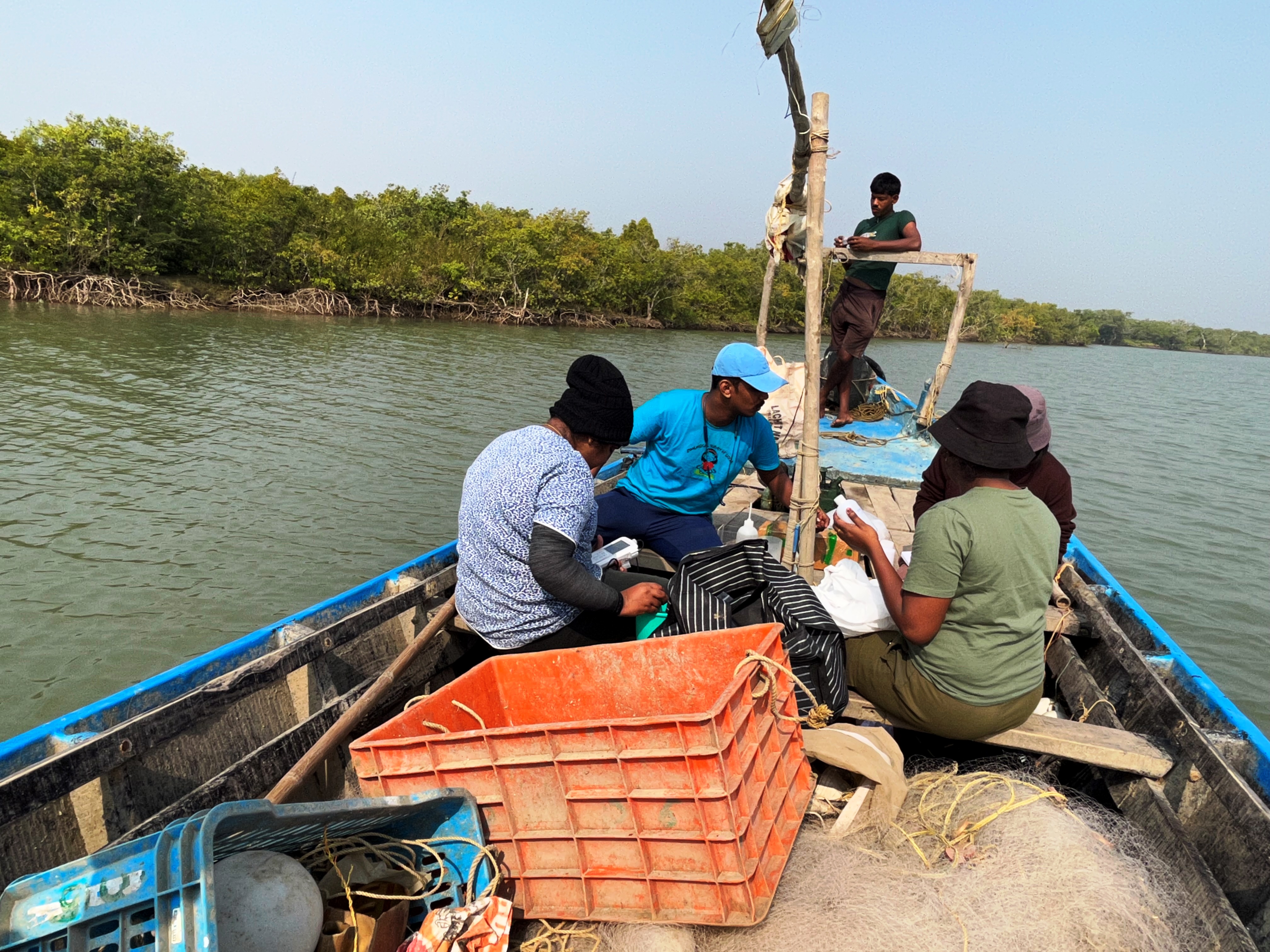
A team of researchers from the Zoological Survey of India (ZSI) recently investigated the phenomenon locally known as “tel fut” in the coastal waters of Digha (West Bengal) and Bichitrapur (Odisha). Some mysterious gelatinous globe-shaped substances were detected floating in the upper layers of the coastal waters of Digha and estuarine region of river Subarnarekha in large numbers. These aggregations were found to be blooms of colonial Phaeocystis, a kind of algal plankton.
Phaeocystis occurs worldwide, both in temperate and cold polar waters with occasional appearances in tropical seas, although their blooming is mostly restricted in high latitude seas. The bloom persisted for many days, according to the fisherfolk and boat operators in Digha and Bichitrapur, and it was upon their request a team of researchers from ZSI headquarters, lead by Senior Scientist, Dr. Jasmine Purushothaman, reached the affected areas to conduct their study.
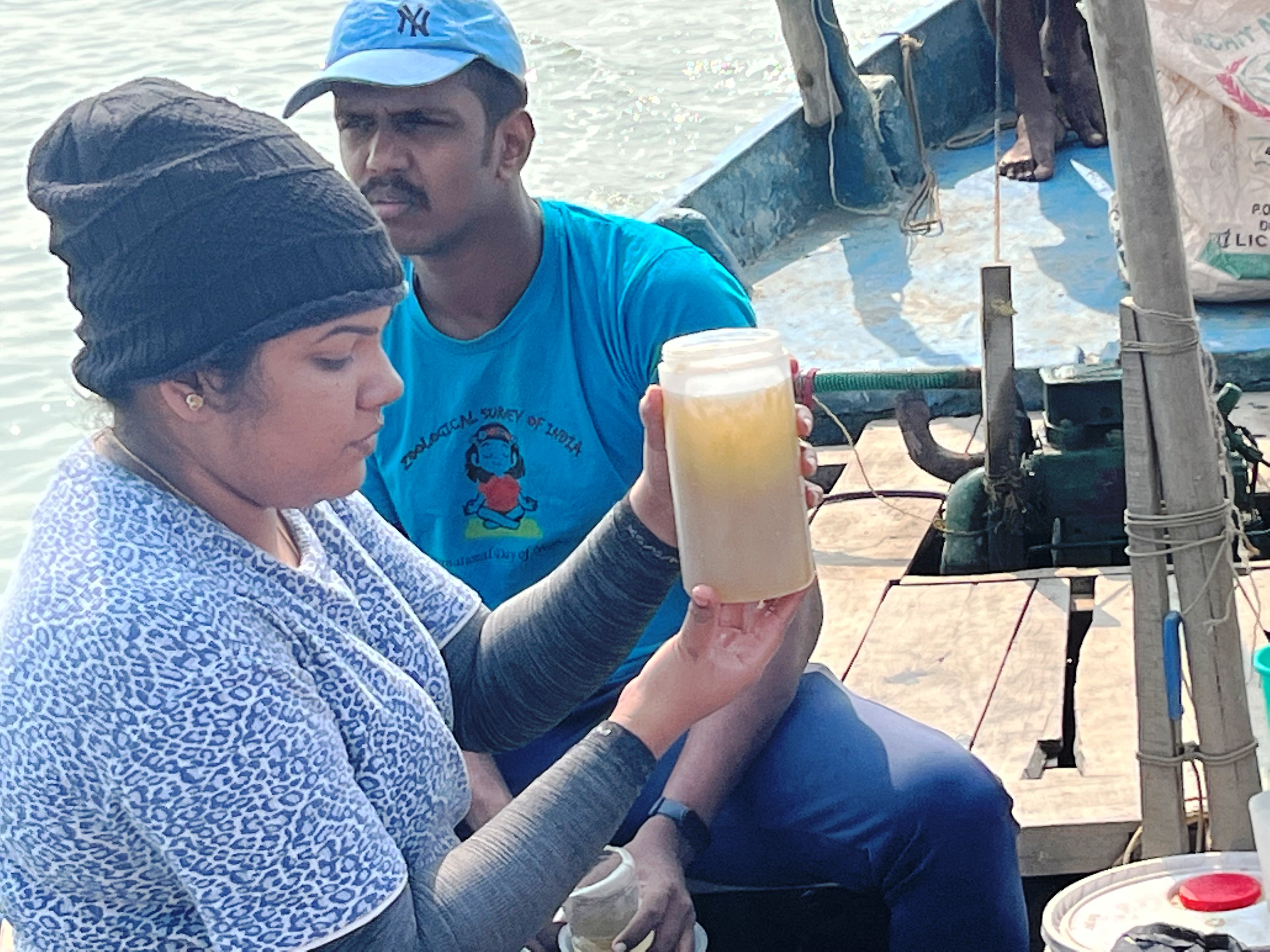
Interestingly, the boat operators and fisherfolk also mentioned about the“glowing light in the waters” observed at night in these areas of bloom. This is the phenomenon of bioluminescence, exhibited by some plankton in the water, including Phaeocystis. Usually, Phaeocystis spp. lead a polymorphic life, alternating between free-living solitary vegetative cells (~3-9 µm) and spherical (mostly) giant gelatinous colonies (up to 5 mm diameter) comprising >10000 cells. The balloon-like colonies produce significant amounts of DOM, rich in glucan and mucopolysaccharides in which cells are randomly distributed. This is not the first occurrence of such a bloom. The first report about Phaeocystis bloom in Indian waters was earlier reported in open waters of Arabian Sea. \
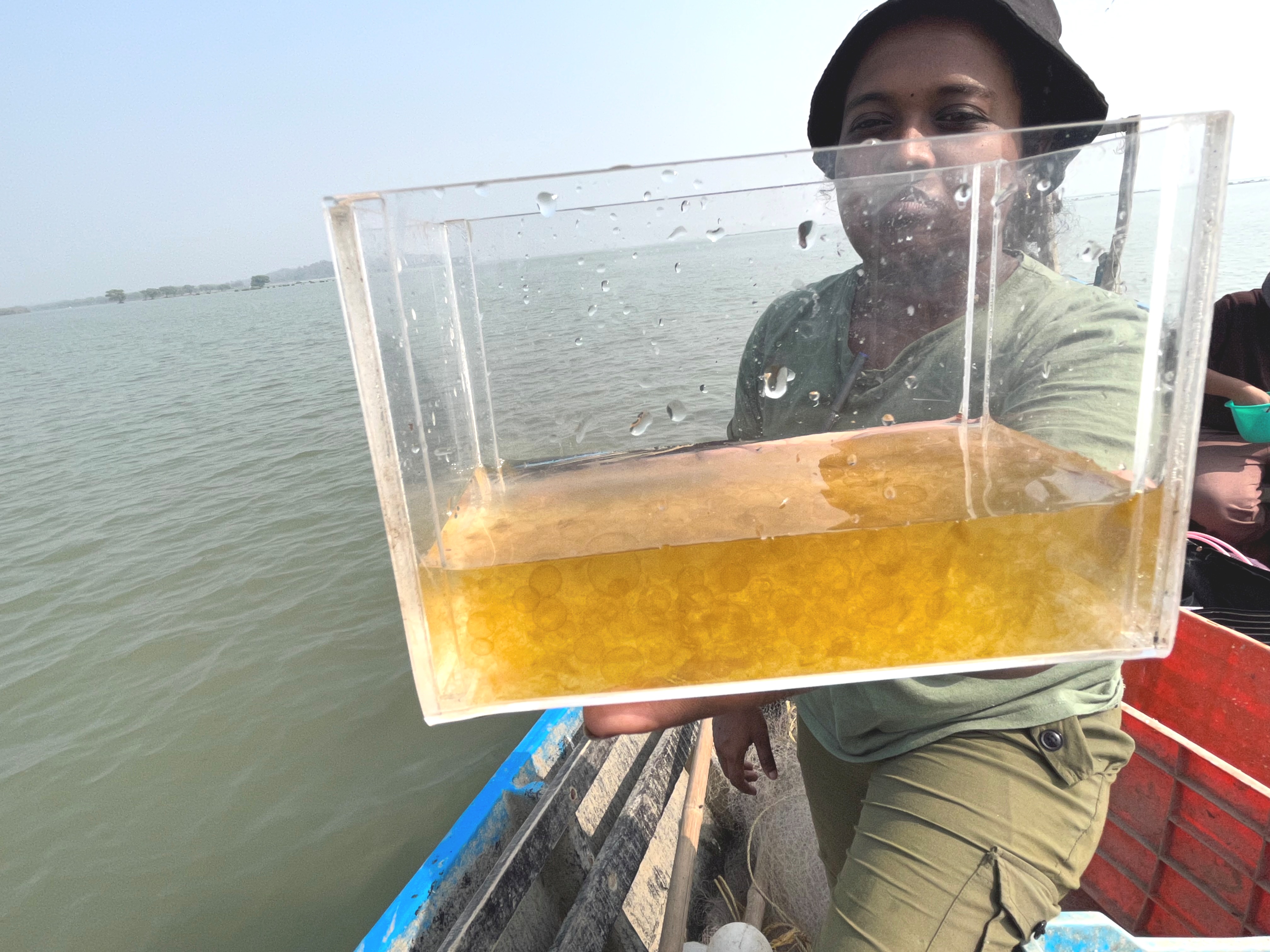
During the waning phase of the bloom, Phaeocystis colonies undergo disruption and release mucus, which ultimately enhances the mucilaginous condition of bloom affected waters and that would eventually cause foam formation. Although foam formation was not witnessed by the research team or the local people, one observation was a prevalent–clogged fishing net. According to the fisherfolk in Digha coast, the mucilaginous components of the Phaeocystis colonies disrupted the fishing operations in the affected areas, damaging the fishing nets and they have stopped the fishing operations for two weeks. Such things can have far reaching consequences.
Frequency in the occurrence of Harmful Algal Blooms (commonly referred to as HABs) of high latitude species has been increasing in the tropical/subtropical coastal waters as a result of potential impacts of human induced climate change. The frequent blooming of such alien species alters the prevailing food-web structures and ecosystem functions of these coastal areas. According to the Director, ZSI, Dr. Dhriti Banerjee, these blooms not only have the capacity to potentially disrupt the pelagic ecosystem in the coastal waters, but they have also led to severely reduced fish catch, especially in the shores in operations and a huge economic loss of fisherman folks through damaging the fishing nets.
More about this phenomenon is being currently studied by Dr Jasmine and the ZSI research team.
******
SSS
(Release ID: 1890245)
Visitor Counter : 664