Ministry of Jal Shakti
Department of Drinking Water and Sanitation, Ministry of Jal Shakti Organises the Second Regional Conference at Agra
Union Jal Shakti Minister Shri C.R. Paatil said that access to tap connections must be complemented by assured delivery of safe drinking water to rural households
Seven Northern States and Union Territories deliberate on accelerating implementation and ensuring long-term functionality of rural drinking water supply schemes
प्रविष्टि तिथि:
26 NOV 2026 7:17PM by PIB Delhi
The Department of Drinking Water and Sanitation (DDWS), Ministry of Jal Shakti, Government of India, organised the Second Regional Conference on Jal Jeevan Mission (JJM) 2.0 at Agra, Uttar Pradesh, bringing together representatives of seven northern States and Union Territories to deliberate on key strategies for accelerating implementation, strengthening sustainability and ensuring long-term functionality of rural drinking water supply systems. The conference forms part of a series of regional consultations being organised following the Departmental Summit on Water and provides a platform for States and Union Territories to review progress, share best practices and discuss solutions to common challenges.
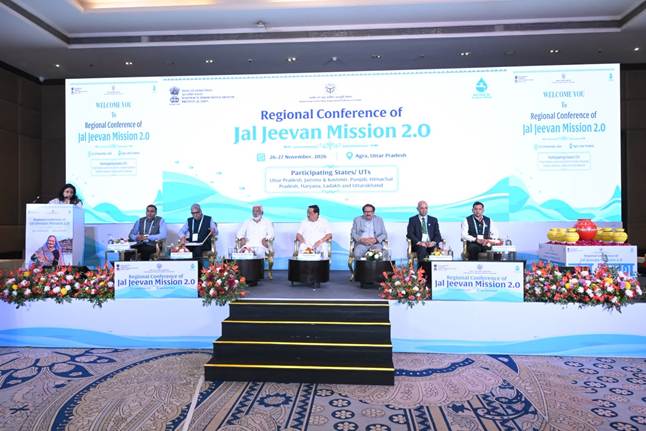
Senior officials from Uttar Pradesh, Haryana, Punjab, Himachal Pradesh, Uttarakhand, Jammu & Kashmir and Ladakh participated in the conference along with representatives from the National Jal Jeevan Mission, State Water and Sanitation Missions, line Ministries viz. Ministry of Skill Development and Entrepreneurship (MoSDE), and Ministry of Rural Development (MoRD). Deliberations focused on sustainability, institutional reforms, convergence, operation and maintenance, groundwater management and community-led water governance.
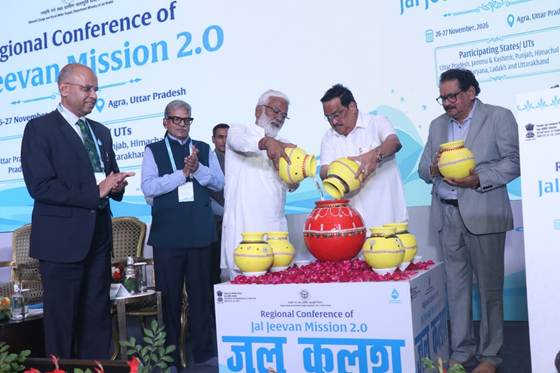
During the ministerial session, a Jal Kalash ceremony was performed by the dignitaries, symbolising respect for water and reaffirming the collective resolve towards water conservation, source sustainability and responsible water management.
Chairing the Ministerial Session at the Conference, Union Minister of Jal Shakti Shri C.R. Paatil highlighted the transformative impact of Jal Jeevan Mission in improving the quality of life in rural India and reducing the drudgery faced by women and girls. Referring to the vision of Hon'ble Prime Minister Shri Narendra Modi for ensuring water security, he emphasised that while significant progress has been made in providing tap water connections across rural households, the next phase of Jal Jeevan Mission must focus on ensuring regular, adequate and safe drinking water supply through sustainable and community-owned service delivery systems.
Further, the Union Minister added that sustainability should remain at the core of all efforts under JJM 2.0. He also underlined the need for timely implementation, greater accountability and collaborative action by States and Union Territories to achieve the Mission's objectives.
Referring to Jal Sanchay Jan Bhagidari se Jan Aandolan, Shri Paatil highlighted the importance of transforming water conservation into a people's movement through active community participation. He emphasised the need to promote groundwater recharge, rainwater harvesting and source protection measures through convergence with ongoing development programmes. Stressing that water conservation is a shared responsibility, he called upon States to strengthen community ownership through initiatives such as Jal Arpan and Jal Utsav and to actively exchange best practices for ensuring sustainable drinking water services for every rural household.
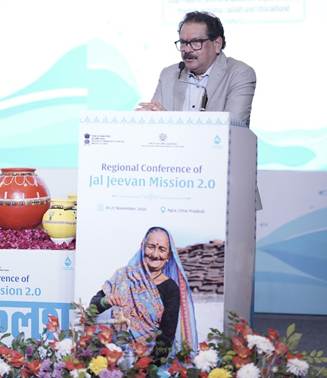
Shri S. P Singh Baghel, Union Minister (Fisheries, Animal Husbandry and Dairyings; Panchayati Raj) and Member of Parliament from Agra, highlighted the importance of sustained coordination among the Central and State Governments, district administrations and implementing agencies in addressing drinking water challenges and ensuring water security. Referring to the regional context, he noted the significance of effective water resource management and inter-regional coordination in ensuring adequate water availability. He expressed confidence that the deliberations during the conference would contribute to identifying practical solutions for strengthening reliable and sustainable rural drinking water services.
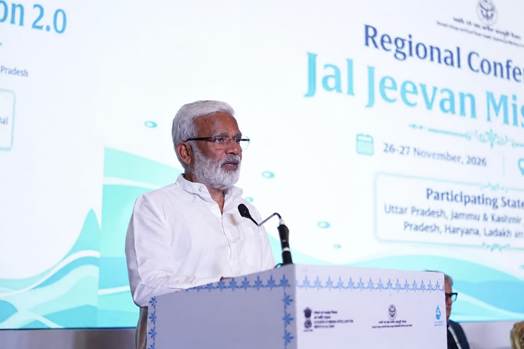
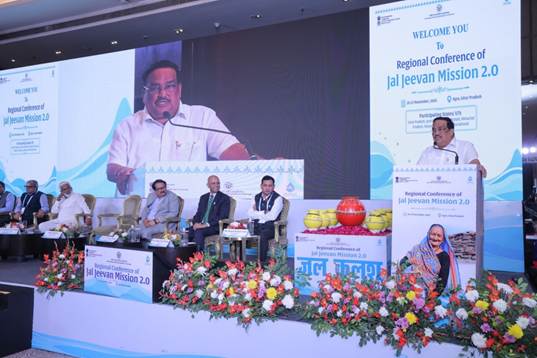
Welcoming the delegates, Shri Swatantra Dev Singh, Cabinet Minister for Jal Shakti and Flood Control, Uttar Pradesh, highlighted the remarkable progress achieved under Jal Jeevan Mission in the State. He noted that tap water coverage in rural Uttar Pradesh has expanded significantly since 2019, with drinking water supply schemes being implemented across the State through a transparent and accelerated approach despite operational challenges. He said that sustained efforts have led to substantial improvement in rural drinking water access, with work on the remaining schemes progressing rapidly towards universal coverage.
Referring to the water-stressed regions of Bundelkhand and Vindhya, Shri Singh highlighted the transformative impact of Jal Jeevan Mission in addressing long-standing drinking water challenges. He noted that districts which once faced acute water scarcity and seasonal distress have witnessed significant improvements in access to safe drinking water through household tap connections. Emphasising the importance of knowledge sharing and collaborative learning, he observed that the Regional Conference provides an important platform for States and Union Territories to exchange experiences, share best practices and strengthen implementation strategies for ensuring sustainable rural drinking water service delivery.
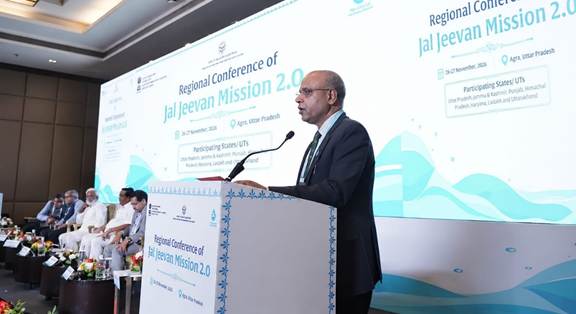
Secretary, DDWS, Shri Ashok K.K Meena, highlighted that sustainability of rural drinking water services requires a whole-of-government approach and cannot be achieved through the drinking water sector alone. He emphasised the importance of convergence across sectors, including skilling, source sustainability, financing, Panchayati Raj institutions and community ownership, for ensuring long-term functionality of rural water supply systems.
Emphasising the need to move beyond infrastructure creation, Shri Meena called upon States and Union Territories to focus on source sustainability, sustainable operation and maintenance, financial planning, skilled local manpower and strengthened Gram Panchayat-led governance. He highlighted the role of tools such as the Decision Support System (DSS) for evidence-based planning, end-to-end digital mapping of water supply assets under Sujalam Bharat Digital Public Infrastructure (DPI) and empowerment of Gram Panchayats, Village Water and Sanitation Committees (VWSCs) for improving service delivery, accountability and long-term sustainability.
During another session of the conference Shri Kamal Kishore Soan, AS&MD, NJJM, outlined the need for transitioning from infrastructure development to sustainable rural drinking water service delivery under Jal Jeevan Mission 2. It was highlighted that the focus would be on ensuring regular, adequate and quality drinking water supply through effective operation and maintenance of existing infrastructure for the next 25–30 years. The importance of clearly defined roles and responsibilities of district administrations, District Magistrates and Panchayati Raj Institutions at all levels was underscored for ensuring long-term sustainability of rural water supply systems.
Shri Soan also shared about the importance of inter-departmental convergence among Public Health Engineering, Rural Development, Panchayati Raj, Skill Development and Tribal Affairs Departments for strengthening source sustainability and O&M. It was informed that five regional conferences were being organised to deliberate on key reforms and implementation strategies, with their outcomes to be reviewed at a national-level conference. The consolidated progress would subsequently be presented to the Hon’ble Prime Minister, with collective efforts of the Centre, States and local institutions being emphasised for achieving the objectives of Jal Jeevan Mission by December 2028.
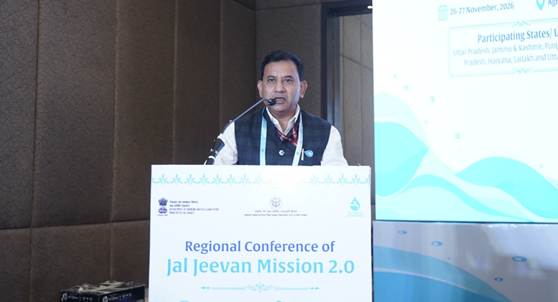
Shri D. Senthil Pandiyan, Joint Secretary, DDWS, during the presentation by representatives of MoRD, emphasised the importance of source sustainability through geotagging of drinking water sources and implementation of the Decision Support System (DSS). Highlighting the integration of data from six departments and agencies to identify at-risk water sources, he urged States to undertake physical verification, pre- and post-monsoon water quality testing, and prepare village-level source augmentation plans through convergence with Rural Development and Panchayati Raj institutions and integration with GPDP. States were requested to expedite geotagging, water quality testing and DSS implementation, and update progress by 31 December 2026.
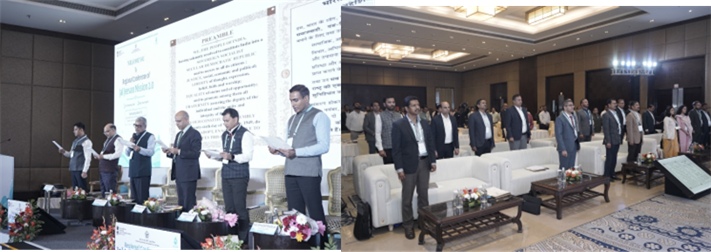
As the conference coincided with Constitution Day, the dignitaries and participants also jointly read the Preamble to the Constitution of India, reiterating their commitment to the constitutional values of justice, liberty, equality and fraternity.
The key reform pillars under Jal Jeevan Mission 2.0 were presented by Shri Y.K. Singh, Director, NJJM with emphasis on strengthening Gram Panchayats and district-level institutions for sustainable rural water service delivery. The importance of performance benchmarking, healthy competition, third-party inspections, water quality monitoring, source sustainability and digital governance through the Sujalam Bharat portal was highlighted. States were urged to expedite the creation of Sujalam Bharat IDs, GIS-based asset tagging and pipeline mapping, and strengthen community participation through Har Ghar Jal certification, Jal Arpan, Jal Seva Arpan and Jal Utsav initiatives.
The need for time-bound capacity building of Gram Panchayat functionaries, VWSC members and district technical teams was underscored, along with the deployment of trained Nal Jal Mitras to strengthen village-level operation and maintenance. States were also encouraged to formulate O&M policies, adopt preventive maintenance practices, ensure financial sustainability, and promote research, innovation and outcome-based financing. The importance of adhering to the timelines for implementing the identified reforms, which were linked to the payment mechanism, was emphasised to ensure smooth financial flows and sustainable drinking water service delivery.
Shri Y.K. Singh further presented on Institutional and Financial Sustainability, highlighting the utilisation of 16th Finance Commission tied grants earmarked for water and sanitation to strengthen the financial capacity of Gram Panchayats for operation and maintenance of rural water supply systems. The importance of integrating these resources with other convergence funds and user-charge collections and incorporating water and sanitation activities into GPDPs, was emphasised. Priority areas such as source sustainability, water quality management, electricity costs, solarisation of water supply schemes, drainage and greywater management were also highlighted to ensure sustainable service delivery at the village level.
Smt. Kritika Kulhari, Deputy Secretary, NJJM, presented on PMJANMAN and DAJGUA and highlighted the progress and implementation requirements, emphasising the need to ensure saturation of rural drinking water supply in identified tribal habitations. She focused on the need to ensure drinking water coverage in all identified PVTG and tribal-majority habitations within the stipulated timelines.
States were requested to submit complete proposals in accordance with the prescribed DPR checklist, supported by Chief Secretary-led Apex Committee approval, joint certification by the Tribal Affairs and concerned water supply departments, non-duplication certificates and appropriate technical justifications. States were urged to coordinate with their respective Tribal Affairs Departments to identify any uncovered habitations, update records and submit complete proposals at the earliest to facilitate timely approval and implementation of drinking water supply schemes.
Representatives from the Ministry of Skill Development and Entrepreneurship (MoSDE), Shri Avinash Kishore presented on the skilling of Nal Jal Mitras, Sujalam Shakti and skill formalization and highlighted ongoing efforts to strengthen skill ecosystems and capacity-building initiatives for rural water sector personnel, including local technicians, Plumbers, Masonry, Electricians and operators.
Shri Gowri Shankar and Shri Raj Kishore Singh, officials from Ministry of Rural Development (MoRD), delivered a detail presentation highlighting convergence opportunities with programmes such as VB-G RAM G for creation of water conservation structures, source strengthening measures, support for sustainability interventions and incorporation of Sujalam Shakti.
Senior officials from the participating States and Union Territories made presentations focusing on updates on progress achieved under the Mission and shared experiences related to state initiatives, digital interventions, IEC, convergence, implementation of sustainability measures, institutional reforms and community participation initiatives.
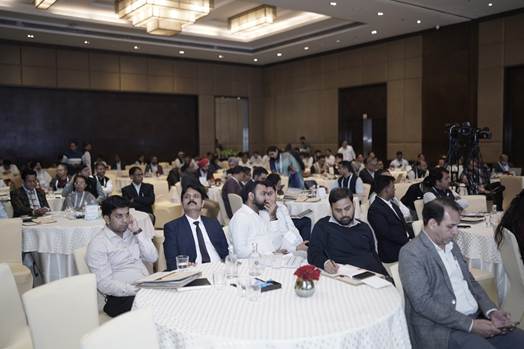
Delegates exchanged best practices and discussed emerging challenges related to source sustainability, functionality of schemes, operation and maintenance, capacity building and financial sustainability. Participants also deliberated on innovative approaches adopted at the State level for improving service delivery and strengthening governance systems.
The conference featured deliberations on implementation of Comprehensive Implementation and Reform Plans (CIRPs), sustainable operation and maintenance, source sustainability, financial sustainability and institutional strengthening. Participants also discussed community ownership, Panchayat-led water governance, capacity development and inter-ministerial convergence as key enablers for ensuring long-term functionality and sustainable rural drinking water service delivery under JJM 2.0.
The second day of the conference will undertake field visits to five selected rural drinking water supply schemes and villages in Uttar Pradesh to observe Jal Arpan and best practices in service delivery, source sustainability, operation and maintenance and community-led water governance. The field exposure is expected to facilitate cross-learning and support replication of successful models across participating States and Union Territories.
***
TM/AK
(रिलीज़ आईडी: 2342186)
आगंतुक पटल : 216