Ministry of Education
NIT Rourkela Develops Technology to Produce Fertiliser from Human Urine
प्रविष्टि तिथि:
23 NOV 2026 9:05PM by PIB Bhubaneswar
Researchers at the National Institute of Technology (NIT) Rourkela have developed an innovative electrochemical technology to recover struvite, a slow-release fertiliser, from human urine. The technology offers a sustainable solution for nutrient recovery, waste management and resource conservation by converting human waste into a valuable agricultural resource. The findings have been published in the prestigious Journal of Water Process Engineering.
Phosphorus and nitrogen are essential nutrients for plant growth and are key components of Nitrogen-Phosphorus-Potassium (NPK) fertilisers widely used in agriculture. However, conventional fertiliser production is energy-intensive and expensive. Recovering these nutrients from waste streams such as human urine offers an alternative approach that can reduce dependence on industrial fertiliser production while promoting resource efficiency.
Conventional methods of recovering phosphorus and nitrogen from human urine often involve chemical precipitation, which requires the continuous addition of alkaline chemicals and external magnesium salts. This increases chemical consumption and operational costs, limiting the economic feasibility of the process.
Addressing these challenges, the NIT Rourkela research team has developed an electrochemical approach that uses electricity to facilitate nutrient recovery without requiring external magnesium salts. The process employs magnesium electrodes that gradually dissolve when an electric current passes through the urine. The released magnesium ions react with naturally occurring nutrients in the urine to form struvite, a valuable mineral that can be used as a slow-release fertiliser.
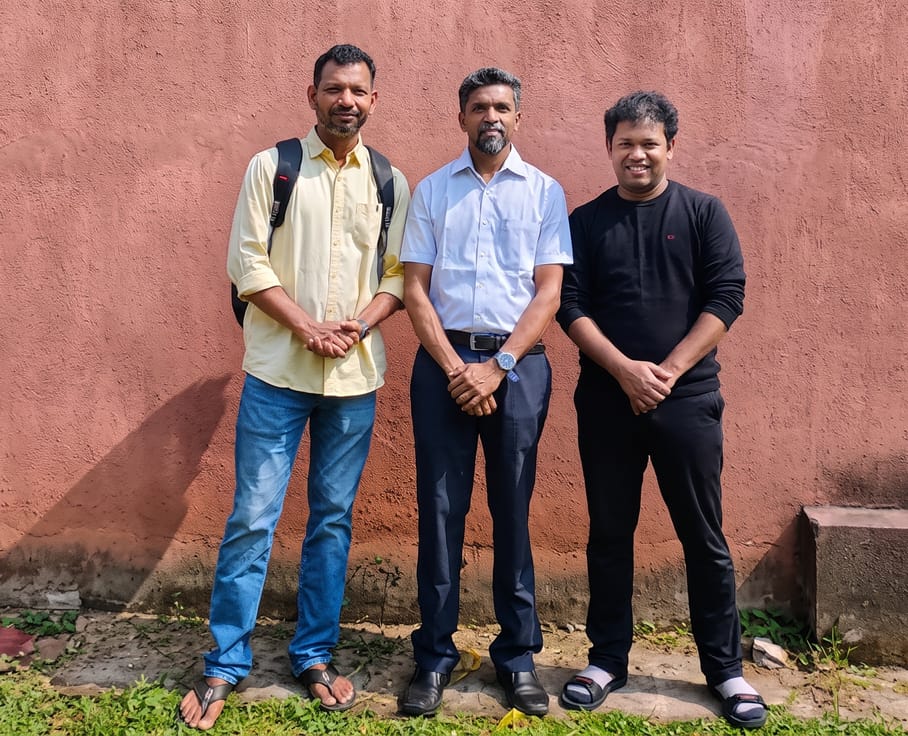
The research has been co-authored by Prof. P. Balasubramanian and Prof. Sivaraman J., Associate Professors, and Prof. Bikash Chandra Maharaj, Assistant Professor, Department of Biotechnology and Medical Engineering, along with Ms. Alisha Zaffar, Research Scholar at NIT Rourkela.
Explaining the significance of the innovation, Prof. P. Balasubramanian, Associate Professor, Department of Biotechnology and Medical Engineering, NIT Rourkela, said, “Our electrochemical process offers a sustainable and chemical-free route for nutrient recovery. By using a sacrificial magnesium anode, we can generate the required magnesium ions in situ, eliminating the need for external chemical addition and enabling precise control over the precipitation process. This makes the technology compact, modular, and well-suited for decentralised nutrient recovery.”
One of the major technical challenges in the process is the accumulation of sludge on the electrode surfaces, which can obstruct the flow of electricity, interfere with electrode performance and reduce the overall efficiency of the system. To address this issue, the researchers incorporated a reverse polarisation technique, periodically reversing the direction of electric current to remove deposits from the electrodes. This ensures uniform magnesium dissolution and helps maintain the efficiency of the nutrient recovery process.
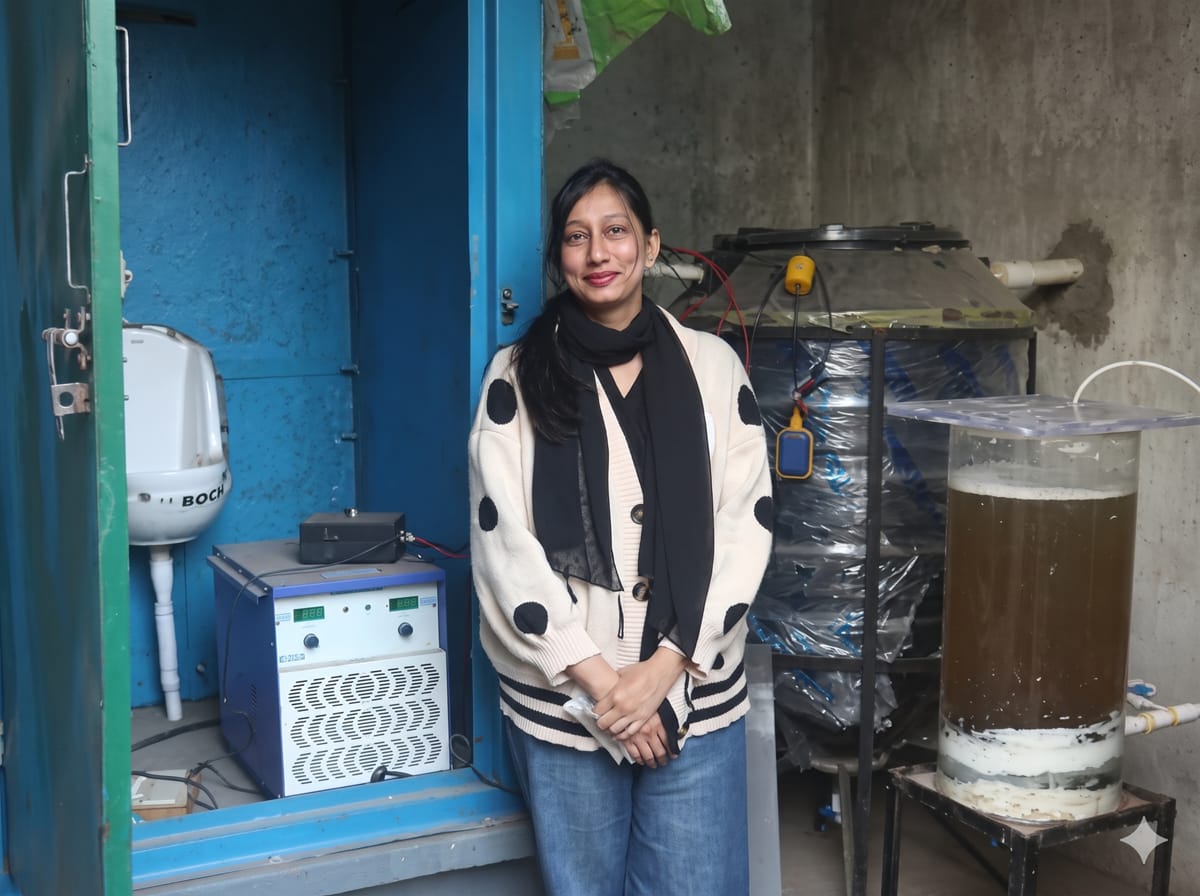
The research team evaluated the technology using two electrochemical reactors with working volumes of 5 litres and 35 litres, employing urine collected from male urinals. Laboratory-scale experiments demonstrated phosphorus recovery efficiencies of over 98% in the 5-litre reactor and more than 91% in the scaled-up 35-litre reactor. The recovered material was confirmed to be pure struvite through X-ray diffraction (XRD) and Fourier-transform infrared spectroscopy (FTIR) analyses.
Further experiments demonstrated the agricultural potential of the recovered struvite. Its performance in supporting the growth of basil, cowpea and okra was found to be comparable to that of commercially available NPK fertilisers, highlighting its potential as a sustainable alternative nutrient source for agriculture.
Highlighting the technology's economic potential, Prof. P. Balasubramanian said, “Our techno-economic analysis indicates that while struvite recovery alone from a 35 L reactor is not economically viable due to high operating costs, integrating it with additional nutrient recovery processes such as recovering ammonium sulphate is essential. When scaled up to a 500 L pilot-scale system, the integrated process demonstrated financial viability, with a payback time of 6.55 years and an internal rate of return of 13%. This confirms that a multi-nutrient recovery approach is the key to making this technology economically sustainable.”
Building on these promising findings, the research team plans to focus on developing continuous-flow electrocoagulation systems, conducting field trials of struvite-based fertiliser, upgrading the technology for green hydrogen recovery and undertaking a comprehensive life cycle assessment. These efforts are expected to facilitate further technological development and support the practical implementation of sustainable nutrient recovery systems.
The innovation represents an important step towards circular resource management by transforming human waste into valuable agricultural inputs, while offering potential benefits for sustainable agriculture, wastewater management and environmental conservation.
(रिलीज़ आईडी: 2340621)
आगंतुक पटल : 14