Ministry of Science & Technology
India’s Healthcare Research Focus Shifting to Prevention Through Futuristic Strategies at molecular and genetic levels: Dr Jitendra Singh
Preventive healthcare assumes importance as metabolic disorders increasingly affect younger populations, says Dr. Jitendra Singh
India advances disease research to molecular and genetic levels, opening new frontiers in precision medicine and early interventions: Dr. Jitendra Singh
Genome sequencing of 10,000 Indians across 84 populations strengthens understanding of India's genetic diversity and disease susceptibility, says Dr. Jitendra Singh
Over 50 lakh adolescent girls vaccinated against HPV as India expands preventive healthcare, indigenous medical research and genetic therapies: Dr. Jitendra Singh
प्रविष्टि तिथि:
22 NOV 2026 3:24PM by PIB Delhi
Union Minister Dr. Jitendra Singh said India is moving towards a futuristic healthcare approach with research focus shifting to prevention through futuristic strategies that places greater emphasis on prevention, early detection and advanced research at molecular and genetic levels, as metabolic disorders and lifestyle-related diseases increasingly affect younger populations. Emphasising that protecting the health of India's young population is critical to the nation's future, he said healthcare is evolving beyond conventional treatment approaches towards scientific interventions, preventive strategies and more precise disease management, in line with the vision of Viksit Bharat 2047.
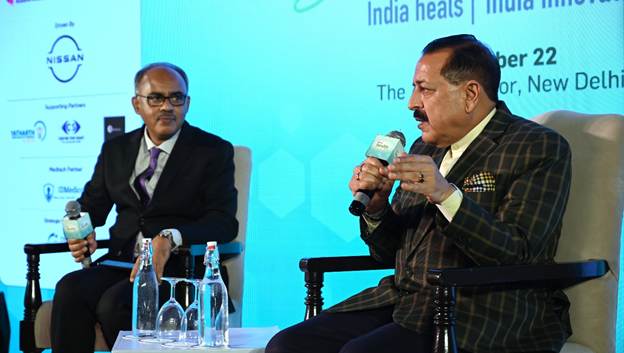
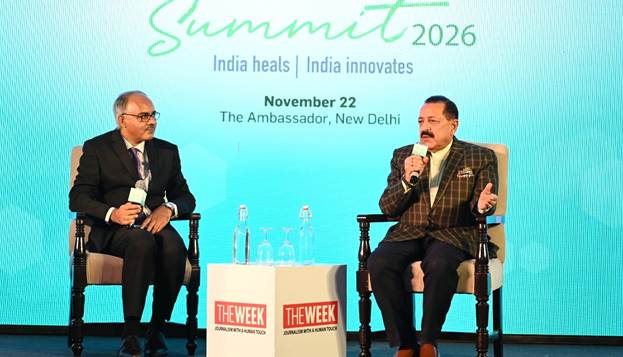
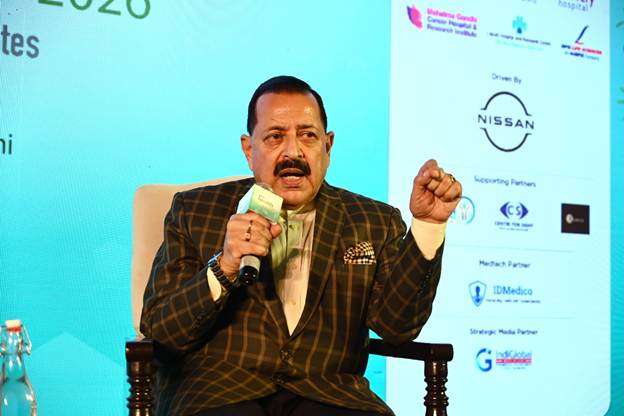
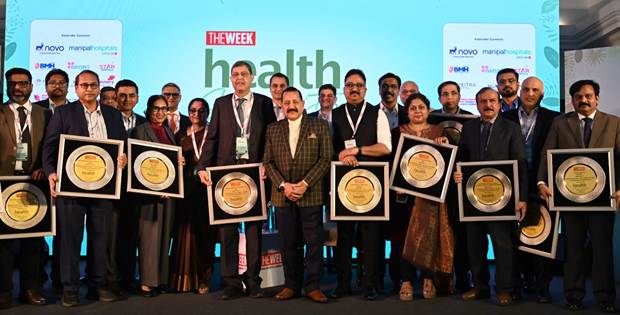
Dr. Jitendra Singh was speaking at THE WEEK Health Summit 2026 in New Delhi, where he delivered the Chief Guest Address on *Healthcare Initiatives of the Union Government* and participated in an interaction with healthcare professionals, researchers and industry representatives. The summit brought together prominent healthcare experts, including Dr. Nikhil Tandon, Director, AIIMS New Delhi; Sharad Aggarwal, Director, FSSAI; Dr. Andrei Kozik, Deputy Head–India, International Committee of the Red Cross, besides senior doctors, medical researchers and representatives of leading healthcare institutions.
Addressing the growing burden of metabolic disorders, Dr. Jitendra Singh said diabetes, obesity, hypertension and cardiovascular diseases are increasingly affecting younger people, making preventive healthcare and early detection imperative. He said changing dietary patterns, declining physical activity and the spread of lifestyle-related health risks across urban and rural India have made the challenge more widespread. Prevention, he said, cannot be left to medical professionals alone and requires collective societal participation and greater awareness.
The Minister said India is progressing towards futuristic healthcare strategies through research at molecular and genetic levels, with scientific efforts increasingly extending beyond conventional treatment to explore deeper mechanisms of diseases and potential interventions. He said advances in biotechnology, genetic research and molecular science are strengthening India's ability to address complex health conditions and develop more precise and effective approaches to disease management.
Dr. Jitendra Singh said India has witnessed a major transformation in its healthcare and scientific capabilities and is emerging as an important global contributor in preventive healthcare and vaccine development. Referring to India's indigenous DNA vaccine developed during the COVID-19 pandemic and subsequent advances in vaccine research, he cited the HPV vaccination initiative under which more than 50 lakh adolescent girls have already been vaccinated, contributing to efforts towards cervical cancer prevention.
Highlighting India's advances in genomics, the Minister said genome sequencing of 10,000 Indian individuals belonging to 84 different populations has been undertaken, reflecting the country's unique genetic diversity. With more than 400 genetic traits across different populations, India's genetic landscape offers significant opportunities for research into disease susceptibility, healthcare risks and the development of targeted medical interventions.
Referring to the emerging field of precision medicine, Dr. Jitendra Singh said healthcare is increasingly moving towards personalised treatment approaches based on an individual's genetic profile, lifestyle, environment and other factors. He explained that the same disease may require different treatment approaches for different individuals, making precision medicine an important frontier. He also referred to ongoing research into biomarkers among women with gestational diabetes to identify those at greater risk of developing Type 2 diabetes in later life and enable more targeted follow-up.
The Minister said the Government and ICMR are working towards expanding the coverage of rare genetic diseases to improve access to diagnosis and treatment and make therapies more accessible and affordable. He said rare diseases often impose a disproportionate burden on affected individuals and their families, owing to diagnostic difficulties, high treatment costs and limited availability of medicines, requiring sustained scientific and institutional efforts.
Dr. Jitendra Singh said India is also making significant progress in indigenous medical research, including the development of new antibiotics and advancements in genetic therapies. Referring to gene therapy research for haemophilia undertaken by Christian Medical College, Vellore, and published in the New England Journal of Medicine, he said Indian researchers are increasingly developing advanced medical solutions with potential applications beyond the country, reflecting India's growing research capabilities.
Referring to healthcare infrastructure and disease management, the Minister said the expansion of dialysis facilities across district hospitals has improved access to treatment for kidney patients, while research is also advancing towards detection of kidney disease at earlier stages, even before symptoms become apparent. He emphasised that prevention and effective management of diabetes and hypertension remain essential to protecting vital organs and reducing the long-term burden of chronic diseases.
Dr. Jitendra Singh said greater collaboration between government institutions, research organisations, healthcare professionals and private-sector partners is essential to accelerate medical research and translate scientific discoveries into practical healthcare solutions. He said increased participation of private players has opened new avenues for research, innovation and development, while also stressing the need to encourage philanthropy to strengthen support for medical research.
Addressing young people, the Minister cautioned against health-related misinformation, unverified nutrition advice and the unsupervised use of medicines for cosmetic purposes. He advised young people to seek guidance from qualified medical professionals and rely on authenticated scientific information, stressing that informed decisions and responsible health practices are crucial for a healthier society.
India's expanding capabilities in preventive healthcare, molecular and genetic research, genomics, biotechnology and indigenous medical innovation are paving the way for a more futuristic and precision-driven healthcare ecosystem, with scientific advancement and early intervention playing an increasingly important role in addressing emerging health challenges.
***
NKR/AK/NM
(रिलीज़ आईडी: 2339914)
आगंतुक पटल : 41