PIB Backgrounder
When Festivities Find a Greener Way to Celebrate
प्रविष्टि तिथि:
28 SEP 2026 4:09PM by PIB Delhi
India's festivals arrive in many forms, but their emotional language is remarkably familiar. Ganesh Chaturthi brings Bappa into homes and neighbourhoods. Durga Puja fills pandals with devotion and artistry. Diwali brings the glow of diyas, prayers and new beginnings. Chhath brings families together at the ghats, offering prayers to the Sun. Rooted in faith, family and community, these celebrations are also closely tied to the spaces where they unfold.
A temple receives flowers, a pandal becomes a place of worship, and a ghat becomes part of a sacred ritual. As these traditions bring communities together, caring for these sacred spaces is becoming part of the celebration itself. This spirit finds a national platform in Swachhata Hi Seva 2026, launched on 17 September 2026. This year's campaign carries the theme “Swachhata Mein Sahbhag; Swachh Bharat, Viksit Bharat”. The campaign places shared responsibility for cleanliness at its heart, with “Swachh Parv, Harit Parv” focusing on clean and green festivities. It also promotes source segregation, Reduce, Reuse and Recycle (3R’s), circular economy and Waste-to-Wealth initiatives.
Across India’s festive landscape, this idea is already finding expression in meaningful ways. Devotional flowers are being repurposed, clay is returning to Ganpati celebrations, bamboo is being used to create festive spaces, and Chhath ghats are being kept clean for devotees. Together, these efforts demonstrate how deeply rooted traditions can evolve with changing times while remaining anchored in faith, community participation, and a growing sense of environmental responsibility.
When Flowers of Devotion Find a New Life
At dawn in Ujjain, thousands of devotees enter the Mahakaleshwar Temple carrying flowers for worship. For them, the flowers are offerings of faith. The temple receives around 75,000 to 100,000 visitors every day and generates around 5 to 6 tonnes of floral waste daily. Special ‘Pushpanjali Econirmit’ vehicles collect the flowers and take them to a processing plant, where they are converted into products such as compost, briquettes and biofuels.
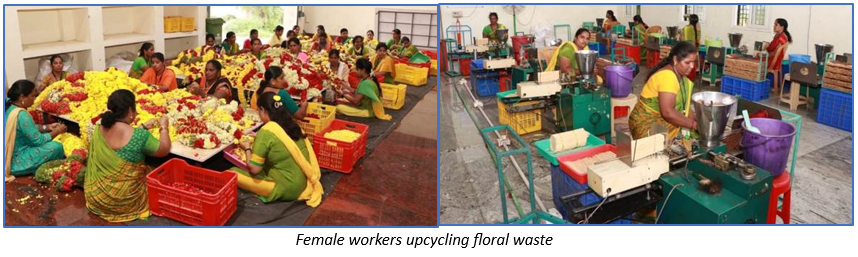
For the women of the Shiv Arpan Self-Help Group, discarded flowers have become a source of livelihood and renewed purpose. In 2024, by transforming floral waste into more than 30 million incense sticks and other eco-friendly products, the initiative has turned waste into value while creating stable employment opportunities. In this way, a flower offered in devotion does not mark the end of its journey; after the prayer, it finds a new purpose through enterprise, livelihoods, and environmental responsibility.
When Celebration Meets Environmental Responsibility
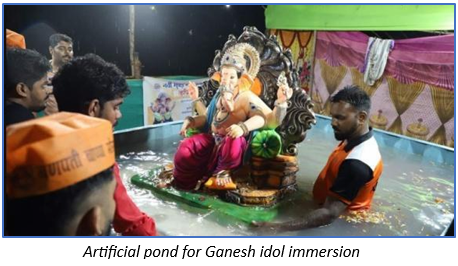
For millions, Ganesh Chaturthi is a deeply personal celebration. Bappa enters homes amid music and prayers, becomes part of the family, and eventually departs for visarjan, carrying with him the promise of his return. The farewell is sacred, but it is also the moment when a cherished tradition intersects with the responsibility of protecting our water bodies.
In 2024, Navi Mumbai created 136 artificial ponds for Ganesh idol immersion, providing devotees with designated spaces for visarjan. The locations were shared through social media and WhatsApp, making it easier for devotees to access these facilities while helping reduce pressure on natural water bodies.
The Brihanmumbai Municipal Corporation (BMC) supplied around 500 tonnes of free clay to sculptors, encouraging the use of traditional and environmentally conscious materials for Ganesh idols. Complementing this effort, the Maharashtra Pollution Control Board launched the Eco-Bappa mobile application to promote eco-friendly idols and decorations. The initiative encourages devotees and artisans to adopt sustainable practices while preserving the cultural and devotional essence of the celebration.
The idea also found resonance among young participants. The Pimpri Chinchwad Municipal Corporation organised an eco-friendly idol-making and decoration competition for students. They were encouraged to work with clay, papier-mâché, natural fibres and recycled materials, bringing environmental care into the celebrations. In Thane, Maharashtra, nearly 500 students learnt to make Ganpati idols using shadu clay. Beyond developing their creativity and craftsmanship, these initiatives introduced young minds to the idea of carrying cherished traditions forward with greater environmental care.
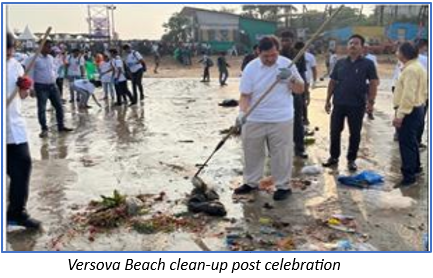
Following the visarjan ceremony (2023), the spirit of participation continued. More than 900 Swachh volunteers, including over 500 students, helped clean Versova Beach. They removed around 80,000 kilograms of waste and collected approximately 7,400 Plaster of Paris Ganesh idols. The farewell to Bappa became another opportunity for seva.
The green transformation does not always require something new. Sometimes, it means returning to materials that communities have known for generations.
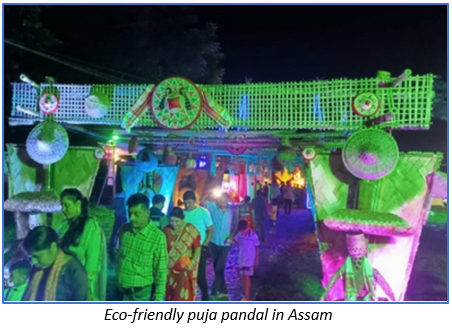
In Digboi, Assam, Ganesh Puja (2023) was organised around bamboo. The material was used for idols, entrance gates, and traditional decorations, including the Japi headgear and Khorahi baskets. The celebration brought local tradition and environmental care together.
Delhi offered another expression of this idea through eco-friendly Ganesha idols made from coconut bark and clay, embedded with plantable seeds. After immersion, the idols dissolved into the soil, allowing the seeds to germinate and grow into plants. The ritual remains rooted in tradition, while the materials offer a more sustainable way to complete the journey.
From Pandal to Prasad: A Greener Celebration
Durga Puja is a celebration of devotion, artistry, and community, with pandals transforming into temporary spaces that welcome the goddess. Increasingly, the materials used to create these spaces reflect greater environmental awareness. In 2023, instead of thermocol and plastic, bamboo, wood, coconut shells, cloth, jute, coir, hay, straw, cane, and paper were used, while soluble clay Durga idols were also encouraged.
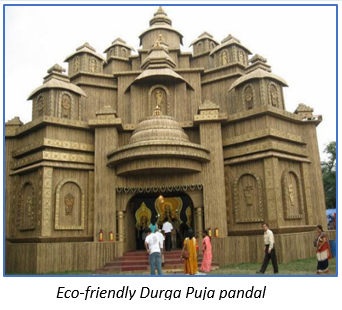
The effort extended beyond the pandal. Blue and green waste bins were placed at high-footfall locations, night-time cleanliness drives were organised, and non-plastic decorations were promoted. Some pandals in Delhi chose bamboo and cotton as the primary materials for their installations.
The offerings, too, found a second life. Flowers and other organic materials collected after the Puja were channelled towards composting and other productive uses. Prasad and refreshments were served on paper plates, banana leaves, shell leaves and clay plates, showing how familiar elements of the celebration can be retained while adopting more environmentally conscious practices.
Celebrating Diwali, Carrying the Spirit of Swachhata
Diwali has always been closely linked with cleanliness. Homes are cleaned, old things are sorted, and families come together for puja, gifts, and sweets. The “Swachh Diwali, Shubh Diwali” campaign builds on this tradition. It encourages waste segregation, the 3Rs- Reduce, Reuse, and Recycle- locally made products, and cleaner celebrations.
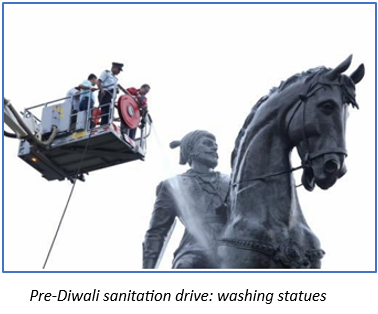
In Mira Bhayandar, Maharashtra, the celebration began with preparation and community cleanliness. A special pre-Diwali sanitation drive saw Safai Mitras cleaning public spaces, washing statues of national heroes and freedom fighters, and tending to green areas.
In Rajasthan and the Andaman and Nicobar Islands, citizens are encouraged to take household waste generated during Diwali cleaning to nearby Reduce, Reuse and Recycle centres.
In 2023, the spirit of reuse also reached festive gifting. At the ‘Swap Before You Shop-Gift Revival Mela’ in Delhi's Navjeevan Vihar, residents exchanged unused gifts through a categorised gift pool. 50 gifts were received in less than two hours on a single day.
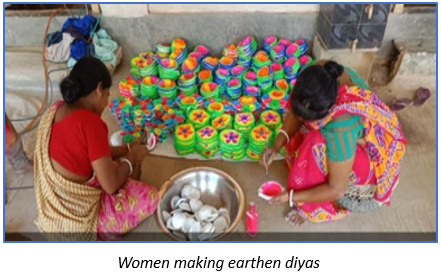
Meanwhile, in Melaghar, Tripura, women from Self-Help Groups made earthen diyas for an eco-friendly Diwali. Further, Delhi's Deep Mahotsav, Swachh Utsav and Voter Utsav demonstrated how celebration itself could become a zero-waste experience. Fabric katran waste became reusable streamers, discarded cardboard became selfie frames, and old ice-cream sticks became hanging decorations. Their work kept a familiar tradition alive while offering a more sustainable choice.
After the Diyas Go Out
In Guwahati, the story continued even after the diyas were lit. Banana leaves used in the traditional Diwali celebration were collected afterwards and sent as feed for elephants.
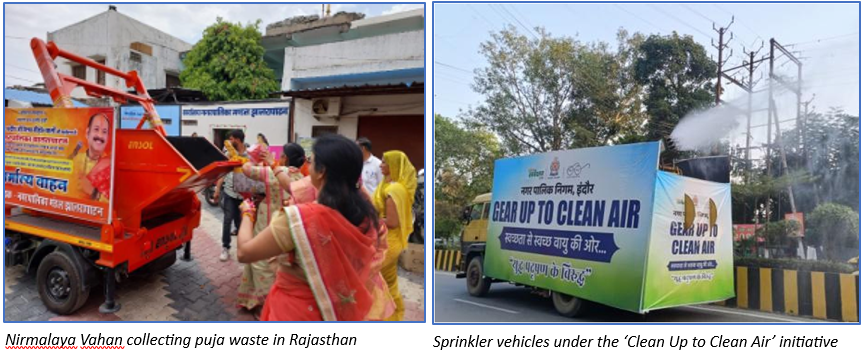
In Jhalrapatan, Rajasthan, Nirmalaya Vahan vehicles collect garlands and other Puja material from temples. The collected material is then processed into compost. In Indore, Madhya Pradesh, special cleaning began as early as 4 am after the festival. Under the ‘Clean Up to Clean Air’ initiative, sprinkler vehicles watered trees and plants with the message ‘Swachhata Se Swachh Vayu Ki Aur’.
Where the River Becomes Part of the Prayer
Chhath Puja reflects one of India’s deeply rooted relationships with nature. Devotees offer prayers to the Sun while standing before the water, often along sacred rivers such as the Ganga, making the ghat an integral part of the ritual rather than merely a venue for the celebration.
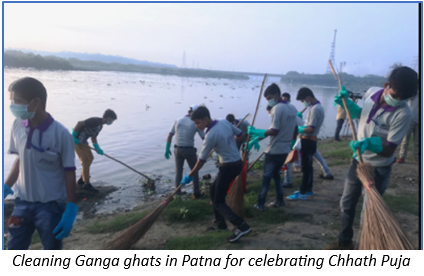
In Patna, Bihar, the Municipal Corporation organises zero-waste Chhath Puja at designated ghats. Separate waste bins are installed, while dedicated vehicles collect waste generated during the celebrations. Wet waste is processed into organic compost, and a plastic ban is enforced. An extensive Information, Education and Communication (IEC) campaign is also conducted for a month ahead of the Puja to encourage devotees and the wider community to maintain a clean and hygienic festive environment.
The approach recognises that the sanctity of the festival is closely connected to the cleanliness of the spaces where it is observed. When the river becomes part of worship, caring for its banks becomes an expression of reverence.
A Celebration That Leaves Something Good Behind
A festival is remembered for its prayers, lights, music, and the people who come together to celebrate. Yet every celebration also leaves something behind: a street to be cleaned, flowers at a ghat, an idol in a water body, or decorations left after the crowds have dispersed. Increasingly, it can leave something more: a cleaner ghat, a recycled decoration, a clay idol, a new plant, a livelihood, or a community that has learnt to celebrate with greater care.
India’s festivals do not need to lose their colour to become greener. The diya can still glow, the drums can still play, and prayers can still rise. What can change is what we leave behind when the celebration ends. A celebration is truly complete when its joy remains with people, while its burden does not remain with the earth.
References
Ministry of Housing & Urban Affairs
https://sbmurban.org/swachhata-parv
https://www.pib.gov.in/PressReleasePage.aspx?PRID=2032112
https://www.pib.gov.in/PressReleasePage.aspx?PRID=1968363
https://sbmurban.org/clean-green-diwali
https://sbmurban.org/Maharashtra-Celebrates-Green-Ganeshotsav/
https://sbmurban.org/swachh-sanskar-aur-diwali
Ministry of Jal Shakti
https://www.pib.gov.in/newsite/erelcontent.aspx?lang=2®=48&relid=294881
Click here to see pdf
****
PIB Research
(रिलीज़ आईडी: 2315989)
आगंतुक पटल : 127