Office of Principal Scientific Advisor to GoI
Principal Scientific Adviser to the GoI chairs Third Annual Review Meeting of RuTAG 2.0 Projects at IIT Roorkee
From Rural Needs to Real-World Solutions: RuTAG 2.0 Focuses on Deepening Technology Impact
प्रविष्टि तिथि:
25 SEP 2026 7:33PM by PIB Delhi
Principal Scientific Adviser (PSA) to the Government of India, Prof. Ajay Kumar Sood, chaired the Third Annual Review Meeting of the Rural Technology Action Group (RuTAG) 2.0 projects, an initiative of the Office of the Principal Scientific Adviser (OPSA), held on 24-25 September 2026, at the Indian Institute of Technology (IIT) Roorkee, Uttarakhand.
Conceptualised in 2003-04 and formally established in 2004 by the Office of the Principal Scientific Adviser, RuTAG was instituted to connect the capabilities of scientific and technical institutions with rural technology needs. RuTAG 2.0, launched in 2023, places greater emphasis on field engagement, technology validation, commercialisation, scale-up, and their wider application. The two-day review meeting brought together stakeholders from all seven RuTAG Centres to take stock of the cumulative progress of projects under RuTAG 2.0, and deliberate on technology maturity, field validation, measurable outcomes, pathways for wider adoption and the future course of the programme.
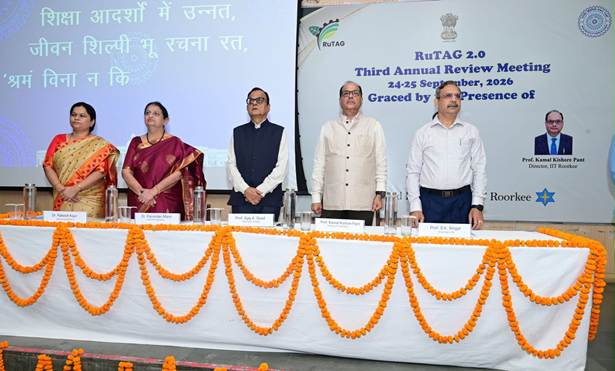
Dr Parvinder Maini, Scientific Secretary, OPSA; Prof. Kamal Kishore Pant, Director, IIT Roorkee; and Dr Rakesh Kaur, Adviser/Scientist ‘G’, OPSA, participated in the meeting along with Principal Investigators, Co-Investigators, and project teams from the RuTAG Centres. The inaugural session commenced with a welcome address by Prof. S.K. Singal, Principal Investigator, RuTAG IIT Roorkee.
In his address, Prof. Ajay Kumar Sood stressed the need for RuTAG to remain focused on addressing practical and genuine challenges faced by rural communities. He emphasised that technological interventions should be scalable and sustainable, stating, “The objective should increasingly be depth of impact rather than breadth of activity.”
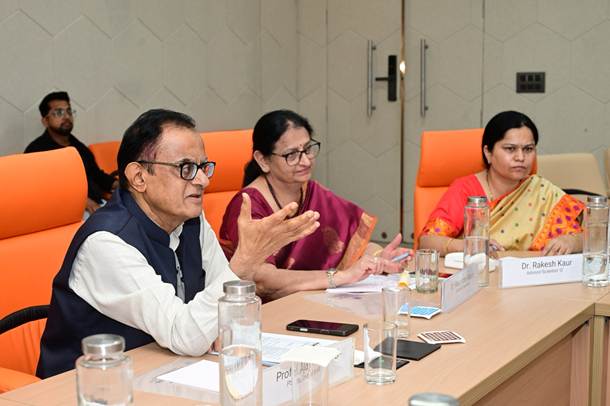
Prof. Sood further underlined that affordability should not compromise quality, reliability, safety, or durability. He further emphasised that technologies which have reached maturity should progressively move beyond programme-supported development towards adoption by relevant institutions, enterprises, or industry. He also referred to the RSVC-AMRIT platform, developed by NABARD in collaboration with the Office of the Principal Scientific Adviser, in the context of supporting technology discovery, validation, deployment, and collaboration.
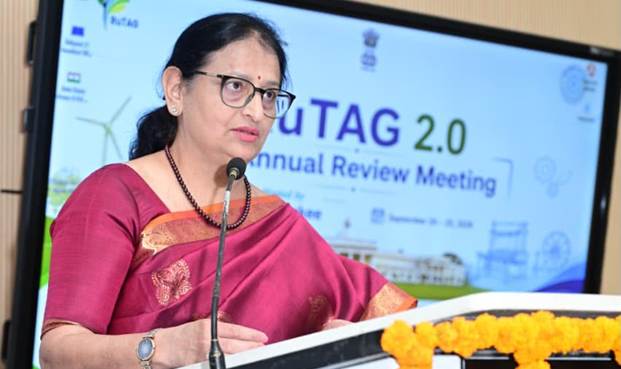
Dr Parvinder Maini, Scientific Secretary, OPSA, observed that RuTAG technologies have reached a stage where their contribution needs to be considered in the context of broader rural value chains and livelihood systems, rather than as standalone technological solutions. She said, “The strength of RuTAG will increasingly lie in how effectively its technologies are adopted and scaled.”
Dr Maini further noted that the requirements for taking technology forward vary depending on its stage of development and adoption. She highlighted the role of State Governments, producer organisations, financial institutions, incubators, manufacturers, and local fabricators in supporting the adoption and utilisation of RuTAG technologies. She also emphasised the need for greater exchange of knowledge and capabilities among the seven RuTAG Centres.
Prof. Kamal Kishore Pant, Director, IIT Roorkee, highlighted the role of science, technology, and entrepreneurship in addressing the evolving challenges of rural communities. He emphasised the need to translate research outcomes into practical solutions and viable models that can support sustainable agriculture, local livelihoods, employment and entrepreneurship, particularly in remote and rural regions. He also underscored the importance of multidisciplinary collaboration, efficient use of water and other resources, and local manufacturing and technology deployment, so that technological interventions are sustainable, scalable, and responsive to regional needs.
In her context-setting remarks, Dr Rakesh Kaur, Adviser/Scientist ‘G’, OPSA and RuTAG Coordinator, said that the review comes at an important stage of the programme and provides an opportunity to take stock of progress, examine evidence from field trials and user engagement, assess measurable outcomes, and develop greater clarity on the next stage of the interventions.
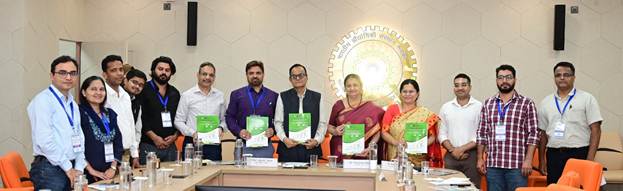
As part of the review, all seven RuTAG Centres – IIT Bombay, IIT Delhi, IIT Guwahati, IIT Madras, IIT Roorkee, ICAR-National Academy of Agricultural Research Management (NAARM), Hyderabad, and Sher-e-Kashmir University of Agricultural Sciences and Technology (SKUAST), Kashmir – presented their cumulative progress. The discussions covered technology readiness, field validation, user feedback, measurable outcomes, documentation, fabrication and manufacturing pathways, institutional linkages and roadmaps for technologies at different stages of maturity. A compendium of technologies developed under RuTAG 2.0 (2023-2026) by the RuTAG Centre at SKUAST-Kashmir was also released; documenting the technologies and interventions undertaken by the Centre during the period.
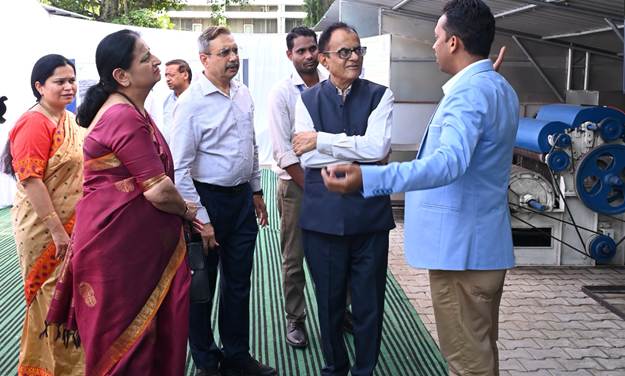
Exhibition stalls were set up by all seven RuTAG Centres to showcase selected technologies and interventions developed under RuTAG 2.0. Participants also visited key research and technology facilities at IIT Roorkee, including the Hydro Turbine Testing Laboratory, RuTAG Laboratory, Biomass and Biochar Research Laboratory (BBRL), and Environmental Bio Research Laboratory (EBRL), and were briefed on the ongoing research, testing and technology-development activities at these facilities.
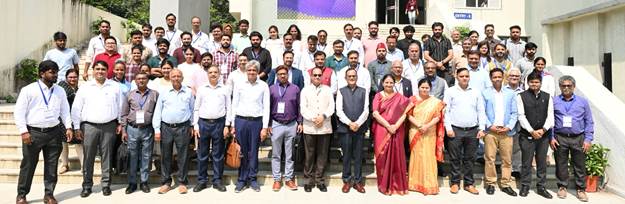
The two-day meeting concluded with deliberations on strengthening pathways for mature technologies to move towards wider adoption, building stronger institutional linkages, promoting collaboration across the RuTAG network and sustaining the uptake of technologies developed to address identified rural needs.
****
MJPS/SS/ST
(रिलीज़ आईडी: 2315073)
आगंतुक पटल : 45