National Human Rights Commission
NHRC, India holds Statutory Full Commission Meeting in New Delhi
The meeting aimed to enhance synergy and cooperation among the Commissions for the promotion and protection of human rights
Chairing the meeting, Chairperson Justice V. Ramasubramanian says, the NHRC may explore extending support to other Commissions if lacking in machinery in the investigation of cases
Shares concerns over the lack of rehabilitation of mentally ill women engaged in begging, social security for PwDs and the denial of insurance coverage to them by insurance companies
प्रविष्टि तिथि:
22 SEP 2026 8:20PM by PIB Delhi
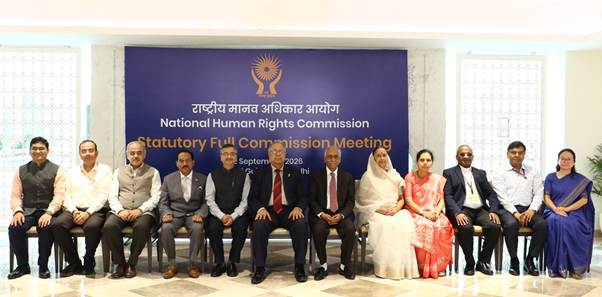
The National Human Rights Commission (NHRC), India, organised a Statutory Full Commission meeting with representatives of all seven deemed members of the Commission in New Delhi today. The meeting aimed to enhance synergy and cooperation among the Commissions for the promotion and protection of human rights.
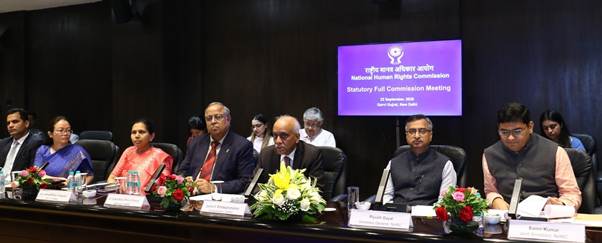
Chairing the meeting, Justice Shri V. Ramasubramanian, Chairperson, NHRC, India, emphasised the importance of collaborative functioning among the Commissions. He said that the Chairpersons of all the National Commissions are ex-officio Members of the NHRC and, therefore, are part of it. He said that together, the Commissions can undertake meaningful work for promoting and protecting the human rights of various sections of society.
Justice Ramasubramanian suggested appointing a Nodal Officer to coordinate among all the National Commissions. He said that the NHRC may explore extending support to other Commissions if lacking in machinery in the investigation of cases. In his concluding remarks, he also shared the concern over the lack of rehabilitation measures for mentally ill women engaged in begging, which requires attention. He noted that there is a sizeable population of persons with disabilities (PwDs) worldwide and stressed the need to examine policies intended for their welfare and identify gaps. The NHRC, India Chairperson expressed concern over the lack of social security for PwDs and the denial of insurance coverage by insurance companies. He also appreciated the suggestion for interfaith dialogue and coordinated research, particularly in overlapping areas.
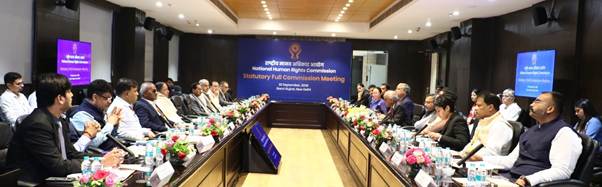
The meeting discussed issues including an integrated approach towards protecting the rights of vulnerable and marginalised sections, identification of key areas for collaborative efforts, sharing of best practices and minimising duplication of cases. The participants emphasised the need for joint fact-finding efforts, research, awareness campaigns and outreach programmes.
Smt. Vijaya K. Rahatkar, Chairperson, National Commission for Women (NCW), highlighted the work of the NCW towards promoting and protecting women's rights and various programmes, including public hearings organised in different districts to hear their complaints. She said that, besides handling complaints, the NCW also focuses on research, awareness and outreach training programmes for the welfare of women. She added that the NCW has been organising anti-human trafficking campaigns in collaboration with Central Armed Police Forces and holding dialogues with youth on POSH, POCSO and cybercrime-related issues in collaboration with different institutions.
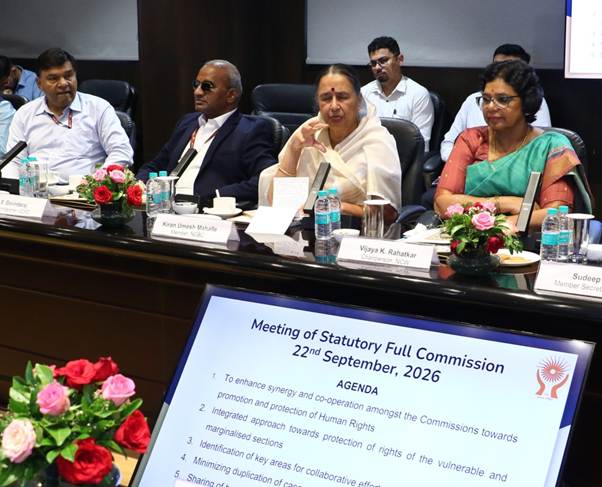
Smt. Kiran Umesh Mahalle, Member, National Commission for Backward Classes (NCBC), spoke about the problems faced by the beggar community, particularly those suffering from mental health issues. She expressed concern over mentally ill women being left by their families to beg on the roads. She suggested that the National Commissions may consider formulating a policy for their rehabilitation and recommending its implementation to the Government.
Shri S. Govindraj, Commissioner for Persons with Disabilities (CCPD) said that the CCPD has been focusing on reaching those who have remained unreached. He stressed the need for research into gaps in welfare measures for persons with disabilities, who he described as among the most vulnerable populations facing discrimination.
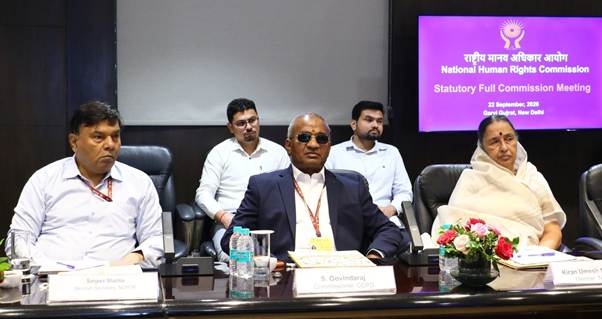
Dr. Sanjeev Sharma, Member Secretary, National Commission for Protection of Child Rights (NCPCR), highlighted the NCPCR's work on rescue and rehabilitation of children in a campaign mode. He said that over 8,000 children have been rescued and rehabilitated. He also underscored the need for capacity building and training. He said that the circulation of child sexual abuse material on social media platforms requires immediate attention. He suggested joint investigations and joint bench sittings of Statutory Commission members, besides strengthening State Commissions.
Shri Vivek Kumar Dewangan, Secretary, National Commission for Scheduled Castes (NCSC), said that the NCSC has set up an e-grievance monitoring portal, which has resulted in quicker redressal of grievances. He emphasised better coordination among the Statutory Commission members, collaboration on capacity building and awareness in educational institutions, joint studies on socio-economic indicators and joint action plans with measurable objectives.
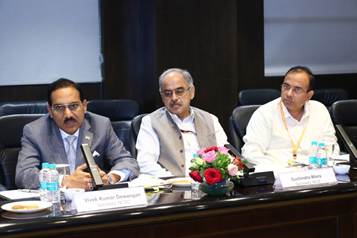
Shri Suchindra Misra, Secretary, National Commission for Minorities (NCM), highlighted the importance of electronic grievance redressal systems and capacity building with support from the NHRC. He also stressed coordination with States to establish State Minority Commissions, noting that only 18 States have such Commissions so far. He further underscored the significance of coordinated research and complaint redressal, besides holding interfaith dialogues.
Shri Manohar N. Sukole, Deputy Secretary, National Commission for Scheduled Tribes (NCST), highlighting the importance of registering of suomotu cases besides the need for establishing grievance redressal platforms with real time tracking provisions and early warning systems identifying the recurring issues and overlapping matters requiring a more integrated approach among Statutory Commission Members.
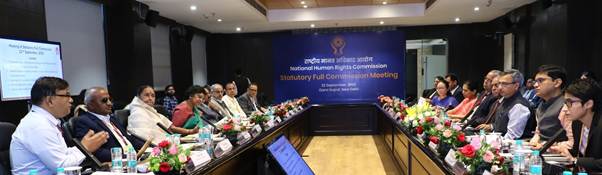
Justice (Dr.) Bidyut Ranjan Sarangi, Member, NHRC, India said that the endeavour should be to work together to ensure that benefits reach the grassroots level. He said that while the Statutory Commission members work in different fields, their purpose is the same. He observed that SOPs can be effective if implemented properly and emphasised the need for adequate staff and infrastructure for all the Commissions to achieve their objectives.
Dr. Anupama Nilekar Chandra, DG (Inv) NHRC, India said that the Commission will be organising a training programme for investigation officers on the last Wednesday of each month beginning 30th September 2026. It will be further expanded over the course of time.
Earlier, setting the agenda for the meeting, Shri Piyush Goyal, Secretary General, NHRC, India, gave an overview of the country's unique institutional human rights protection framework. He emphasised that interactions among these institutions are useful in forming synergy and cooperation between different Commissions to protect the rights of vulnerable and disadvantaged communities including bonded labours, older persons and manual scavengers. The interactions can also help in paving the way forward for capacity building and sharing of best practices.
Shri Samir Kumar, Joint Secretary, NHRC, India, summarised the activities undertaken by the Commission over the last year.
The meeting concluded with a renewed commitment to collaborative efforts among the Commissions for the promotion and protection of human rights in India.
*****
NSK
(रिलीज़ आईडी: 2313640)
आगंतुक पटल : 139
इस विज्ञप्ति को इन भाषाओं में पढ़ें:
Urdu